Hyldmo Per Kristian, Vist Gunn E, Feyling Anders Christian, Rognås Leif, Magnusson Vidar, Sandberg Mårten, Søreide Eldar
Department of Research and Development, Norwegian Air Ambulance Foundation, Drøbak, Norway.
Department of Anesthesiology and Intensive Care Medicine, Sørlandet Hospital, Kristiansand, Norway.
Scand J Trauma Resusc Emerg Med. 2015 Jul 1;23:50. doi: 10.1186/s13049-015-0116-0.
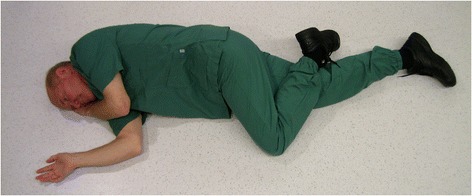
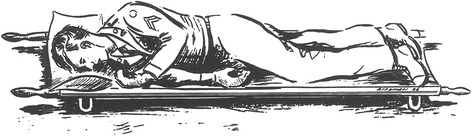
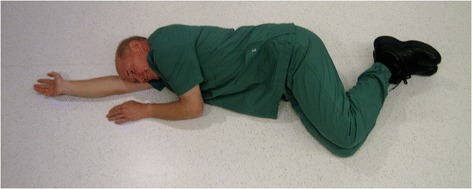
Airway compromise is a leading cause of death in unconscious trauma patients. Although endotracheal intubation is regarded as the gold standard treatment, most prehospital providers are not trained to perform ETI in such patients. Therefore, various lateral positions are advocated for unconscious patients, but their use remains controversial in trauma patients. We conducted a systematic review to investigate whether the supine position is associated with loss of airway patency compared to the lateral position.
The review protocol was published in the PROSPERO database (Reg. no. CRD42012001190). We performed literature searches in PubMed, Medline, EMBASE, Cochrane Library, CINAHL and British Nursing Index and included studies related to airway patency, reduced level of consciousness and patient position. We conducted meta-analyses, where appropriate. We graded the quality of evidence with the GRADE methodology. The search was updated in June 2014.
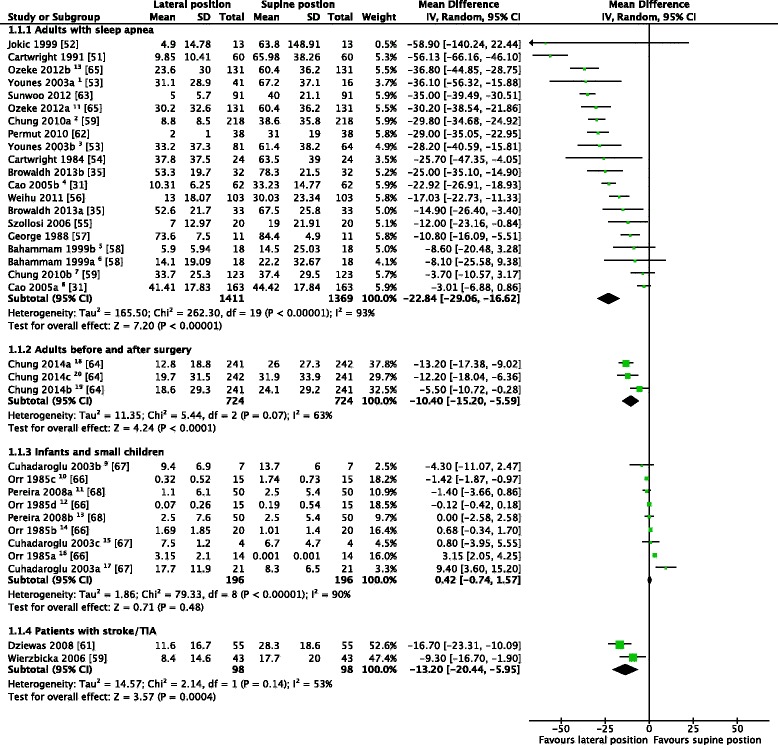
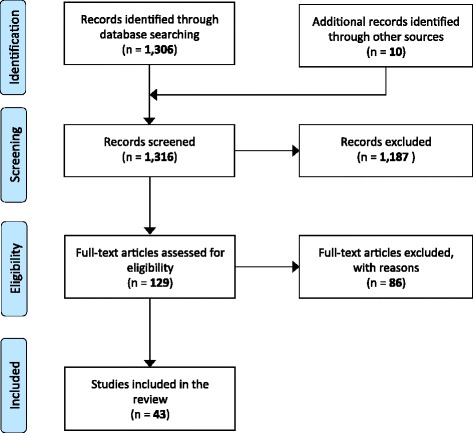
We identified 1,306 publications, 39 of which were included for further analysis. Sixteen of these publications were included in meta-analysis. We did not identify any studies reporting direct outcome measures (mortality or morbidity) related to airway compromise caused by the patient position (lateral vs. supine position) in trauma patients or in any other patient group. In studies reporting only indirect outcome measures, we found moderate evidence of reduced airway patency in the supine vs. the lateral position, which was measured by the apnea/hypopnea index (AHI). For other indirect outcomes, we only found low or very low quality evidence.
Although concerns other than airway patency may influence how a trauma patient is positioned, our systematic review provides evidence supporting the long held recommendation that unconscious trauma patients should be placed in a lateral position.
气道梗阻是昏迷创伤患者死亡的主要原因。尽管气管插管被视为金标准治疗方法,但大多数院前急救人员并未接受过对这类患者进行气管插管的培训。因此,各种侧卧位被推荐用于昏迷患者,但在创伤患者中使用侧卧位仍存在争议。我们进行了一项系统评价,以研究与侧卧位相比,仰卧位是否与气道通畅性丧失有关。
该评价方案发表于PROSPERO数据库(注册号CRD42012001190)。我们在PubMed、Medline、EMBASE、Cochrane图书馆、CINAHL和英国护理索引中进行了文献检索,纳入了与气道通畅性、意识水平降低和患者体位相关的研究。在适当的情况下,我们进行了荟萃分析。我们采用GRADE方法对证据质量进行分级。检索于2014年6月更新。
我们共识别出1306篇出版物,其中39篇被纳入进一步分析。其中16篇出版物被纳入荟萃分析。我们未发现任何研究报告创伤患者或任何其他患者群体中因患者体位(侧卧位与仰卧位)导致气道梗阻的直接结局指标(死亡率或发病率)。在仅报告间接结局指标的研究中,我们发现有中等证据表明,仰卧位与侧卧位相比气道通畅性降低,这是通过呼吸暂停/低通气指数(AHI)来衡量的。对于其他间接结局,我们仅发现低质量或极低质量的证据。
尽管除气道通畅性外的其他因素可能会影响创伤患者的体位摆放方式,但我们的系统评价提供了证据,支持长期以来的建议,即昏迷创伤患者应采取侧卧位。