Simón-Soro Áurea, D'Auria Giuseppe, Collado M Carmen, Džunková Mária, Culshaw Shauna, Mira Alex
Department of Health and Genomics, FISABIO Foundation, Center for Advanced Research in Public Health, Avda. Cataluña 21, 46020, Valencia, Spain.
The Institute of Agrochemistry and Food Technology, Spanish National Research Council (IATA-CSIC), 46980, Valencia, Spain.
BMC Microbiol. 2015 Jul 2;15:132. doi: 10.1186/s12866-015-0456-y.
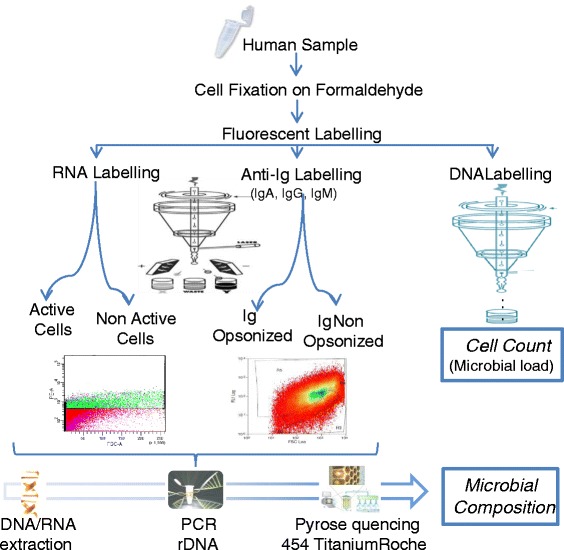
Recognition of microorganisms by antibodies is a vital component of the human immune response. However, there is currently very limited understanding of immune recognition of 50 % of the human microbiome which is made up of as yet un-culturable bacteria. We have combined the use of flow cytometry and pyrosequencing to describe the microbial composition of human samples, and its interaction with the immune system.
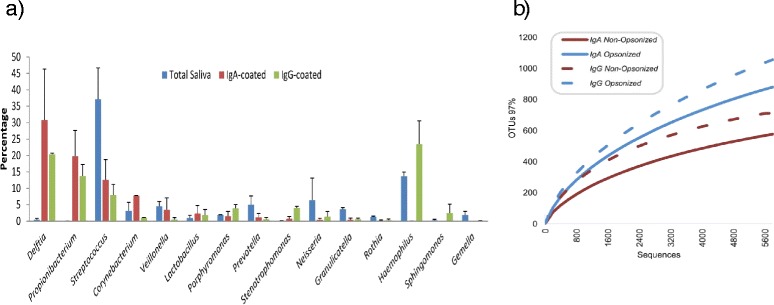
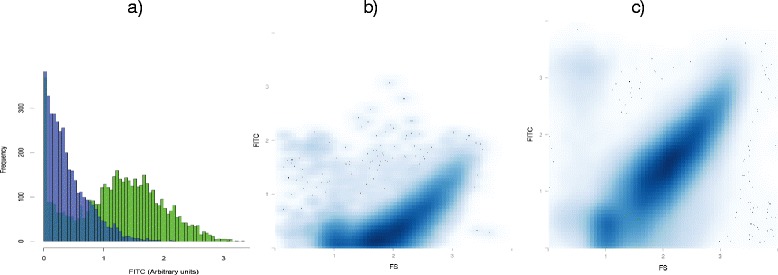
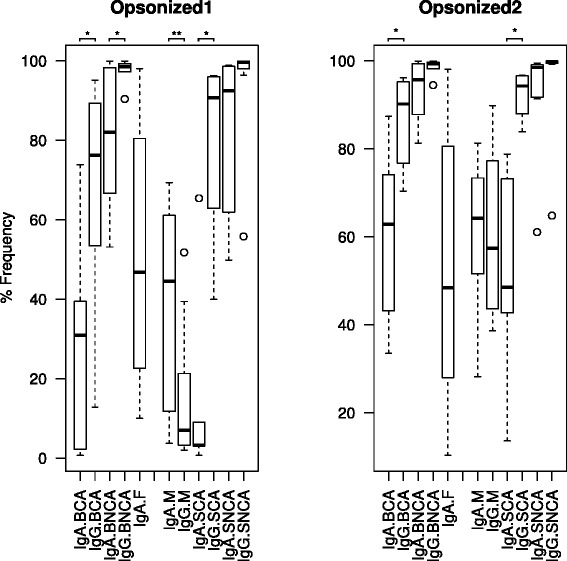
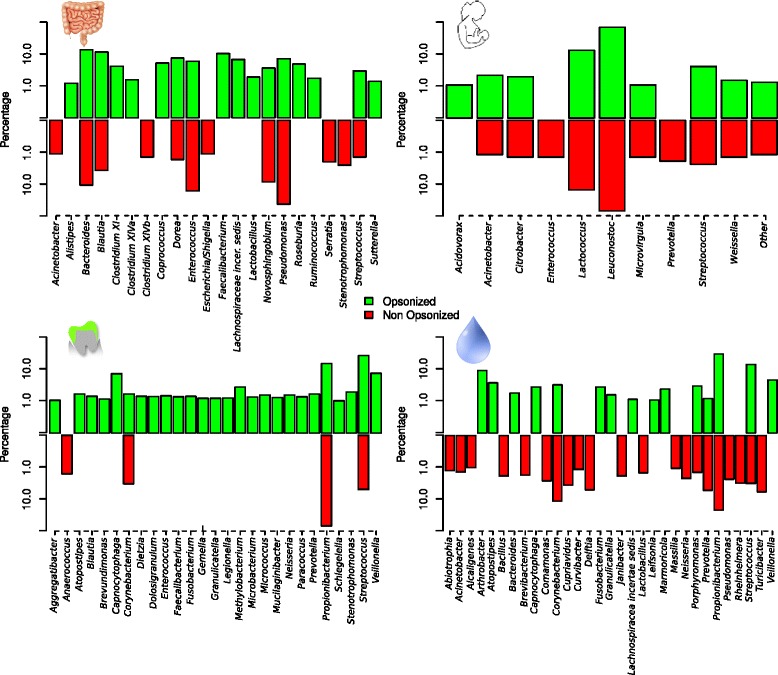
We show the power of the technique in human faecal, saliva, oral biofilm and breast milk samples, labeled with fluorescent anti-IgG or anti-IgA antibodies. Using Fluorescence-Activated Cell Sorting (FACS), bacterial cells were separated depending on whether they are coated with IgA or IgG antibodies. Each bacterial population was PCR-amplified and pyrosequenced, characterizing the microorganisms which evade the immune system and those which were recognized by each immunoglobulin.
The application of the technique to healthy and diseased individuals may unravel the contribution of the immune response to microbial infections and polymicrobial diseases.
抗体对微生物的识别是人类免疫反应的重要组成部分。然而,目前对于由尚未培养的细菌组成的50%的人类微生物群的免疫识别了解非常有限。我们结合使用流式细胞术和焦磷酸测序来描述人类样本的微生物组成及其与免疫系统的相互作用。
我们展示了该技术在用人粪便、唾液、口腔生物膜和母乳样本中的强大作用,这些样本用荧光抗IgG或抗IgA抗体进行标记。使用荧光激活细胞分选术(FACS),根据细菌细胞是否被IgA或IgG抗体包被来分离细菌细胞。对每个细菌群体进行PCR扩增和焦磷酸测序,以鉴定逃避免疫系统的微生物以及被每种免疫球蛋白识别的微生物。
将该技术应用于健康个体和患病个体可能会揭示免疫反应对微生物感染和多种微生物疾病的作用。