Jacobs Jonathan M, Pesce Céline, Lefeuvre Pierre, Koebnik Ralf
Institut de Recherche pour le Développement - Cirad - Université Montpellier, Interactions Plantes Microorganismes Environnement Montpellier, France.
Institut de Recherche pour le Développement - Cirad - Université Montpellier, Interactions Plantes Microorganismes Environnement Montpellier, France ; Department of Applied Microbiology, Earth and Life Institute, Université Catholique de Louvain Louvain-la-Neuve, Belgium.
Front Plant Sci. 2015 Jun 16;6:431. doi: 10.3389/fpls.2015.00431. eCollection 2015.
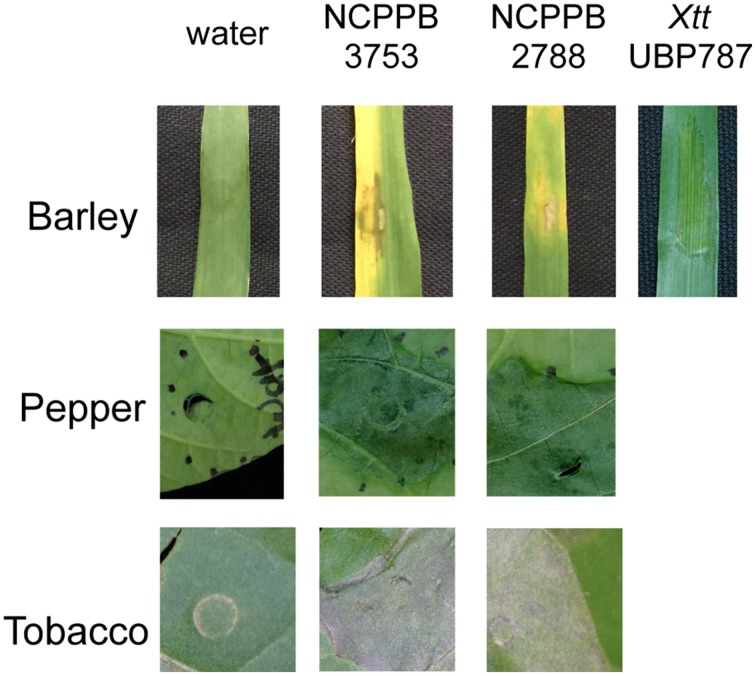
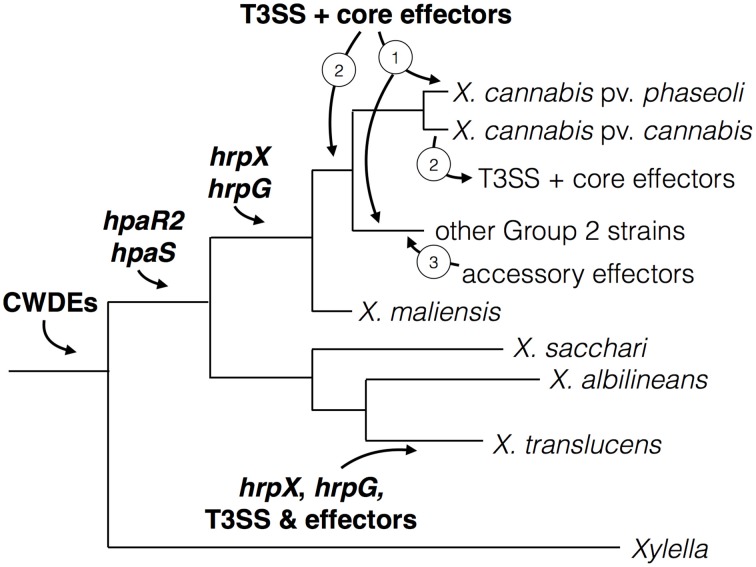
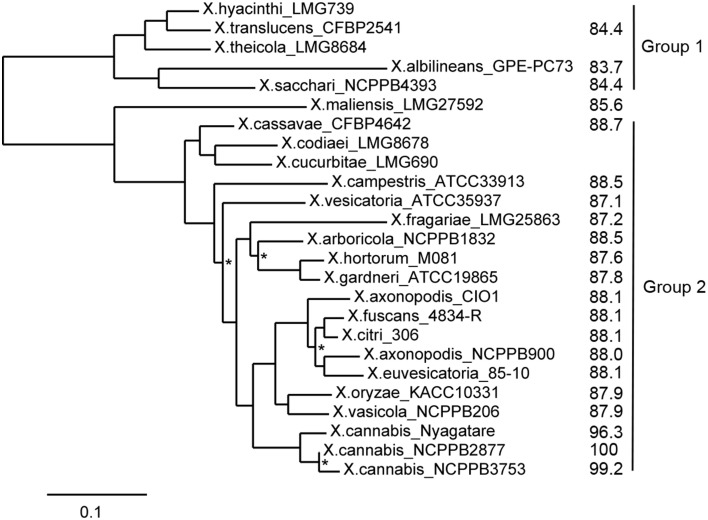
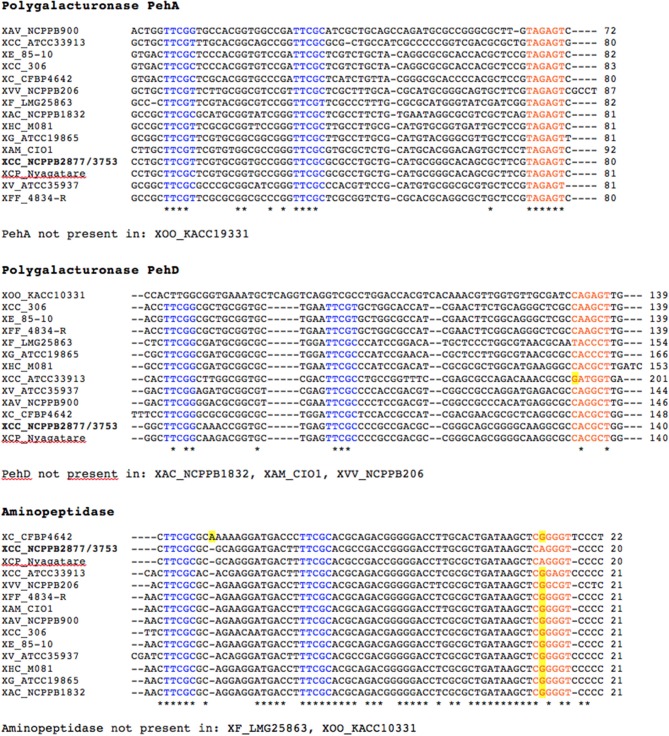
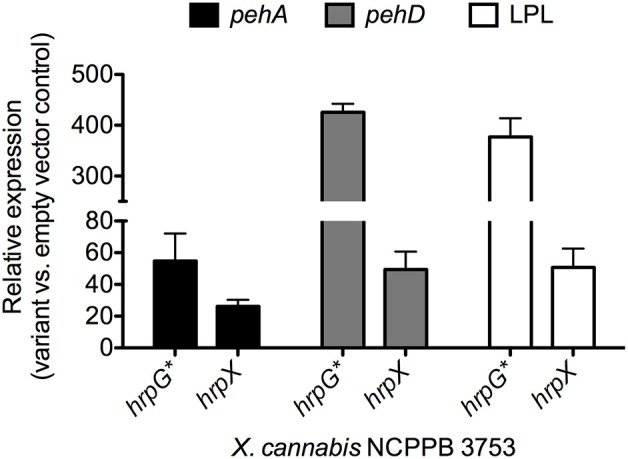
Pathogenic bacteria in the genus Xanthomonas cause diseases on over 350 plant species, including cannabis (Cannabis sativa L.). Because of regulatory limitations, the biology of the Xanthomonas-cannabis pathosystem remains largely unexplored. To gain insight into the evolution of Xanthomonas strains pathogenic to cannabis, we sequenced the genomes of two geographically distinct Xanthomonas strains, NCPPB 3753 and NCPPB 2877, which were previously isolated from symptomatic plant tissue in Japan and Romania. Comparative multilocus sequence analysis of housekeeping genes revealed that they belong to Group 2, which comprises most of the described species of Xanthomonas. Interestingly, both strains lack the Hrp Type III secretion system and do not contain any of the known Type III effectors. Yet their genomes notably encode two key Hrp pathogenicity regulators HrpG and HrpX, and hrpG and hrpX are in the same genetic organization as in the other Group 2 xanthomonads. Promoter prediction of HrpX-regulated genes suggests the induction of an aminopeptidase, a lipase and two polygalacturonases upon plant colonization, similar to other plant-pathogenic xanthomonads. Genome analysis of the distantly related Xanthomonas maliensis strain 97M, which was isolated from a rice leaf in Mali, similarly demonstrated the presence of HrpG, HrpX, and a HrpX-regulated polygalacturonase, and the absence of the Hrp Type III secretion system and known Type III effectors. Given the observation that some Xanthomonas strains across distinct taxa do not contain hrpG and hrpX, we speculate a stepwise evolution of pathogenicity, which involves (i) acquisition of key regulatory genes and cell wall-degrading enzymes, followed by (ii) acquisition of the Hrp Type III secretion system, which is ultimately accompanied by (iii) successive acquisition of Type III effectors.
黄单胞菌属的致病细菌可导致350多种植物发病,其中包括大麻(Cannabis sativa L.)。由于监管限制,黄单胞菌-大麻病理系统的生物学特性在很大程度上仍未得到探索。为了深入了解对大麻致病的黄单胞菌菌株的进化情况,我们对两个地理上不同的黄单胞菌菌株NCPPB 3753和NCPPB 2877的基因组进行了测序,这两个菌株先前分别从日本和罗马尼亚有症状的植物组织中分离得到。对看家基因进行的比较多位点序列分析表明,它们属于第2组,该组包含了黄单胞菌属中大多数已描述的物种。有趣的是,这两个菌株都缺乏Hrp III型分泌系统,并且不包含任何已知的III型效应子。然而,它们的基因组显著编码了两个关键的Hrp致病性调节因子HrpG和HrpX,并且hrpG和hrpX的基因组织与其他第2组黄单胞菌相同。对HrpX调控基因的启动子预测表明,在植物定殖时会诱导一种氨肽酶、一种脂肪酶和两种多聚半乳糖醛酸酶,这与其他植物致病黄单胞菌类似。对从马里水稻叶片中分离得到的远缘黄单胞菌菌株97M进行的基因组分析同样表明,存在HrpG、HrpX和一种受HrpX调控的多聚半乳糖醛酸酶,并且不存在Hrp III型分泌系统和已知的III型效应子。鉴于观察到不同分类群中的一些黄单胞菌菌株不包含hrpG和hrpX,我们推测致病性的逐步进化,这涉及(i)获得关键调控基因和细胞壁降解酶,随后(ii)获得Hrp III型分泌系统,最终伴随着(iii)III型效应子的相继获得。