Shah Vibhuti, Taddio Anna, McMurtry C Meghan, Halperin Scott A, Noel Melanie, Pillai Riddell Rebecca, Chambers Christine T
*Mount Sinai Hospital †Faculty of Medicine ‡Leslie Dan Faculty of Pharmacy, University of Toronto §The Hospital for Sick Children ‡‡Department of Psychology, York University, Toronto ∥Department of Psychology, University of Guelph, Guelph ¶Children's Health Research Institute, London #Department of Paediatrics, Western University, London, ON **Departments of Pediatrics and Microbiology and Immunology, IWK Health Centre, Dalhousie University §§Department of Pediatrics and Psychology, Faculty of Science, IWK Health Centre, Dalhousie University, Halifax, NS, Canada ††Department of Psychology, University of Calgary, AB, Canada.
Clin J Pain. 2015 Oct;31(10 Suppl):S38-63. doi: 10.1097/AJP.0000000000000281.
This systematic review assessed the effectiveness and safety of pharmacotherapy and combined interventions for reducing vaccine injection pain in individuals across the lifespan.
DESIGN/METHODS: Electronic databases were searched for relevant randomized and quasi-randomized controlled trials. Self-reported pain and fear as well as observer-rated distress were critically important outcomes. Data were combined using standardized mean difference (SMD) or relative risk with 95% confidence intervals (CI).
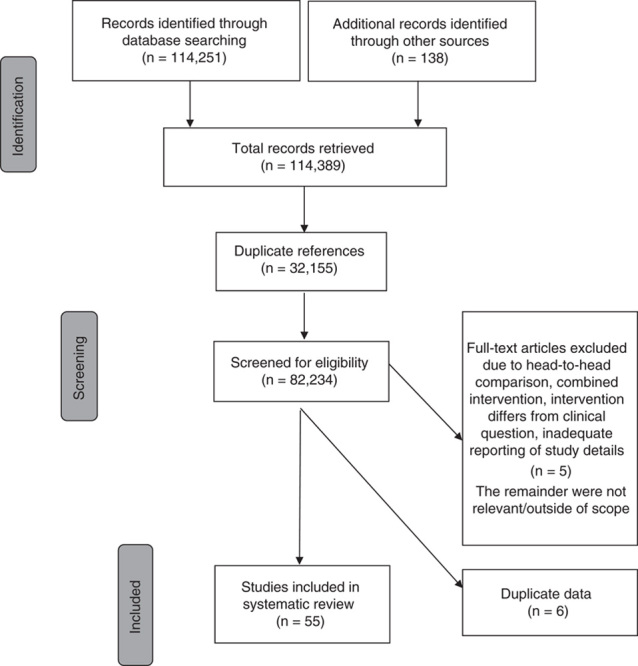
Fifty-five studies that examined breastfeeding (which combines sweet-tasting solution, holding, and sucking), topical anesthetics, sweet-tasting solutions (sucrose, glucose), vapocoolants, oral analgesics, and combination of 2 versus 1 intervention were included. The following results report findings of analyses of critical outcomes with the largest number of participants. Compared with control, acute distress was lower for infants breastfed: (1) during vaccination (n=792): SMD -1.78 (CI, -2.35, -1.22) and (2) before vaccination (n=100): SMD -1.43 (CI, -2.14, -0.72). Compared with control/placebo, topical anesthetics showed benefit on acute distress in children (n=1424): SMD -0.91 (CI, -1.36, -0.47) and self-reported pain in adults (n=60): SMD -0.85 (CI, -1.38, -0.32). Acute and recovery distress was lower for children who received sucrose (n=2071): SMD -0.76 (CI, -1.19, -0.34) or glucose (n=818): SMD -0.69 (CI, -1.03, -0.35) compared with placebo/no treatment. Vapocoolants reduced acute pain in adults [(n=185), SMD -0.78 (CI, -1.08, -0.48)] but not children. Evidence from other needle procedures showed no benefit of acetaminophen or ibuprofen. The administration of topical anesthetics before and breastfeeding during vaccine injections showed mixed results when compared with topical anesthetics alone. There were no additive benefits of combining glucose and non-nutritive sucking (pacifier) compared with glucose or non-nutritive sucking (pacifier) alone or breastfeeding and sucrose compared with breastfeeding or sucrose alone.
Breastfeeding, topical anesthetics, sweet-tasting solutions, and combination of topical anesthetics and breastfeeding demonstrated evidence of benefit for reducing vaccine injection pain in infants and children. In adults, limited data demonstrate some benefit of topical anesthetics and vapocoolants.
本系统评价评估了药物治疗及联合干预措施在减轻各年龄段个体疫苗注射疼痛方面的有效性和安全性。
设计/方法:检索电子数据库以查找相关的随机和半随机对照试验。自我报告的疼痛和恐惧以及观察者评定的痛苦是至关重要的结局指标。数据采用标准化均数差(SMD)或相对危险度及95%置信区间(CI)进行合并。
纳入了55项研究,这些研究考察了母乳喂养(结合甜味溶液、怀抱和吸吮)、局部麻醉剂、甜味溶液(蔗糖、葡萄糖)、汽化冷却剂、口服镇痛药以及2种干预措施与1种干预措施的联合使用。以下结果报告了对参与人数最多的关键结局指标分析的结果。与对照组相比,母乳喂养的婴儿在以下情况时急性痛苦较低:(1)接种疫苗期间(n = 792):SMD -1.78(CI,-2.35,-1.22);(2)接种疫苗前(n = 100):SMD -1.43(CI,-2.14,-0.72)。与对照组/安慰剂相比,局部麻醉剂对儿童的急性痛苦(n = 1424)显示出益处:SMD -0.91(CI,-1.36,-0.47),对成人的自我报告疼痛(n = 60)也显示出益处:SMD -0.85(CI,-1.38,-0.32)。与安慰剂/未治疗相比,接受蔗糖(n = 2071)或葡萄糖(n = 818)的儿童急性和恢复性痛苦较低:SMD -0.76(CI,-1.19,-0.34)和SMD -0.69(CI,-1.03,-0.35)。汽化冷却剂减轻了成人的急性疼痛[(n = 185),SMD -0.78(CI,-1.08,-0.48)],但对儿童无效。其他针刺操作的证据表明对乙酰氨基酚或布洛芬没有益处。与单独使用局部麻醉剂相比,在疫苗注射前使用局部麻醉剂并在注射期间进行母乳喂养的结果不一。与单独使用葡萄糖或非营养性吸吮(安抚奶嘴)或母乳喂养和蔗糖单独使用相比,联合使用葡萄糖和非营养性吸吮(安抚奶嘴)或母乳喂养和蔗糖没有额外益处。
母乳喂养、局部麻醉剂、甜味溶液以及局部麻醉剂与母乳喂养的联合使用证明了在减轻婴幼儿疫苗注射疼痛方面的益处。在成人中,有限的数据表明局部麻醉剂和汽化冷却剂有一定益处。