Spaans Sebastiaan K, Weusthuis Ruud A, van der Oost John, Kengen Servé W M
Laboratory of Microbiology, Wageningen University Wageningen, Netherlands.
Bioprocess Engineering, Wageningen University Wageningen, Netherlands.
Front Microbiol. 2015 Jul 29;6:742. doi: 10.3389/fmicb.2015.00742. eCollection 2015.
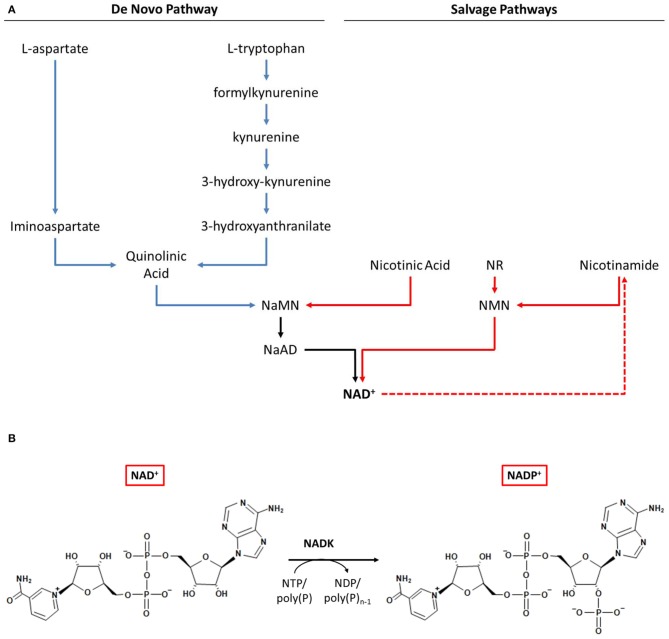
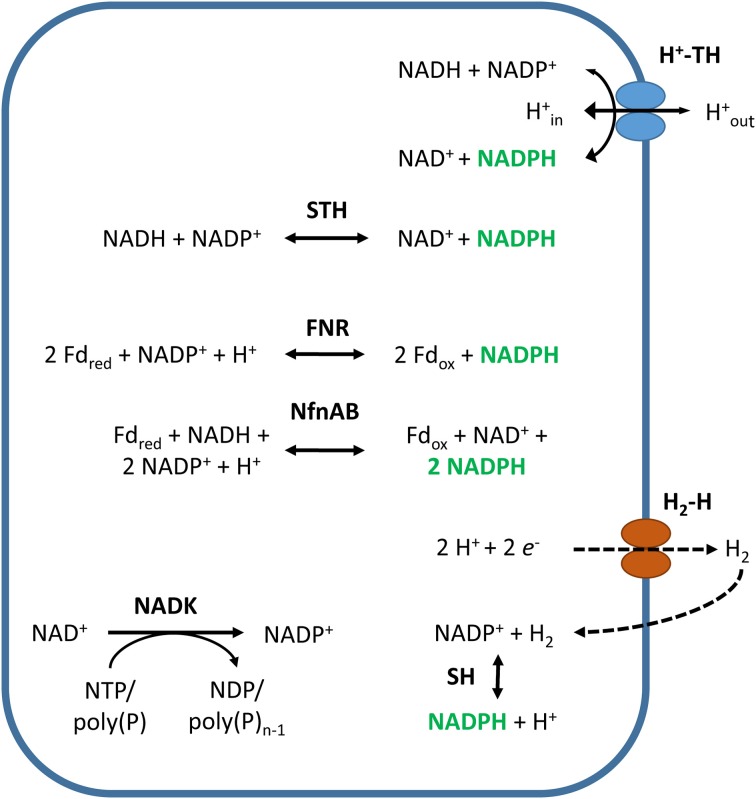
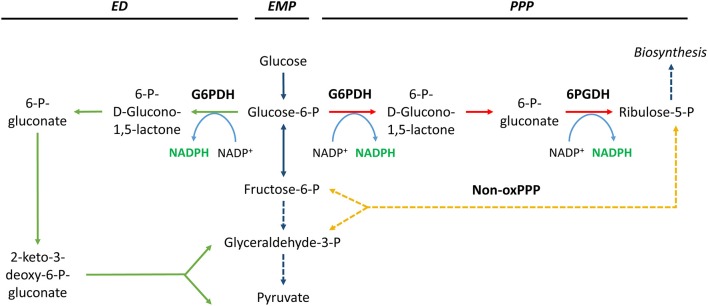
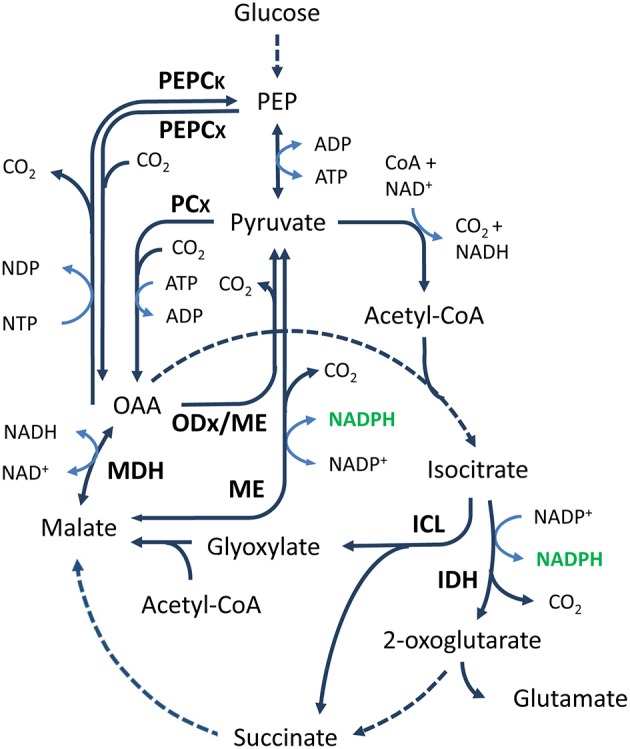
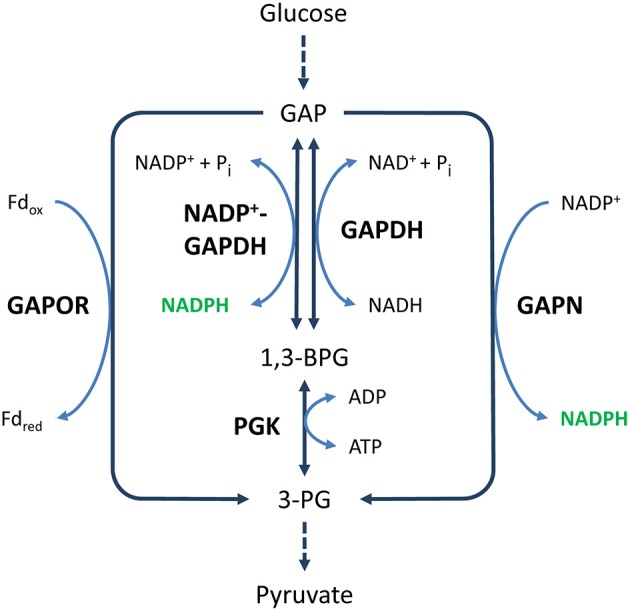
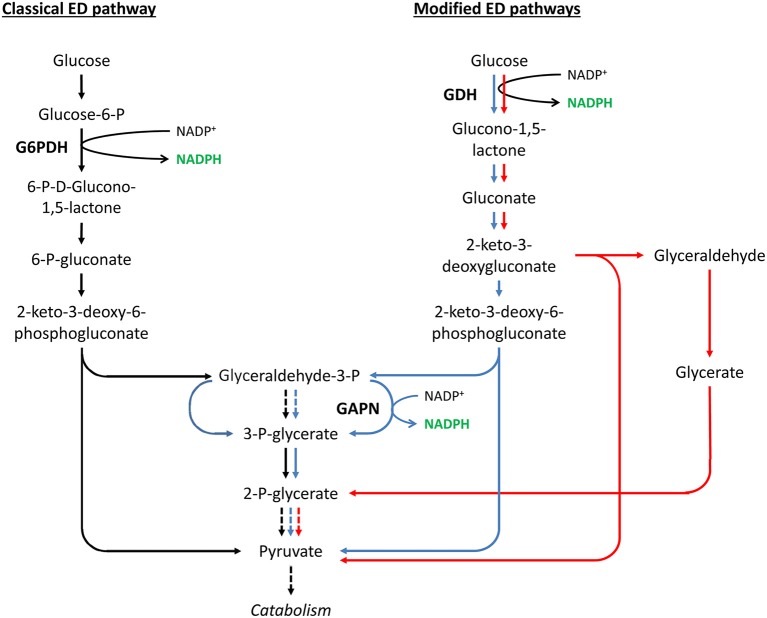
Reduced nicotinamide adenine dinucleotide phosphate (NADPH) is an essential electron donor in all organisms. It provides the reducing power that drives numerous anabolic reactions, including those responsible for the biosynthesis of all major cell components and many products in biotechnology. The efficient synthesis of many of these products, however, is limited by the rate of NADPH regeneration. Hence, a thorough understanding of the reactions involved in the generation of NADPH is required to increase its turnover through rational strain improvement. Traditionally, the main engineering targets for increasing NADPH availability have included the dehydrogenase reactions of the oxidative pentose phosphate pathway and the isocitrate dehydrogenase step of the tricarboxylic acid (TCA) cycle. However, the importance of alternative NADPH-generating reactions has recently become evident. In the current review, the major canonical and non-canonical reactions involved in the production and regeneration of NADPH in prokaryotes are described, and their key enzymes are discussed. In addition, an overview of how different enzymes have been applied to increase NADPH availability and thereby enhance productivity is provided.
还原型烟酰胺腺嘌呤二核苷酸磷酸(NADPH)是所有生物体中必不可少的电子供体。它提供驱动众多合成代谢反应所需的还原力,包括那些负责所有主要细胞成分生物合成以及生物技术中许多产品合成的反应。然而,许多这些产品的高效合成受到NADPH再生速率的限制。因此,需要深入了解NADPH生成过程中涉及的反应,以便通过合理的菌株改良提高其周转率。传统上,增加NADPH可用性的主要工程目标包括氧化戊糖磷酸途径的脱氢酶反应和三羧酸(TCA)循环的异柠檬酸脱氢酶步骤。然而,最近替代NADPH生成反应的重要性已变得明显。在本综述中,描述了原核生物中NADPH产生和再生所涉及的主要经典和非经典反应,并讨论了它们的关键酶。此外,还概述了如何应用不同的酶来增加NADPH可用性,从而提高生产力。