Friedli Lucia, Rosenzweig Ephron S, Barraud Quentin, Schubert Martin, Dominici Nadia, Awai Lea, Nielson Jessica L, Musienko Pavel, Nout-Lomas Yvette, Zhong Hui, Zdunowski Sharon, Roy Roland R, Strand Sarah C, van den Brand Rubia, Havton Leif A, Beattie Michael S, Bresnahan Jacqueline C, Bézard Erwan, Bloch Jocelyne, Edgerton V Reggie, Ferguson Adam R, Curt Armin, Tuszynski Mark H, Courtine Grégoire
Center for Neuroprosthetics and Brain Mind Institute, School of Life Sciences, Swiss Federal Institute of Technology (EPFL), 1015 Lausanne, Switzerland.
Department of Neurosciences, University of California, San Diego, La Jolla, CA 92093-0662, USA.
Sci Transl Med. 2015 Aug 26;7(302):302ra134. doi: 10.1126/scitranslmed.aac5811.
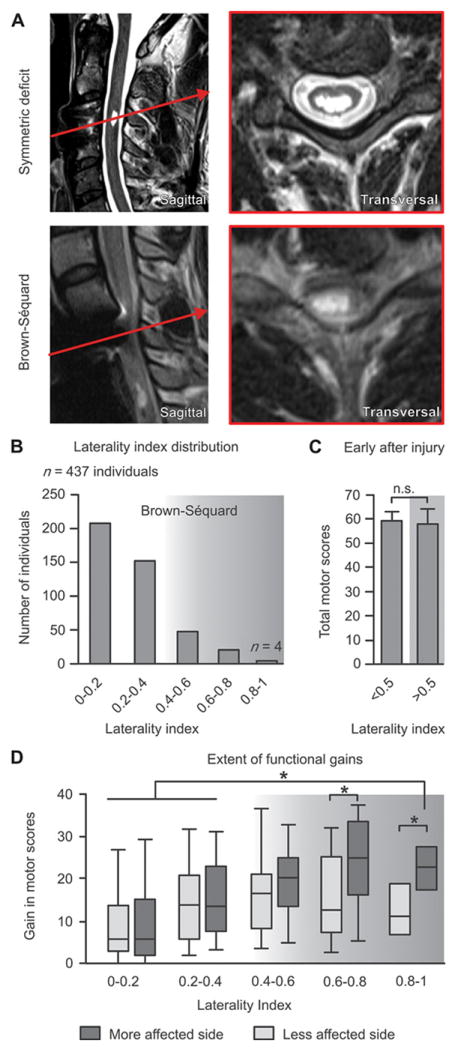
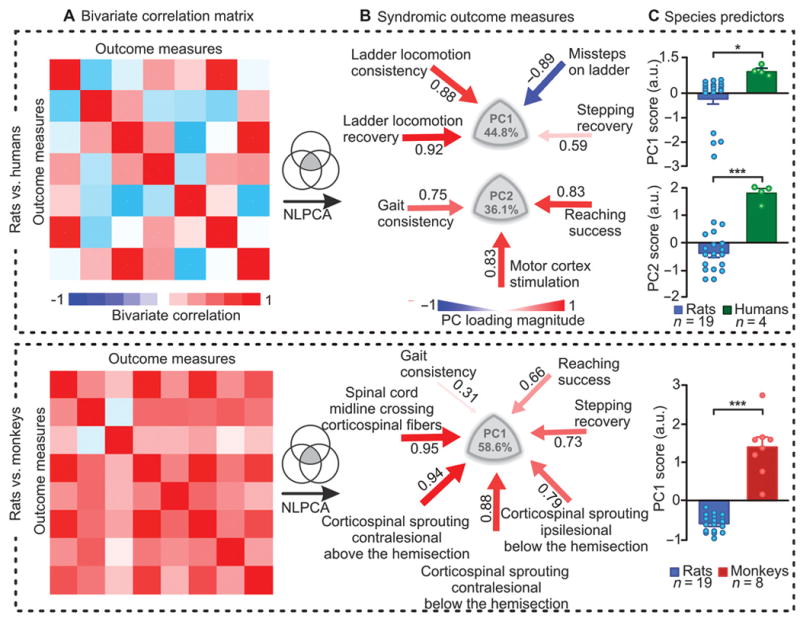
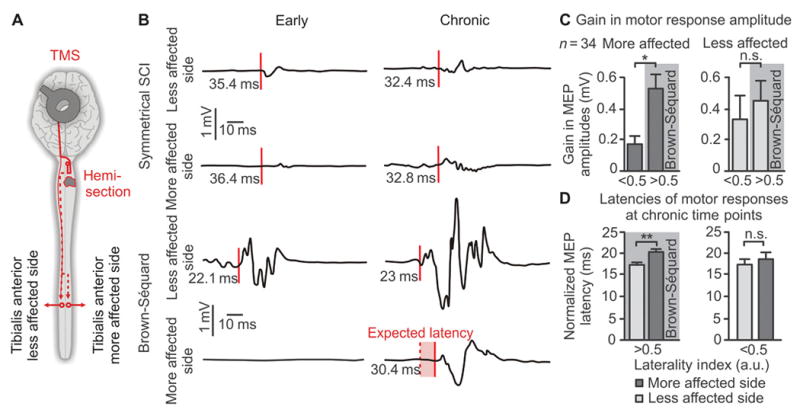
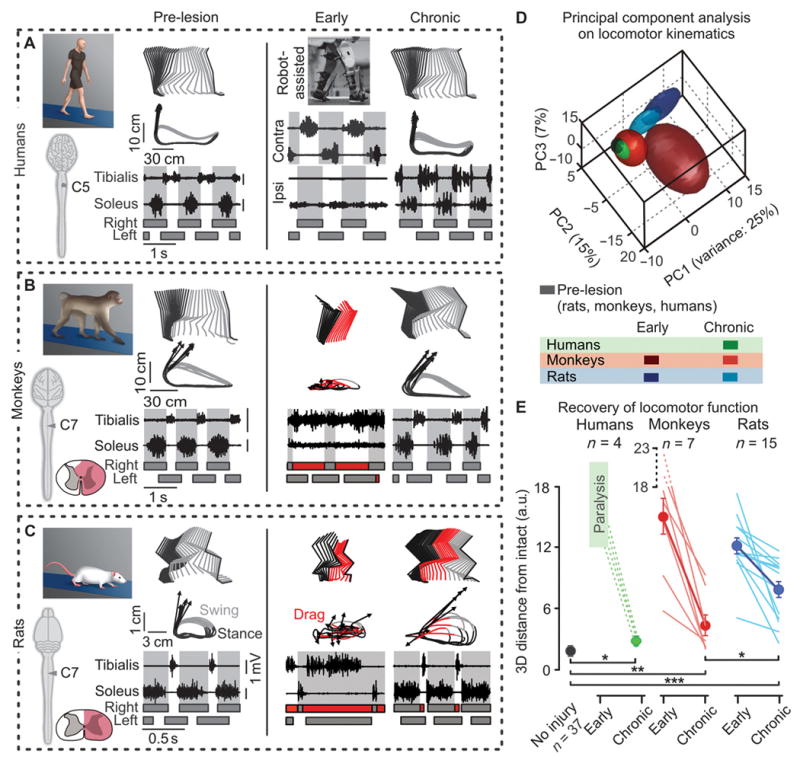
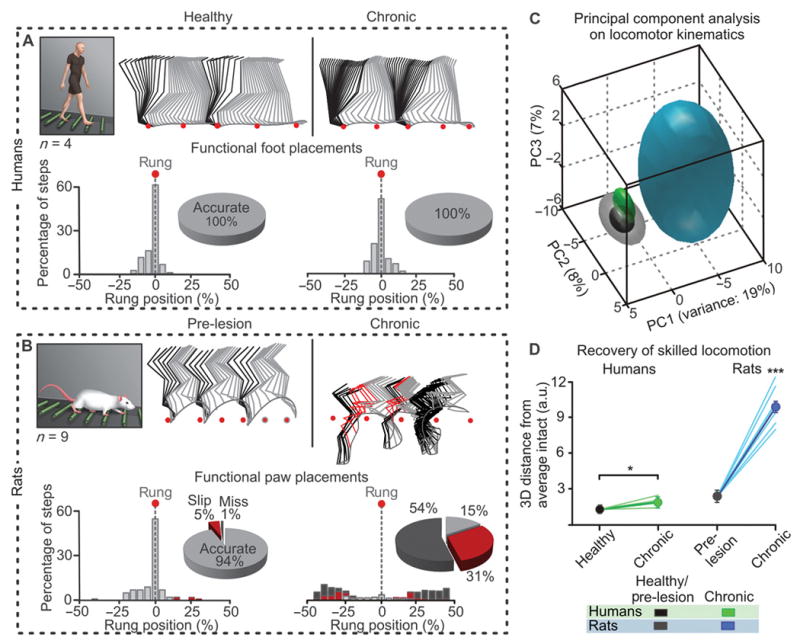
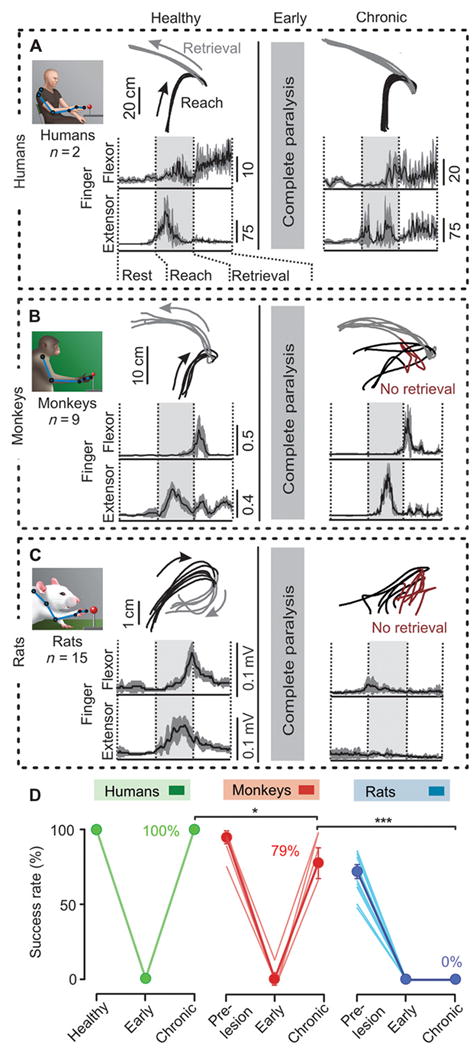
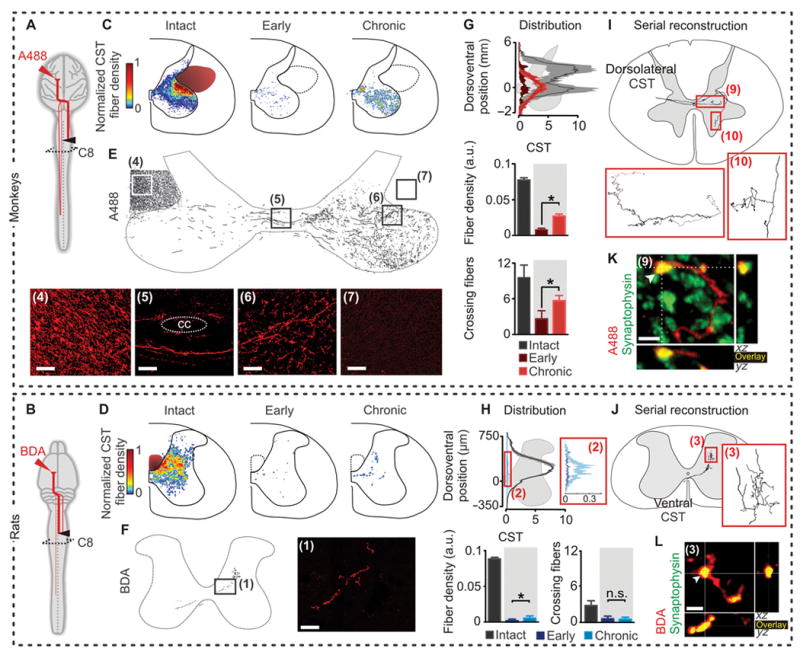
Experimental and clinical studies suggest that primate species exhibit greater recovery after lateralized compared to symmetrical spinal cord injuries. Although this observation has major implications for designing clinical trials and translational therapies, advantages in recovery of nonhuman primates over other species have not been shown statistically to date, nor have the associated repair mechanisms been identified. We monitored recovery in more than 400 quadriplegic patients and found that functional gains increased with the laterality of spinal cord damage. Electrophysiological analyses suggested that corticospinal tract reorganization contributes to the greater recovery after lateralized compared with symmetrical injuries. To investigate underlying mechanisms, we modeled lateralized injuries in rats and monkeys using a lateral hemisection, and compared anatomical and functional outcomes with patients who suffered similar lesions. Standardized assessments revealed that monkeys and humans showed greater recovery of locomotion and hand function than did rats. Recovery correlated with the formation of corticospinal detour circuits below the injury, which were extensive in monkeys but nearly absent in rats. Our results uncover pronounced interspecies differences in the nature and extent of spinal cord repair mechanisms, likely resulting from fundamental differences in the anatomical and functional characteristics of the motor systems in primates versus rodents. Although rodents remain essential for advancing regenerative therapies, the unique response of the primate corticospinal tract after injury reemphasizes the importance of primate models for designing clinically relevant treatments.
实验和临床研究表明,与对称性脊髓损伤相比,灵长类动物在单侧脊髓损伤后表现出更好的恢复情况。尽管这一观察结果对设计临床试验和转化治疗具有重要意义,但迄今为止,非人类灵长类动物在恢复方面相对于其他物种的优势尚未得到统计学证实,相关的修复机制也尚未明确。我们监测了400多名四肢瘫痪患者的恢复情况,发现功能改善随着脊髓损伤的单侧性增加而增加。电生理分析表明,与对称性损伤相比,皮质脊髓束重组有助于单侧损伤后更好的恢复。为了研究潜在机制,我们使用半侧横切术在大鼠和猴子身上模拟单侧损伤,并将解剖学和功能结果与遭受类似损伤的患者进行比较。标准化评估显示,猴子和人类在运动和手部功能恢复方面比大鼠更好。恢复与损伤下方皮质脊髓绕道回路的形成相关,这些回路在猴子中广泛存在,但在大鼠中几乎不存在。我们的结果揭示了脊髓修复机制在性质和程度上存在明显的种间差异,这可能是由于灵长类动物与啮齿动物运动系统的解剖学和功能特征存在根本差异所致。尽管啮齿动物对于推进再生治疗仍然至关重要,但灵长类动物皮质脊髓束在损伤后的独特反应再次强调了灵长类动物模型对于设计临床相关治疗方法的重要性。