Knechtle Beat, Knechtle Raphael, Stiefel Michael, Zingg Matthias Alexander, Rosemann Thomas, Rüst Christoph Alexander
Gesundheitszentrum St Gallen, St Gallen, Switzerland ; Institute of Primary Care, University of Zurich, Zurich, Switzerland.
Institute of Primary Care, University of Zurich, Zurich, Switzerland.
Open Access J Sports Med. 2015 Aug 25;6:277-90. doi: 10.2147/OAJSM.S85310. eCollection 2015.
This narrative review summarizes findings for Ironman triathlon performance and intends to determine potential predictor variables for Ironman race performance in female and male triathletes.
A literature search was performed in PubMed using the terms "Ironman", "triathlon", and "performance". All resulting articles were searched for related citations.
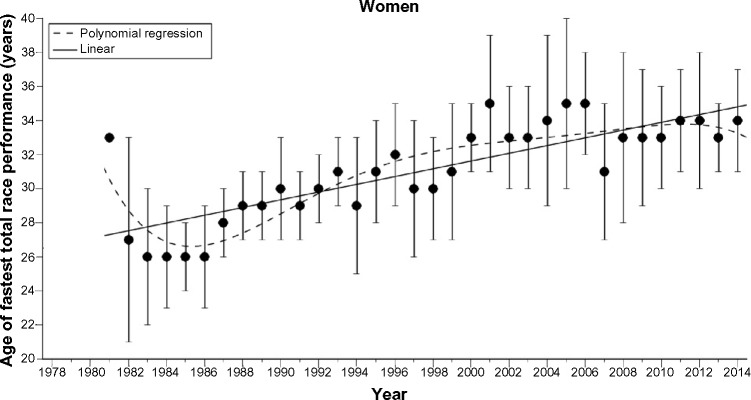
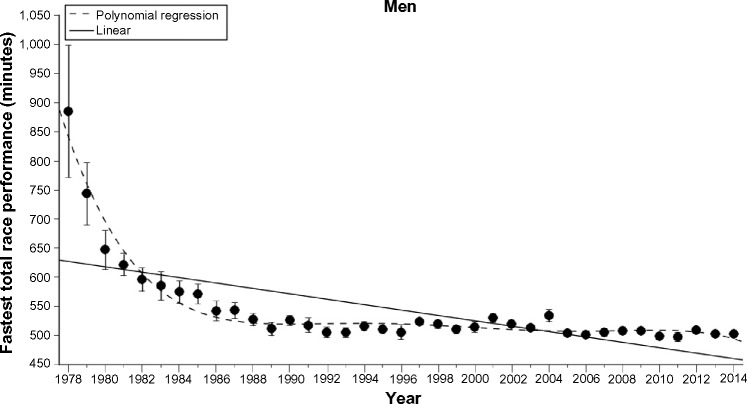
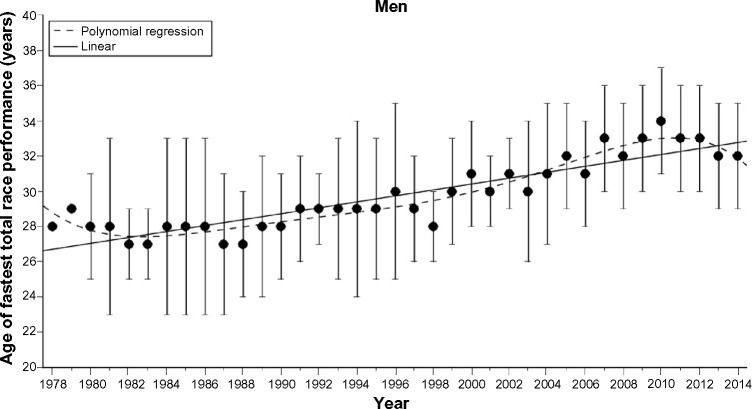
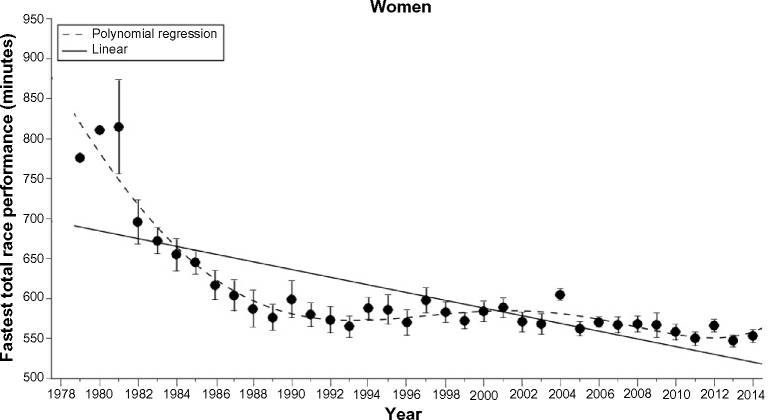
Age, previous experience, sex, training, origin, anthropometric and physiological characteristics, pacing, and performance in split disciplines were predictive. Differences exist between the sexes for anthropometric characteristics. The most important predictive variables for a fast Ironman race time were age of 30-35 years (women and men), a fast personal best time in Olympic distance triathlon (women and men), a fast personal best time in marathon (women and men), high volume and high speed in training where high volume was more important than high speed (women and men), low body fat, low skin-fold thicknesses and low circumference of upper arm (only men), and origin from the United States of America (women and men).
These findings may help athletes and coaches to plan an Ironman triathlon career. Age and previous experience are important to find the right point in the life of a triathlete to switch from the shorter triathlon distances to the Ironman distance. Future studies need to correlate physiological characteristics such as maximum oxygen uptake with Ironman race time to investigate their potential predictive value and to investigate socio-economic aspects in Ironman triathlon.
本叙述性综述总结了铁人三项赛成绩的相关研究结果,旨在确定男女铁人三项运动员铁人赛成绩的潜在预测变量。
在PubMed中使用“铁人”“三项全能”和“成绩”等术语进行文献检索。对所有检索到的文章查找相关引用文献。
年龄、既往经验、性别、训练、出身、人体测量学和生理学特征、配速以及分项比赛成绩具有预测性。人体测量学特征在性别之间存在差异。铁人赛快速完赛时间的最重要预测变量为30至35岁(男女皆是)、在奥运距离三项全能赛中的快速个人最好成绩(男女皆是)、在马拉松比赛中的快速个人最好成绩(男女皆是)、训练量大且速度快(男女皆是,其中训练量比速度更重要)、低体脂、低皮褶厚度以及低上臂围(仅男性),以及来自美国(男女皆是)。
这些研究结果可能有助于运动员和教练规划铁人三项赛职业生涯。年龄和既往经验对于找到铁人三项运动员从较短距离的三项全能赛转向铁人赛的合适人生阶段很重要。未来的研究需要将最大摄氧量等生理特征与铁人赛完赛时间相关联,以研究其潜在预测价值,并研究铁人三项赛中的社会经济因素。