Wang Xiaohong, Gu Haitao, Qin Dongze, Yang Liwang, Huang Wei, Essandoh Kobina, Wang Yigang, Caldwell Charles C, Peng Tianqing, Zingarelli Basilia, Fan Guo-Chang
Department of Pharmacology and Cell Biophysics, University of Cincinnati College of Medicine, Cincinnati, OH, USA.
Shanxi Medical University, Taiyuan, China.
Sci Rep. 2015 Sep 8;5:13721. doi: 10.1038/srep13721.
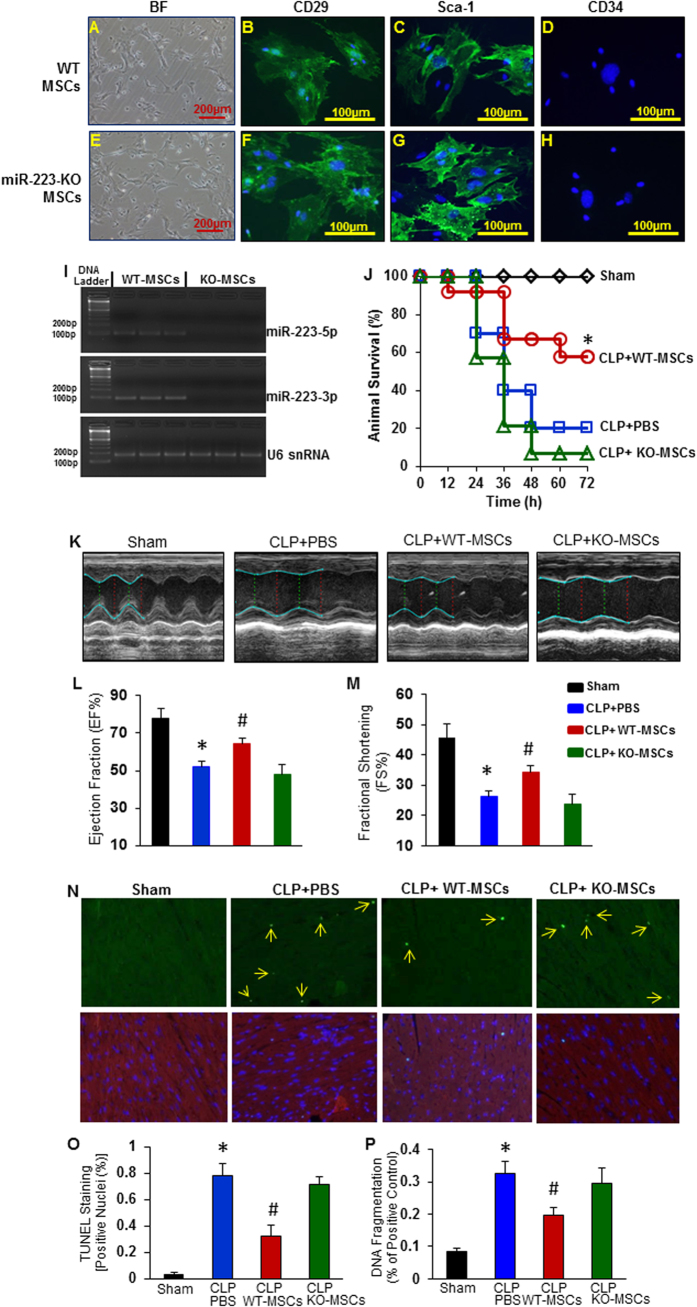
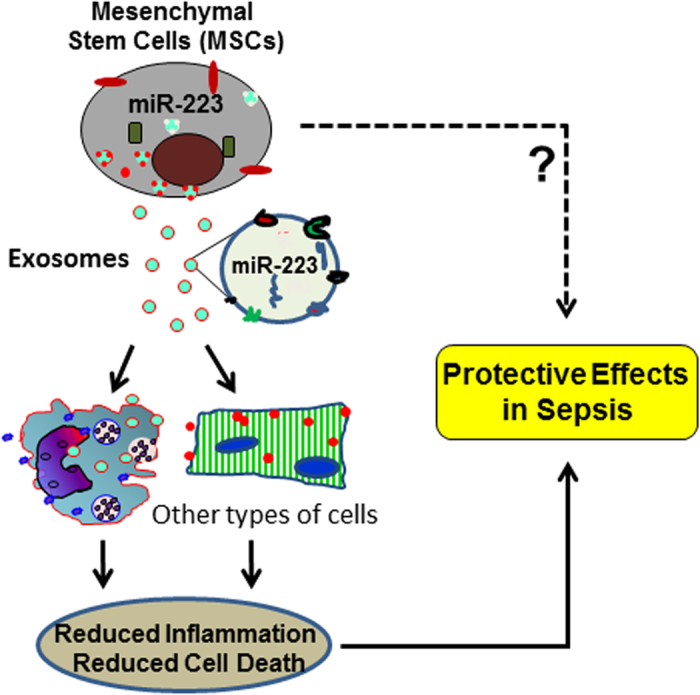
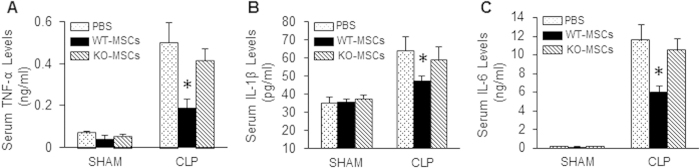
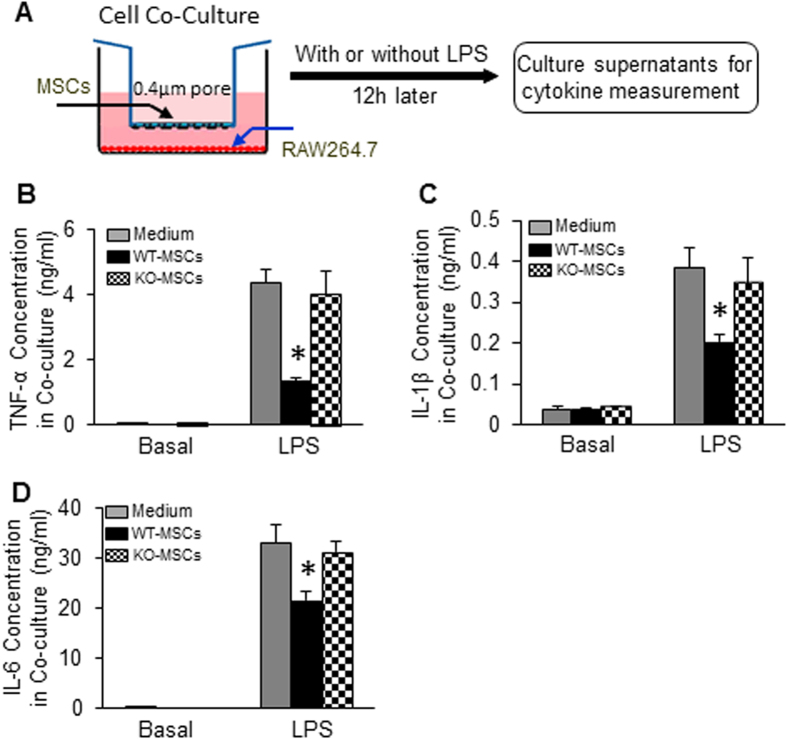
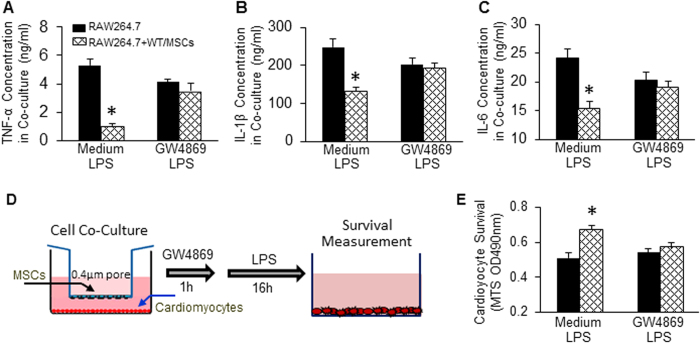
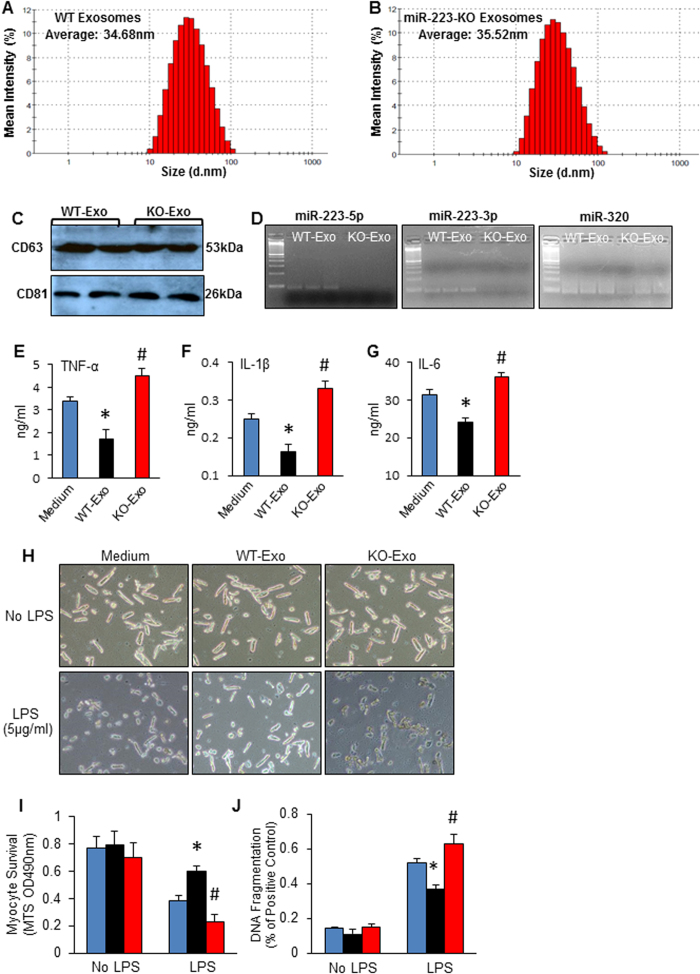
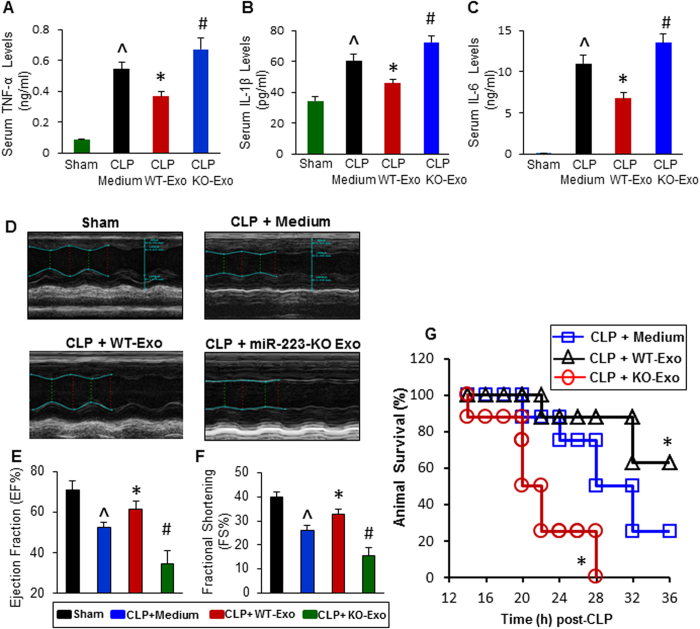
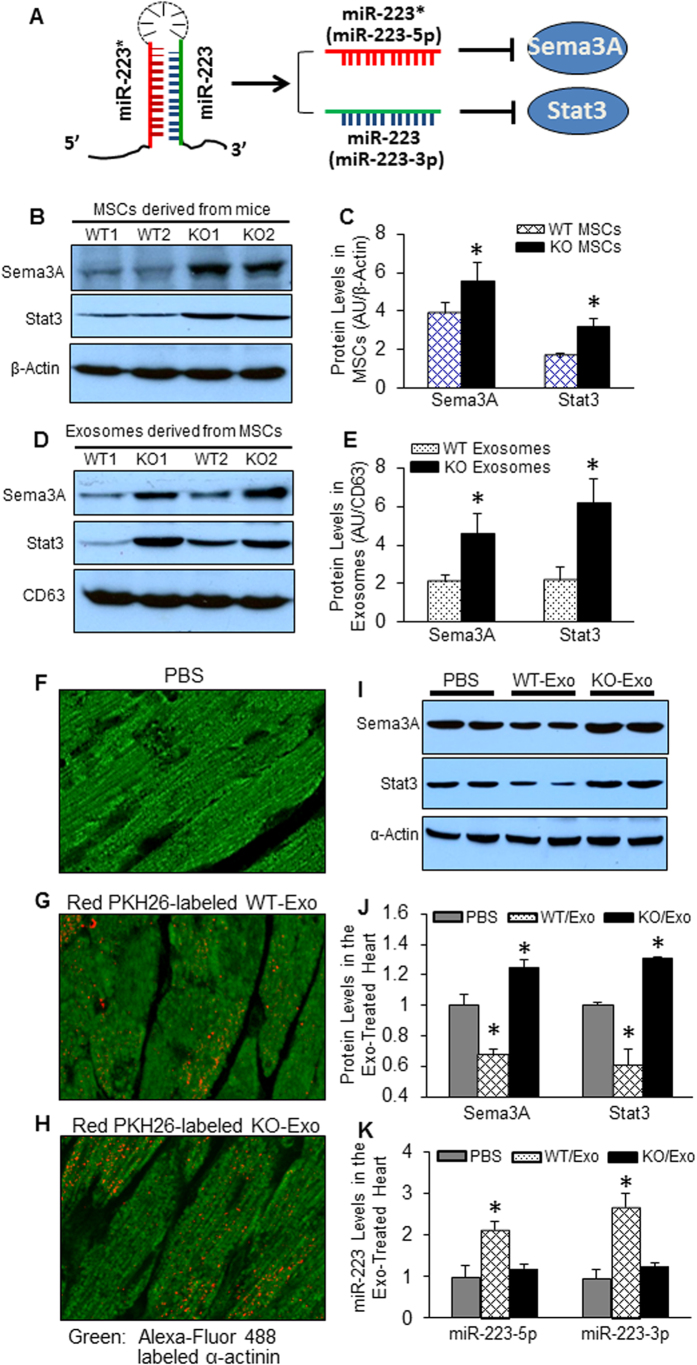
Mesenchymal stem cells (MSCs) have been shown to elicit cardio-protective effects in sepsis. However, the underlying mechanism remains obscure. While recent studies have indicated that miR-223 is highly enriched in MSC-derived exosomes, whether exosomal miR-223 contributes to MSC-mediated cardio-protection in sepsis is unknown. In this study, loss-of-function approach was utilized, and sepsis was induced by cecal ligation and puncture (CLP). We observed that injection of miR-223-KO MSCs at 1 h post-CLP did not confer protection against CLP-triggered cardiac dysfunction, apoptosis and inflammatory response. However, WT-MSCs were able to provide protection which was associated with exosome release. Next, treatment of CLP mice with exosomes released from miR-223-KO MSCs significantly exaggerated sepsis-induced injury. Conversely, WT-MSC-derived-exosomes displayed protective effects. Mechanistically, we identified that miR-223-KO exosomes contained higher levels of Sema3A and Stat3, two known targets of miR-223 (5p &3p), than WT-exosomes. Accordingly, these exosomal proteins were transferred to cardiomyocytes, leading to increased inflammation and cell death. By contrast, WT-exosomes encased higher levels of miR-223, which could be delivered to cardiomyocytes, resulting in down-regulation of Sema3A and Stat3. These data for the first time indicate that exosomal miR-223 plays an essential role for MSC-induced cardio-protection in sepsis.
间充质干细胞(MSCs)已被证明在脓毒症中具有心脏保护作用。然而,其潜在机制仍不清楚。虽然最近的研究表明miR-223在MSC来源的外泌体中高度富集,但外泌体miR-223是否有助于脓毒症中MSC介导的心脏保护尚不清楚。在本研究中,采用功能丧失方法,通过盲肠结扎和穿刺(CLP)诱导脓毒症。我们观察到在CLP后1小时注射miR-223基因敲除的MSCs并不能对CLP引发的心脏功能障碍、细胞凋亡和炎症反应提供保护。然而,野生型MSCs能够提供保护,这与外泌体释放有关。接下来,用miR-223基因敲除的MSCs释放的外泌体处理CLP小鼠,显著加剧了脓毒症诱导的损伤。相反,野生型MSC来源的外泌体显示出保护作用。从机制上讲,我们发现miR-223基因敲除的外泌体比野生型外泌体含有更高水平的Sema3A和Stat3,这是miR-223(5p和3p)的两个已知靶点。因此,这些外泌体蛋白被转移到心肌细胞,导致炎症增加和细胞死亡。相比之下,野生型外泌体含有更高水平的miR-223,其可以被递送至心肌细胞,导致Sema3A和Stat3的下调。这些数据首次表明外泌体miR-223在脓毒症中MSC诱导的心脏保护中起重要作用。