Bai Yue, Wu Huaqiang, Wang Kun, Wu Riga, Song Lin, Li Tianyi, Wang Jiangtao, Yu Zhiping, Qian He
Institute of Microelectronics, Tsinghua University, Beijing, China, 100084.
Tsinghua National Laboratory for Information Science and Technology (TNList), Beijing, China, 100084.
Sci Rep. 2015 Sep 8;5:13785. doi: 10.1038/srep13785.
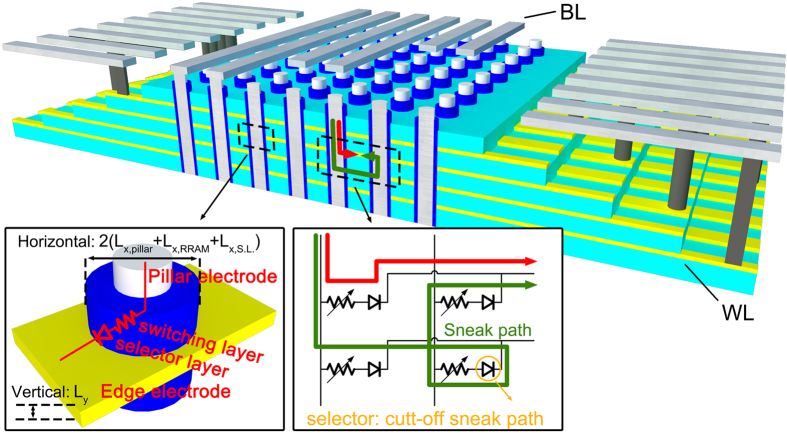
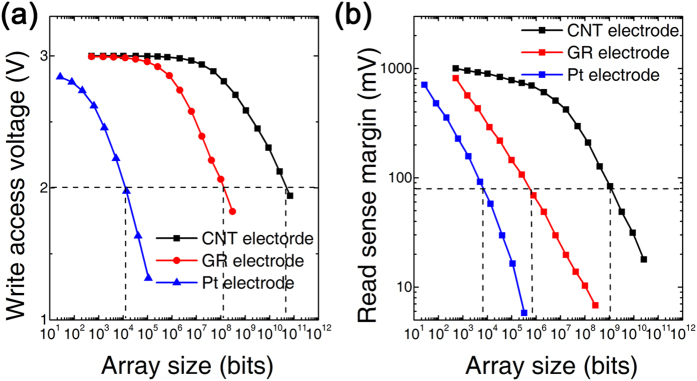
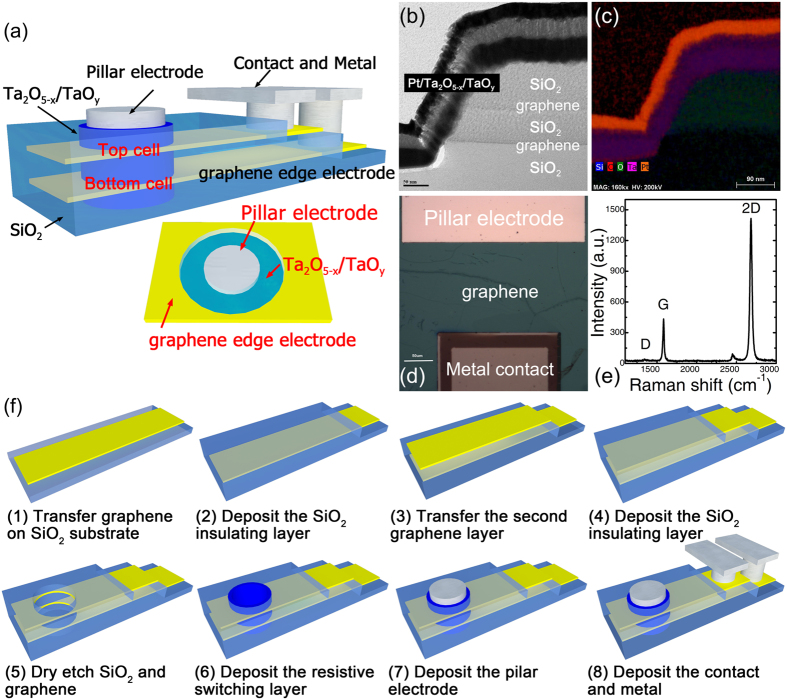
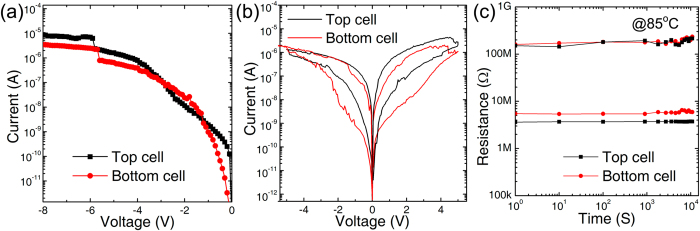
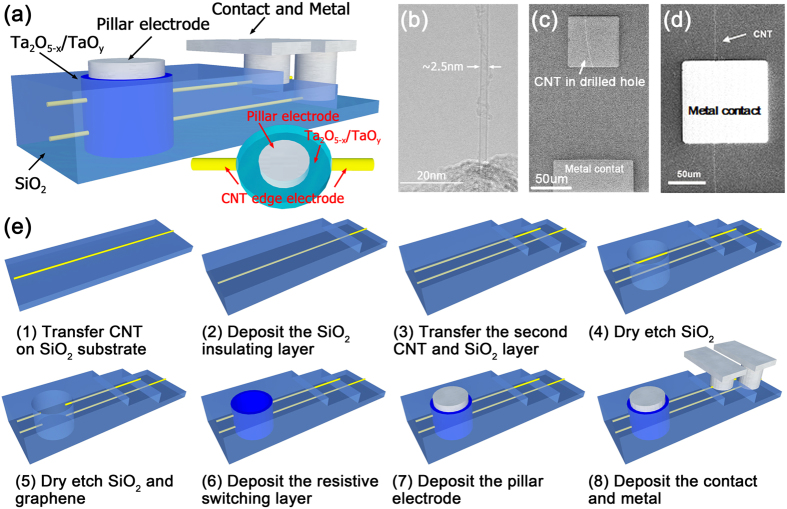
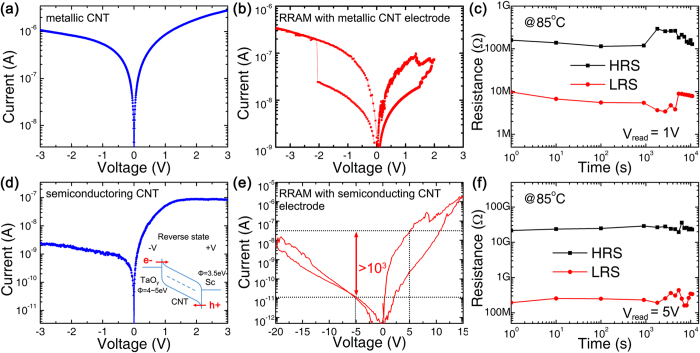
There are two critical challenges which determine the array density of 3D RRAM: 1) the scaling limit in both horizontal and vertical directions; 2) the integration of selector devices in 3D structure. In this work, we present a novel 3D RRAM structure using low-dimensional materials, including 2D graphene and 1D carbon nanotube (CNT), as the edge electrodes. A two-layer 3D RRAM with monolayer graphene as edge electrode is demonstrated. The electrical results reveal that the RRAM devices could switch normally with this very thin edge electrode at nanometer scale. Meanwhile, benefited from the asymmetric carrier transport induced by Schottky barrier at metal/CNT and oxide/CNT interfaces, a selector built-in 3D RRAM structure using CNT as edge electrode is successfully fabricated and characterized. Furthermore, the discussion of high array density potential is presented.
有两个关键挑战决定了3D RRAM的阵列密度:1)水平和垂直方向上的缩放极限;2)选择器器件在3D结构中的集成。在这项工作中,我们提出了一种新颖的3D RRAM结构,使用低维材料,包括二维石墨烯和一维碳纳米管(CNT)作为边缘电极。展示了一种以单层石墨烯为边缘电极的双层3D RRAM。电学结果表明,RRAM器件可以在纳米尺度下使用这种非常薄的边缘电极正常切换。同时,受益于金属/碳纳米管和氧化物/碳纳米管界面处肖特基势垒引起的不对称载流子传输,成功制备并表征了一种以碳纳米管为边缘电极的内置选择器的3D RRAM结构。此外,还讨论了高阵列密度的潜力。