Fiers William D, Dodge Greg J, Li Yang, Smith Janet L, Fecik Robert A, Aldrich Courtney C
Department of Medicinal Chemistry , College of Pharmacy , University of Minnesota , Minneapolis , Minnesota 55455 , USA . Email:
Department of Biological Chemistry and Life Sciences Institute , University of Michigan , Ann Arbor , Michigan 48109 , USA.
Chem Sci. 2015 Aug 14;6(8):5027-5033. doi: 10.1039/c5sc01505g. Epub 2015 Jun 29.
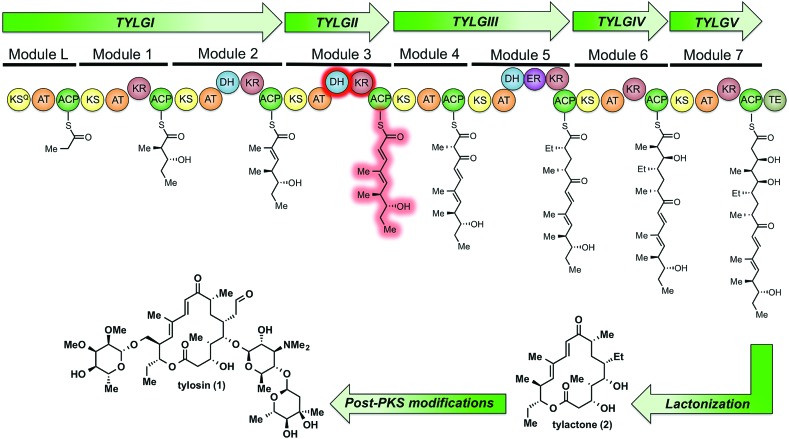
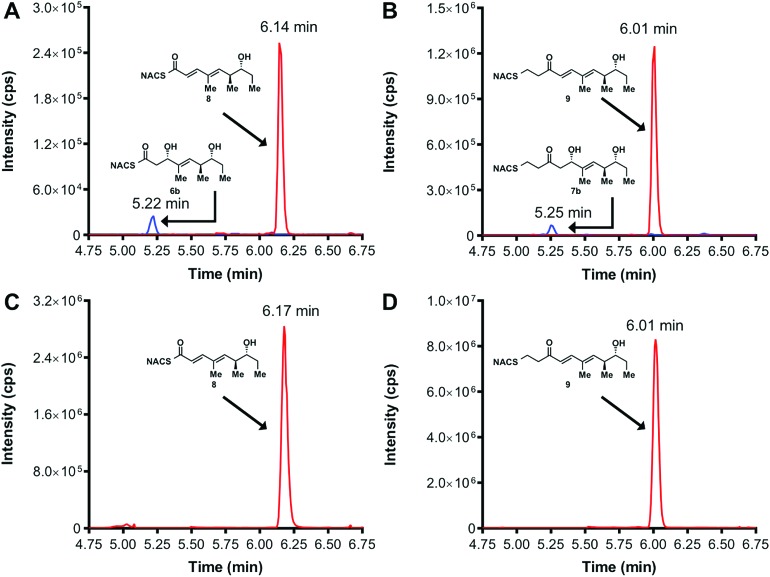
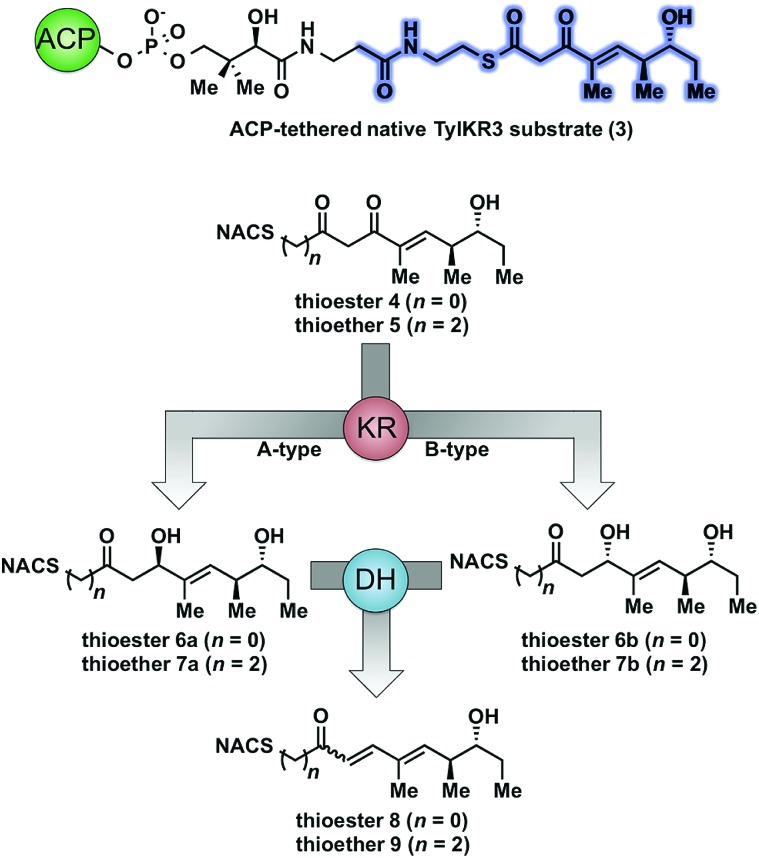
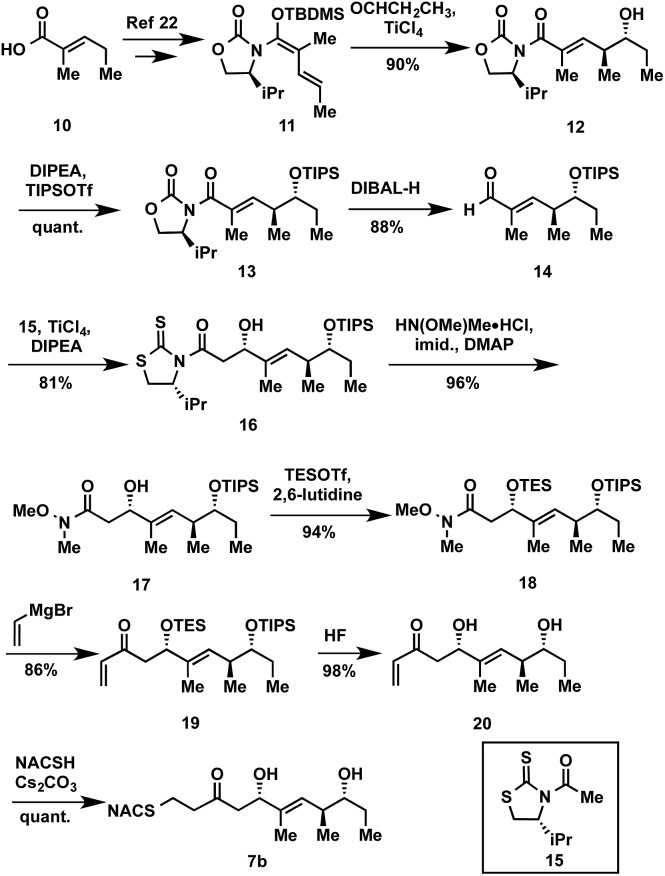
Polyketide synthase (PKS) β-processing domains are responsible for much of the stereochemical complexity of polyketide natural products. Although the importance of β-processing domains has been well noted and significantly explored, key stereochemical details pertaining to cryptic stereochemistry and the impact of remote stereogenic centers have yet to be fully discerned. To uncover the inner workings of ketoreductases (KR) and dehydratases (DH) from the tylosin pathway a didomain composed of TylDH3-KR3 was recombinantly expressed and interrogated with full-length tetraketide substrates to probe the impact of vicinal and distal stereochemistry. product isolation analysis revealed the products of the cryptic KR as d-alcohols and of the DH as -olefins. Steady-state kinetic analysis of the dehydration reaction demonstrated a strict stereochemical tolerance at the β-position as d-configured substrates were processed more than 100 times more efficiently than l-alcohols. Unexpectedly, the / values were diminished 14- to 45-fold upon inversion of remote ε- and ζ-stereocenters. This stereochemical discrimination is predicted to be driven by a combination of allylic A strain that likely disfavors binding of the ε-epimer and a loss of electrostatic interactions with the ζ-epimer. Our results strongly suggest that dehydratases may play a role in refining the stereochemical outcomes of preceding modules through their substrate stereospecificity, honing the configurational purity of the final PKS product.
聚酮合酶(PKS)β-加工结构域是聚酮天然产物许多立体化学复杂性的原因所在。尽管β-加工结构域的重要性已得到充分关注并被深入研究,但与隐藏立体化学以及远程立体中心影响相关的关键立体化学细节尚未完全明晰。为了揭示泰乐菌素途径中酮还原酶(KR)和脱水酶(DH)的内在作用机制,由TylDH3-KR3组成的双结构域被重组表达,并与全长四酮底物进行反应,以探究相邻和远端立体化学的影响。产物分离分析表明,隐藏的KR产物为d-醇,DH产物为-烯烃。脱水反应的稳态动力学分析表明,β-位存在严格的立体化学耐受性,因为d-构型底物的加工效率比l-醇高100倍以上。出乎意料的是,当远程ε-和ζ-立体中心发生反转时,/值降低了14至45倍。预计这种立体化学识别是由烯丙基A应变(可能不利于ε-差向异构体的结合)和与ζ-差向异构体静电相互作用的丧失共同驱动的。我们的结果强烈表明,脱水酶可能通过其底物立体特异性在优化先前模块的立体化学结果方面发挥作用,从而提高最终PKS产物的构型纯度。