Gault Joseph, Ferber Mathias, Machata Silke, Imhaus Anne-Flore, Malosse Christian, Charles-Orszag Arthur, Millien Corinne, Bouvier Guillaume, Bardiaux Benjamin, Péhau-Arnaudet Gérard, Klinge Kelly, Podglajen Isabelle, Ploy Marie Cécile, Seifert H Steven, Nilges Michael, Chamot-Rooke Julia, Duménil Guillaume
Structural Mass Spectrometry and Proteomics Unit, Institut Pasteur, CNRS UMR 3528, Paris, France.
Institut Pasteur, Unité de Bioinformatique Structurale, CNRS UMR 3528, Département de Biologie Structurale et Chimie, Paris, France.
PLoS Pathog. 2015 Sep 14;11(9):e1005162. doi: 10.1371/journal.ppat.1005162. eCollection 2015 Sep.
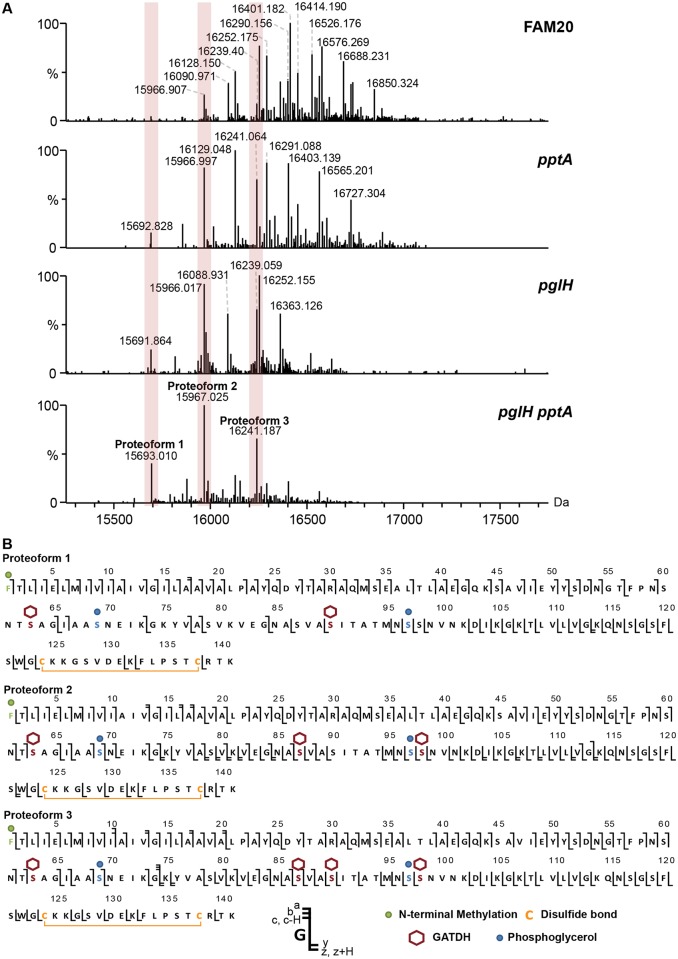
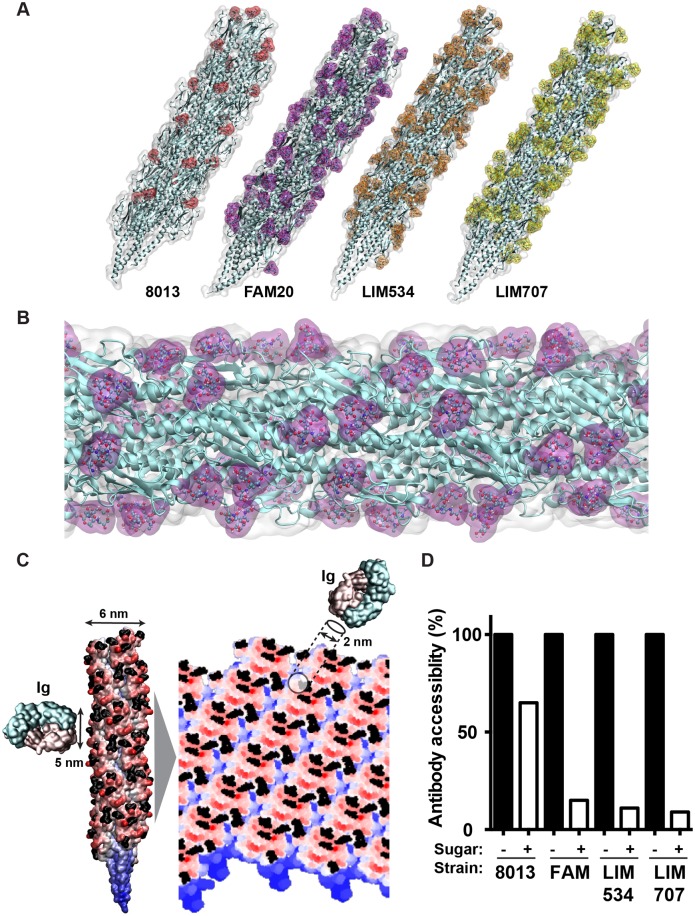
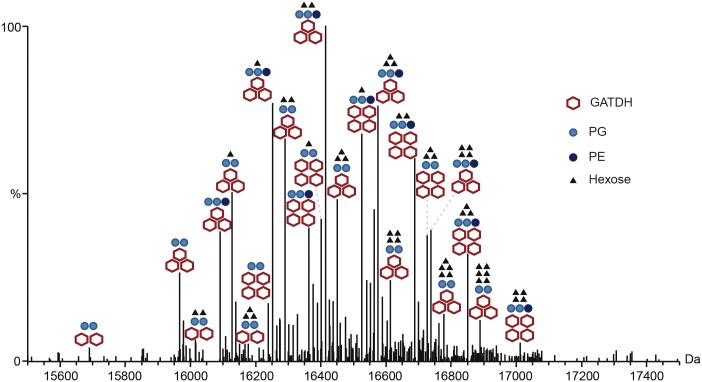
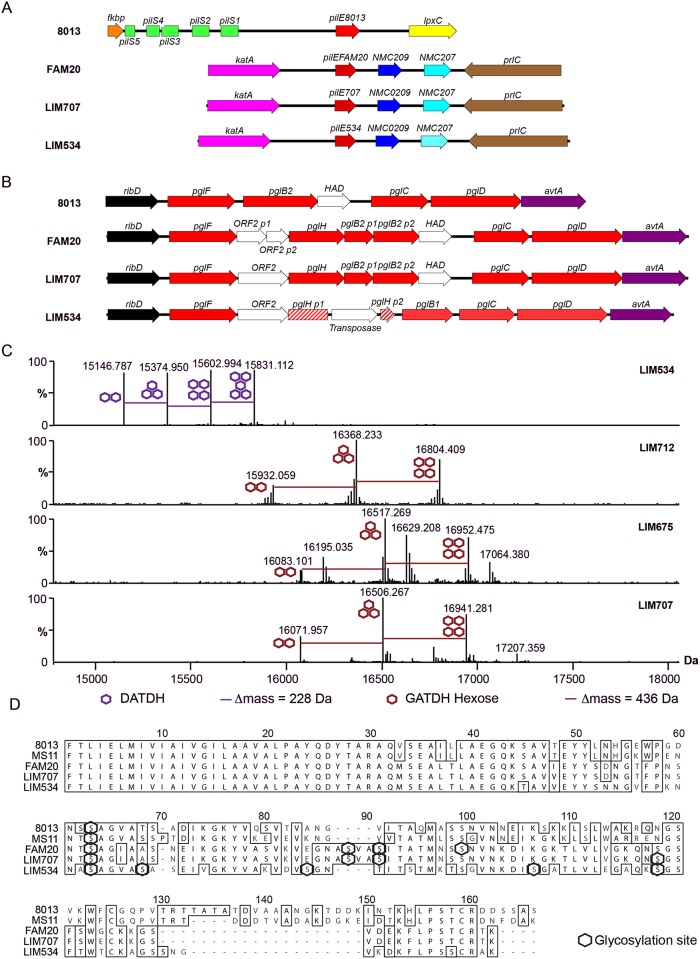
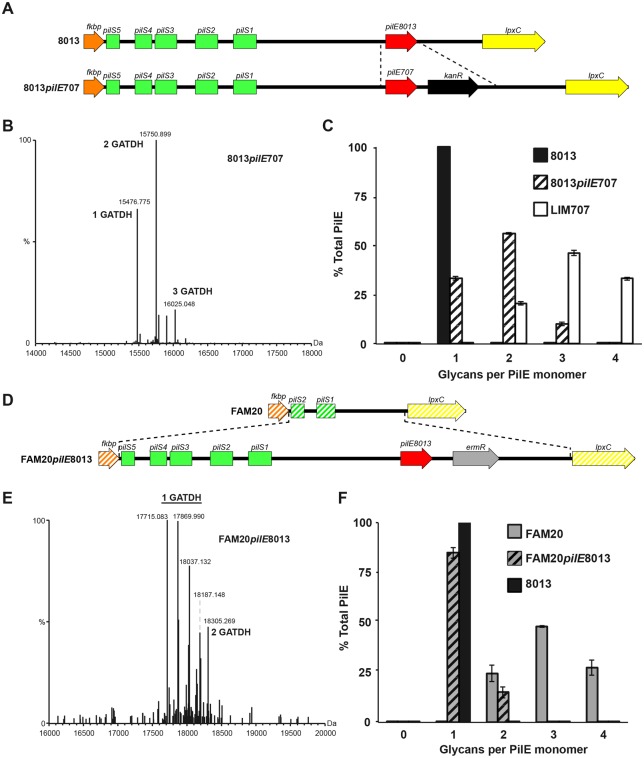
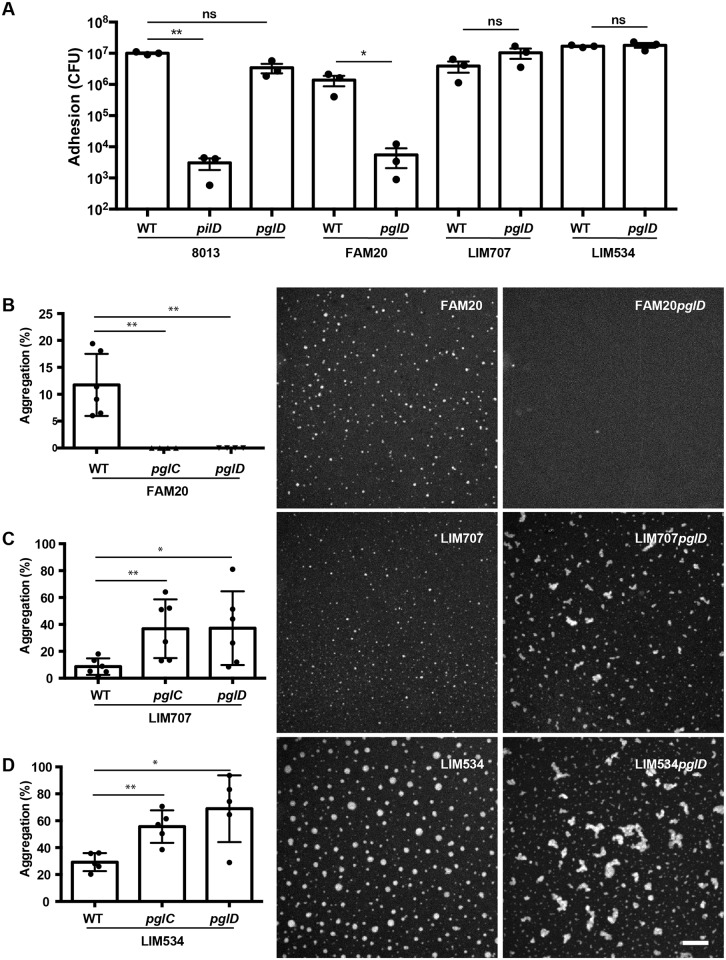
The ability of pathogens to cause disease depends on their aptitude to escape the immune system. Type IV pili are extracellular filamentous virulence factors composed of pilin monomers and frequently expressed by bacterial pathogens. As such they are major targets for the host immune system. In the human pathogen Neisseria meningitidis, strains expressing class I pilins contain a genetic recombination system that promotes variation of the pilin sequence and is thought to aid immune escape. However, numerous hypervirulent clinical isolates express class II pilins that lack this property. This raises the question of how they evade immunity targeting type IV pili. As glycosylation is a possible source of antigenic variation it was investigated using top-down mass spectrometry to provide the highest molecular precision on the modified proteins. Unlike class I pilins that carry a single glycan, we found that class II pilins display up to 5 glycosylation sites per monomer on the pilus surface. Swapping of pilin class and genetic background shows that the pilin primary structure determines multisite glycosylation while the genetic background determines the nature of the glycans. Absence of glycosylation in class II pilins affects pilus biogenesis or enhances pilus-dependent aggregation in a strain specific fashion highlighting the extensive functional impact of multisite glycosylation. Finally, molecular modeling shows that glycans cover the surface of class II pilins and strongly decrease antibody access to the polypeptide chain. This strongly supports a model where strains expressing class II pilins evade the immune system by changing their sugar structure rather than pilin primary structure. Overall these results show that sequence invariable class II pilins are cloaked in glycans with extensive functional and immunological consequences.
病原体引发疾病的能力取决于它们逃避免疫系统的能力。IV型菌毛是由菌毛蛋白单体组成的细胞外丝状毒力因子,常见于细菌病原体中。因此,它们是宿主免疫系统的主要靶点。在人类病原体脑膜炎奈瑟菌中,表达I类菌毛蛋白的菌株含有一个促进菌毛蛋白序列变异的基因重组系统,该系统被认为有助于免疫逃逸。然而,许多高毒力临床分离株表达缺乏这种特性的II类菌毛蛋白。这就提出了一个问题,即它们如何逃避针对IV型菌毛的免疫。由于糖基化是抗原变异的一个可能来源,因此使用自上而下的质谱法进行研究,以在修饰蛋白上提供最高的分子精度。与携带单个聚糖的I类菌毛蛋白不同,我们发现II类菌毛蛋白在菌毛表面每个单体上最多有5个糖基化位点。菌毛蛋白类别和遗传背景的交换表明,菌毛蛋白一级结构决定多位点糖基化,而遗传背景决定聚糖的性质。II类菌毛蛋白中糖基化的缺失以菌株特异性方式影响菌毛生物合成或增强菌毛依赖性聚集,突出了多位点糖基化的广泛功能影响。最后,分子建模表明聚糖覆盖II类菌毛蛋白的表面,并强烈减少抗体对多肽链的接触。这有力地支持了一个模型,即表达II类菌毛蛋白的菌株通过改变其糖结构而非菌毛蛋白一级结构来逃避免疫系统。总体而言,这些结果表明,序列不变的II类菌毛蛋白被聚糖包裹,具有广泛的功能和免疫后果。