Marshall Centre for Infectious Diseases Research and Training, School of Biomedical Sciences, University of Western Australia, Perth, WA, Australia.
College of Science, Health, Engineering and Education, Telethon Kids Institute, Murdoch University, Perth, WA, Australia.
Front Cell Infect Microbiol. 2022 Apr 22;12:862935. doi: 10.3389/fcimb.2022.862935. eCollection 2022.
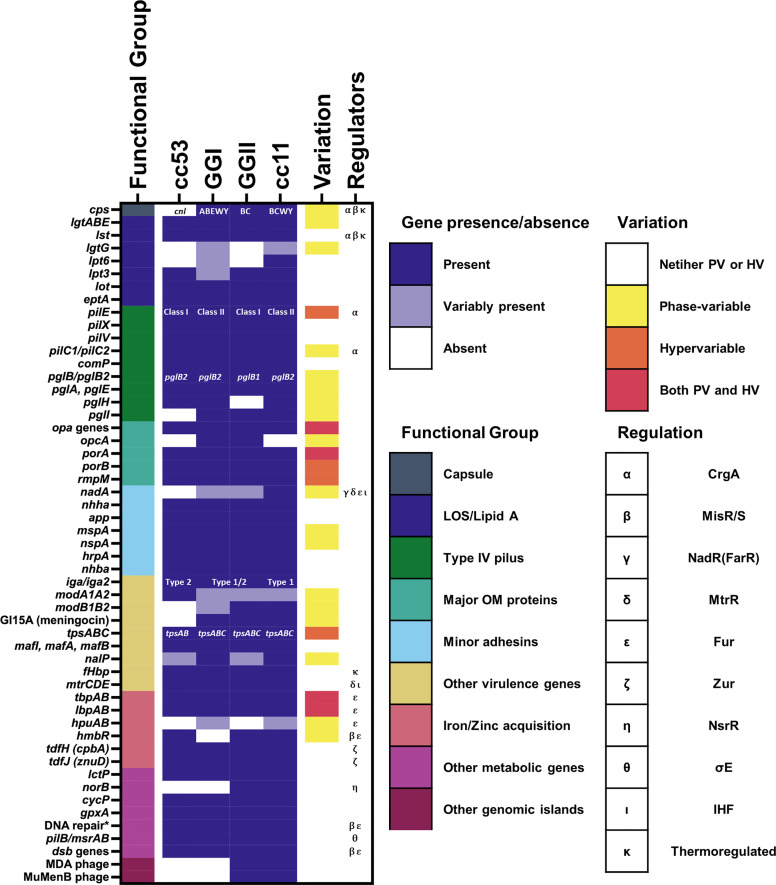
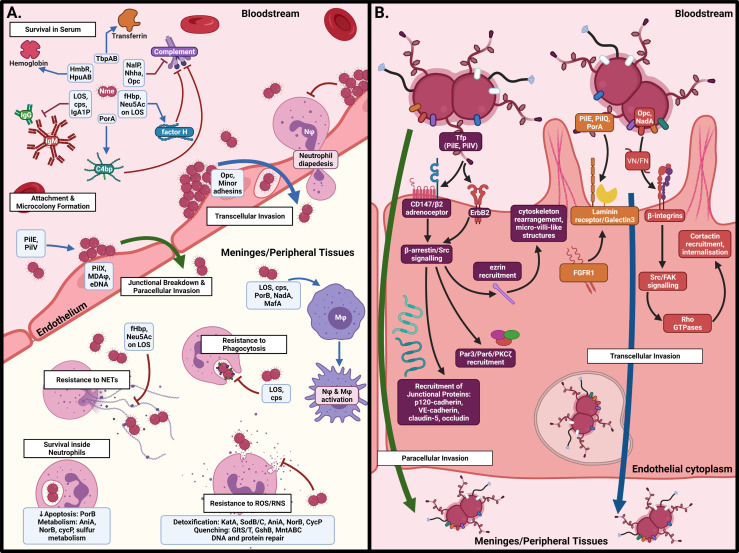
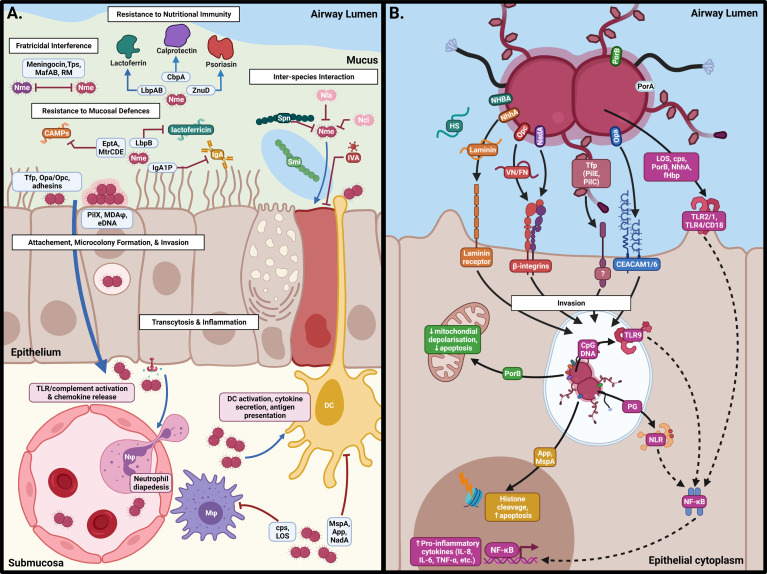
is a gram-negative diplococcus and a transient commensal of the human nasopharynx. It shares and competes for this niche with a number of other species including and . Unlike these other members of the genus, may become invasive, crossing the epithelium of the nasopharynx and entering the bloodstream, where it rapidly proliferates causing a syndrome known as Invasive Meningococcal Disease (IMD). IMD progresses rapidly to cause septic shock and meningitis and is often fatal despite aggressive antibiotic therapy. While many of the ways in which meningococci survive in the host environment have been well studied, recent insights into the interactions between and the epithelial, serum, and endothelial environments have expanded our understanding of how IMD develops. This review seeks to incorporate recent work into the established model of pathogenesis. In particular, we focus on the competition that faces in the nasopharynx from other species, and how the genetic diversity of the meningococcus contributes to the wide range of inflammatory and pathogenic potentials observed among different lineages.
脑膜炎奈瑟菌是一种革兰氏阴性双球菌,也是人体鼻咽部的一种短暂共生菌。它与其他一些物种(包括 和 )共同竞争这个生态位。与该属的其他成员不同,脑膜炎奈瑟菌可能具有侵袭性,穿过鼻咽部的上皮细胞进入血液,在血液中迅速增殖,引起一种称为侵袭性脑膜炎奈瑟菌病(IMD)的综合征。 IMD 迅速进展导致败血性休克和脑膜炎,尽管采用积极的抗生素治疗,仍常导致死亡。虽然脑膜炎奈瑟菌在宿主环境中生存的许多方式已经得到很好的研究,但最近对 与上皮细胞、血清和内皮细胞环境之间相互作用的深入了解,扩展了我们对 IMD 发展的理解。本综述试图将最近的研究工作纳入已建立的发病机制模型。特别是,我们专注于 在鼻咽部面临的来自其他 物种的竞争,以及脑膜炎奈瑟菌的遗传多样性如何导致不同谱系之间观察到的广泛炎症和致病潜力。