Belkin Maxim, Chao Shu-Han, Jonsson Magnus P, Dekker Cees, Aksimentiev Aleksei
Department of Physics, University of Illinois at Urbana-Champaign , Urbana, Illinois 61801, United States.
Organic Electronics, Department of Science and Technology (ITN), Linköping University , SE-58183 Linköping, Sweden.
ACS Nano. 2015 Nov 24;9(11):10598-611. doi: 10.1021/acsnano.5b04173. Epub 2015 Oct 1.
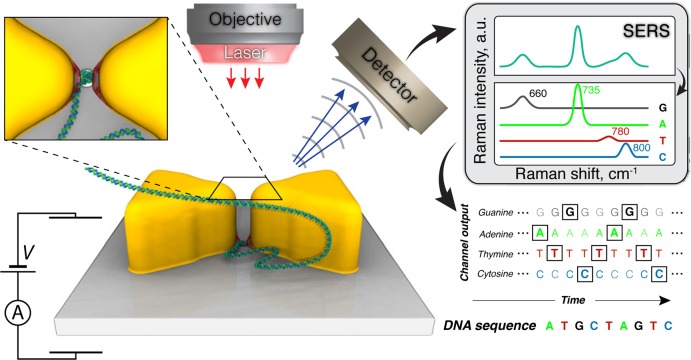
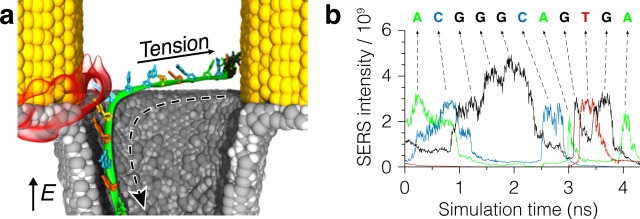
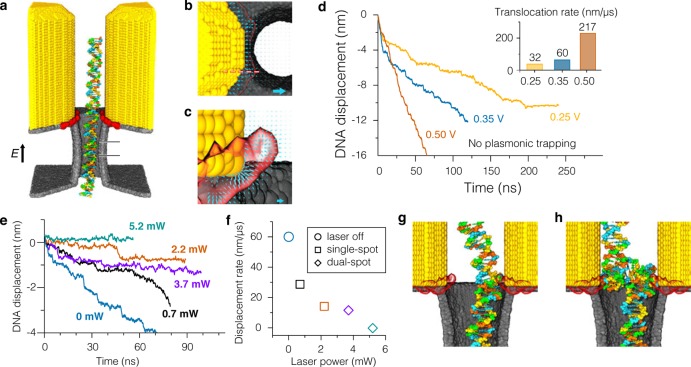
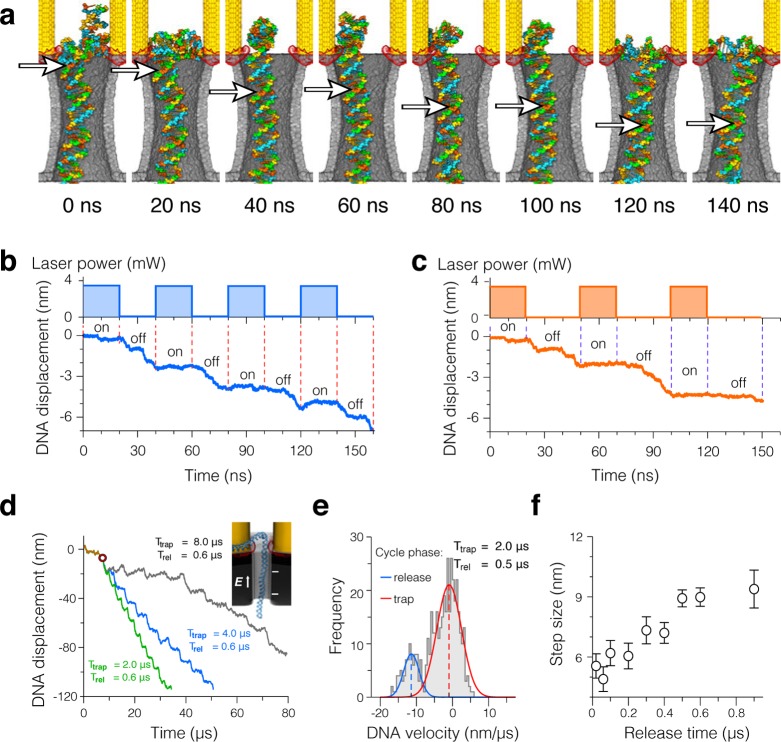
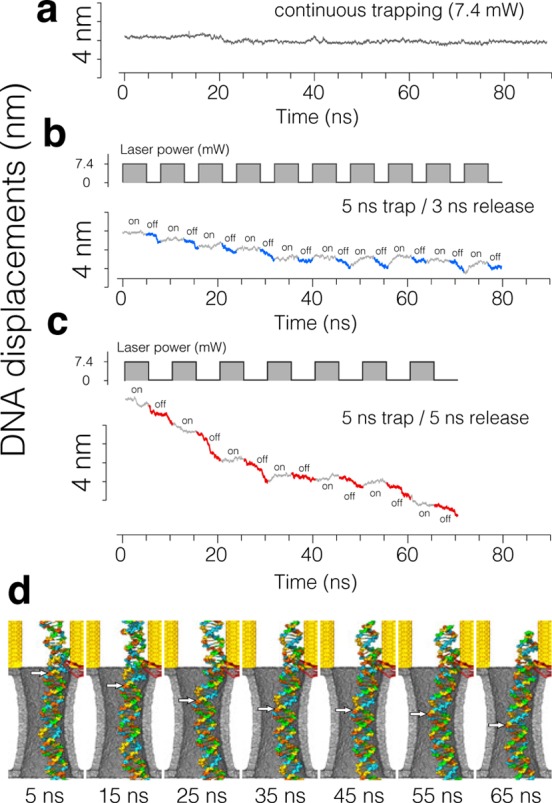
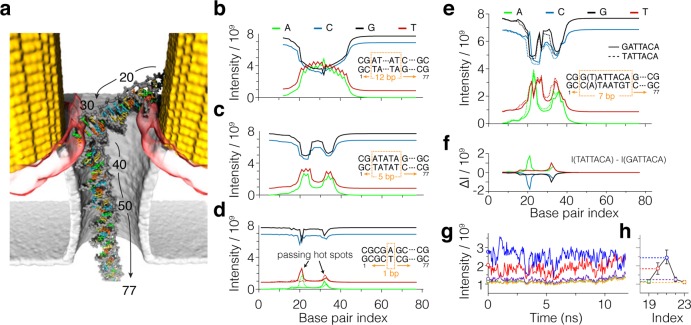
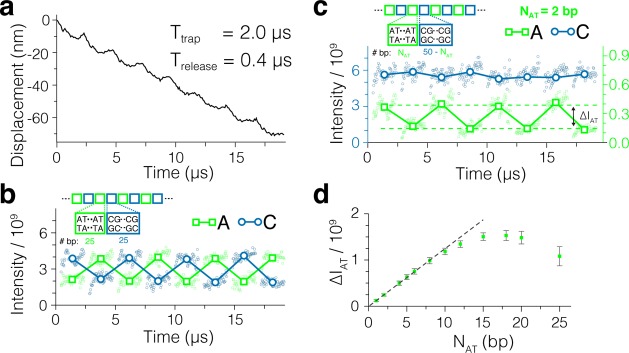
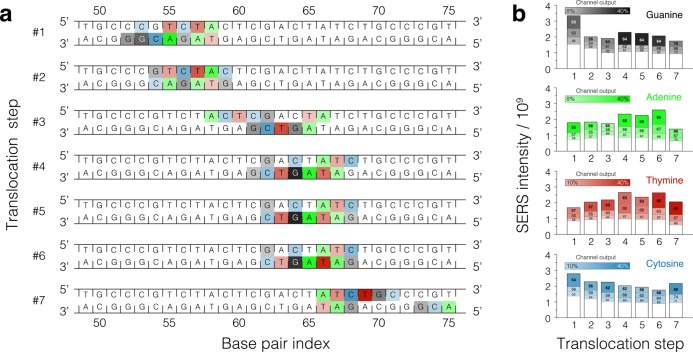
With the aim of developing a DNA sequencing methodology, we theoretically examine the feasibility of using nanoplasmonics to control the translocation of a DNA molecule through a solid-state nanopore and to read off sequence information using surface-enhanced Raman spectroscopy. Using molecular dynamics simulations, we show that high-intensity optical hot spots produced by a metallic nanostructure can arrest DNA translocation through a solid-state nanopore, thus providing a physical knob for controlling the DNA speed. Switching the plasmonic field on and off can displace the DNA molecule in discrete steps, sequentially exposing neighboring fragments of a DNA molecule to the pore as well as to the plasmonic hot spot. Surface-enhanced Raman scattering from the exposed DNA fragments contains information about their nucleotide composition, possibly allowing the identification of the nucleotide sequence of a DNA molecule transported through the hot spot. The principles of plasmonic nanopore sequencing can be extended to detection of DNA modifications and RNA characterization.
为了开发一种DNA测序方法,我们从理论上研究了利用纳米等离子体控制DNA分子通过固态纳米孔的转运,并使用表面增强拉曼光谱读取序列信息的可行性。通过分子动力学模拟,我们表明金属纳米结构产生的高强度光学热点可以阻止DNA通过固态纳米孔的转运,从而提供一个控制DNA速度的物理旋钮。开启和关闭等离子体场可以使DNA分子以离散步骤移动,依次将DNA分子的相邻片段暴露于纳米孔以及等离子体热点。从暴露的DNA片段产生的表面增强拉曼散射包含有关其核苷酸组成的信息,这可能允许识别通过热点转运的DNA分子的核苷酸序列。等离子体纳米孔测序的原理可以扩展到DNA修饰的检测和RNA表征。