Sun Yi, Sheng Zhen, Ma Chao, Tang Kailin, Zhu Ruixin, Wu Zhuanbin, Shen Ruling, Feng Jun, Wu Dingfeng, Huang Danyi, Huang Dandan, Fei Jian, Liu Qi, Cao Zhiwei
School of Life Sciences and Technology, Tongji University, Shanghai 200092, China.
Shanghai Research Center for Model Organisms, Shanghai 200092, China.
Nat Commun. 2015 Sep 28;6:8481. doi: 10.1038/ncomms9481.
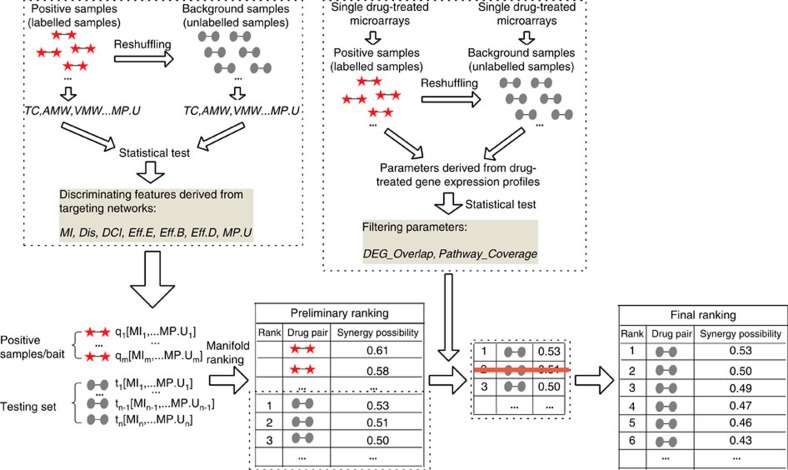
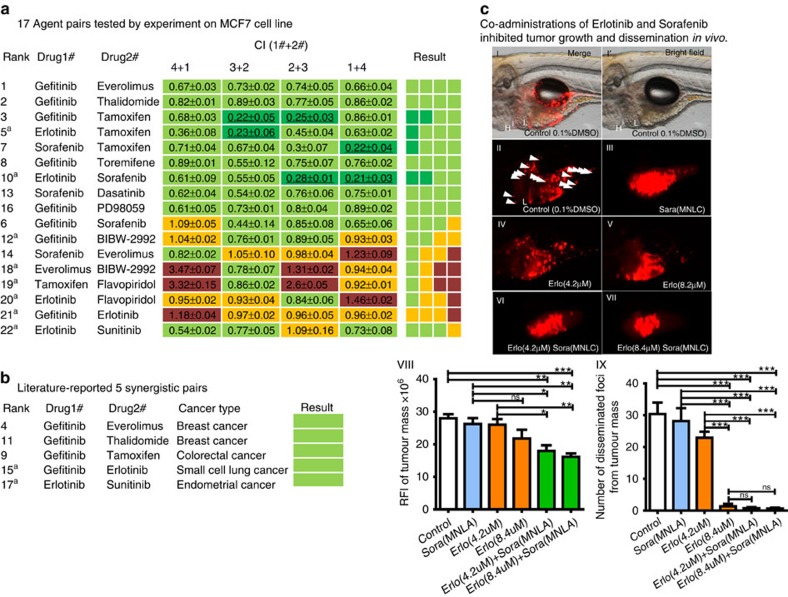
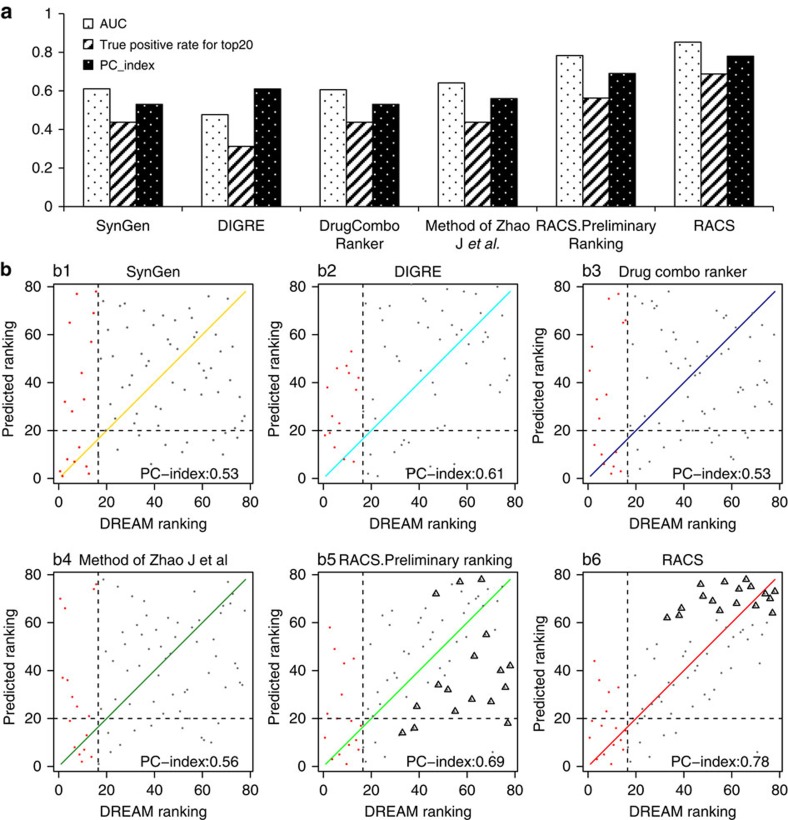
The identification of synergistic chemotherapeutic agents from a large pool of candidates is highly challenging. Here, we present a Ranking-system of Anti-Cancer Synergy (RACS) that combines features of targeting networks and transcriptomic profiles, and validate it on three types of cancer. Using data on human β-cell lymphoma from the Dialogue for Reverse Engineering Assessments and Methods consortium we show a probability concordance of 0.78 compared with 0.61 obtained with the previous best algorithm. We confirm 63.6% of our breast cancer predictions through experiment and literature, including four strong synergistic pairs. Further in vivo screening in a zebrafish MCF7 xenograft model confirms one prediction with strong synergy and low toxicity. Validation using A549 lung cancer cells shows similar results. Thus, RACS can significantly improve drug synergy prediction and markedly reduce the experimental prescreening of existing drugs for repurposing to cancer treatment, although the molecular mechanism underlying particular interactions remains unknown.
从大量候选药物中识别协同化疗药物极具挑战性。在此,我们提出了一种抗癌协同作用排名系统(RACS),它结合了靶向网络和转录组图谱的特征,并在三种癌症类型上进行了验证。利用来自逆向工程评估与方法对话联盟的人类β细胞淋巴瘤数据,我们显示概率一致性为0.78,而之前最佳算法的概率一致性为0.61。我们通过实验和文献证实了63.6%的乳腺癌预测结果,包括四对强协同作用组合。在斑马鱼MCF7异种移植模型中进一步进行体内筛选,证实了一个具有强协同作用和低毒性的预测结果。使用A549肺癌细胞进行的验证显示了类似的结果。因此,RACS可以显著改善药物协同作用预测,并显著减少将现有药物重新用于癌症治疗的实验性预筛选,尽管特定相互作用背后的分子机制仍然未知。