Zanvit Peter, Konkel Joanne E, Jiao Xue, Kasagi Shimpei, Zhang Dunfang, Wu Ruiqing, Chia Cheryl, Ajami Nadim J, Smith Daniel P, Petrosino Joseph F, Abbatiello Brittany, Nakatsukasa Hiroko, Chen Qianming, Belkaid Yasmine, Chen Zi-Jiang, Chen WanJun
Mucosal Immunology Section, OPCB, NIDCR, NIH, Bethesda, Maryland 20892, USA.
University of Manchester, Faculty of Life Sciences, Manchester, M13 9PT, UK.
Nat Commun. 2015 Sep 29;6:8424. doi: 10.1038/ncomms9424.
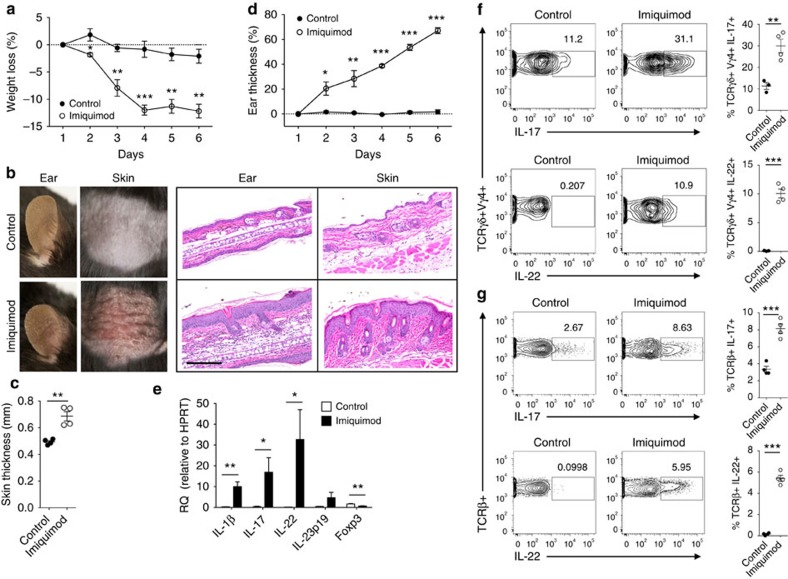
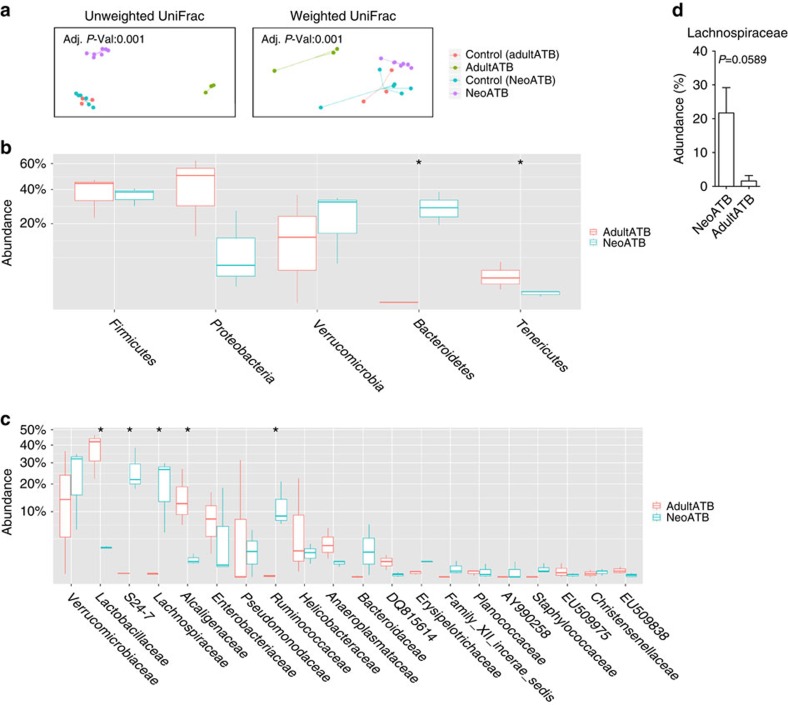
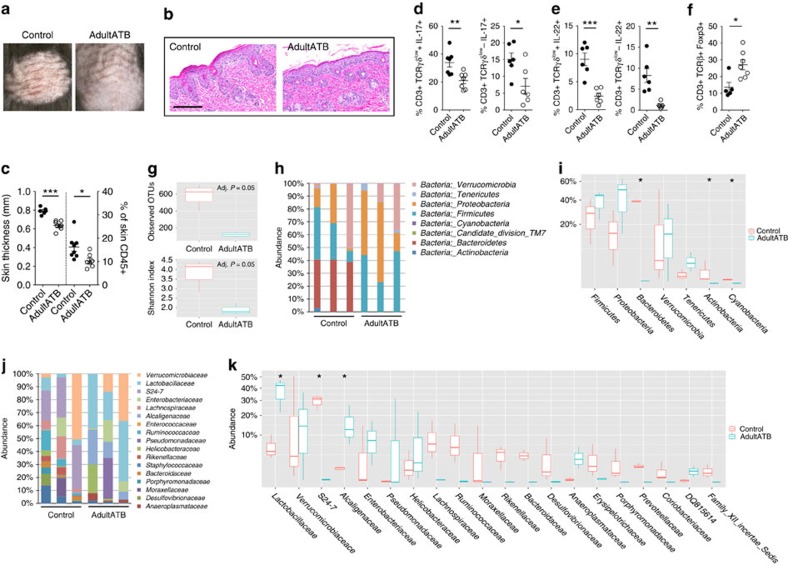
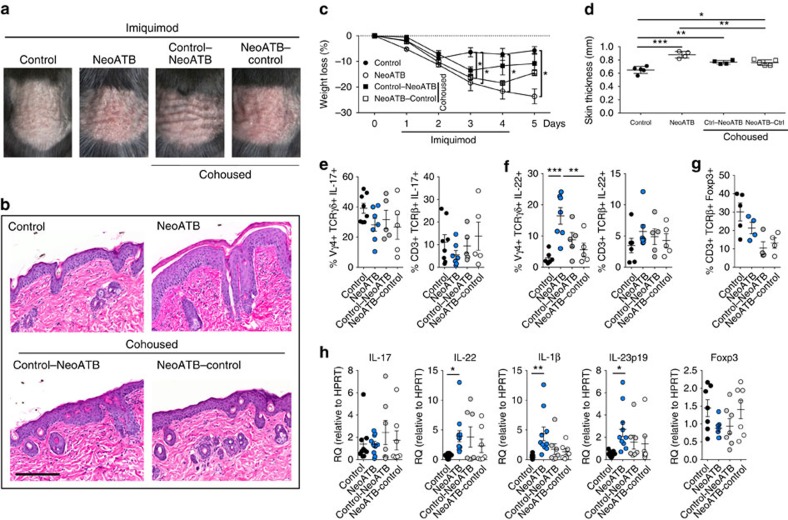
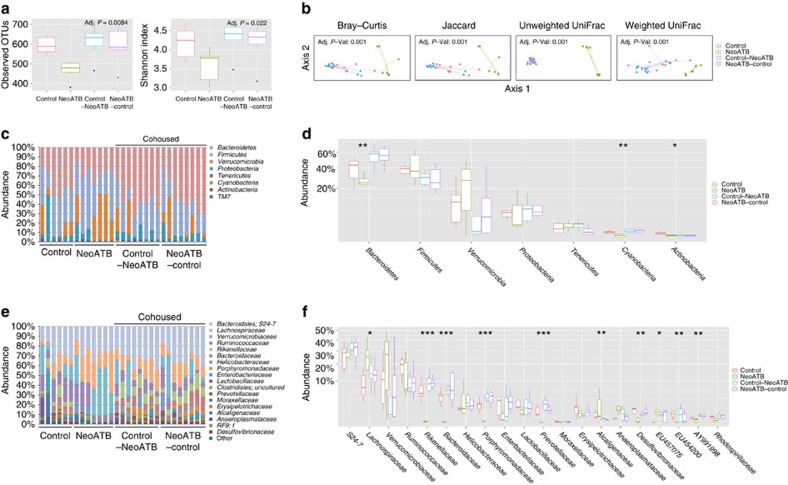
Psoriasis is an inflammatory skin disease affecting ∼2% of the world's population, but the aetiology remains incompletely understood. Recently, microbiota have been shown to differentially regulate the development of autoimmune diseases, but their influence on psoriasis is incompletely understood. We show here that adult mice treated with antibiotics that target Gram-negative and Gram-positive bacteria develop ameliorated psoriasiform dermatitis induced by imiquimod, with decreased pro-inflammatory IL-17- and IL-22-producing T cells. Surprisingly, mice treated neonatally with these antibiotics develop exacerbated psoriasis induced by imiquimod or recombinant IL-23 injection when challenged as adults, with increased IL-22-producing γδ(+) T cells. 16S rRNA gene compositional analysis reveals that neonatal antibiotic-treatment dysregulates gut and skin microbiota in adults, which is associated with increased susceptibility to experimental psoriasis. This link between neonatal antibiotic-mediated imbalance in microbiota and development of experimental psoriasis provides precedence for further investigation of its specific aetiology as it relates to human psoriasis.
银屑病是一种炎症性皮肤病,影响着全球约2%的人口,但其病因仍未完全明确。最近研究表明,微生物群可对自身免疫性疾病的发展进行差异性调节,但其对银屑病的影响尚不完全清楚。我们在此表明,用针对革兰氏阴性菌和革兰氏阳性菌的抗生素治疗的成年小鼠,咪喹莫特诱导的银屑病样皮炎有所改善,产生促炎细胞因子IL-17和IL-22的T细胞减少。令人惊讶的是,新生期用这些抗生素治疗的小鼠成年后受到咪喹莫特或重组IL-23注射攻击时,会出现加剧的银屑病,产生IL-22的γδ(+)T细胞增多。16S rRNA基因组成分析显示,新生期抗生素治疗会导致成年小鼠肠道和皮肤微生物群失调,这与实验性银屑病易感性增加有关。新生期抗生素介导的微生物群失衡与实验性银屑病发展之间的这种联系,为进一步研究其与人类银屑病相关的具体病因提供了依据。