Cockram James, Scuderi Alice, Barber Toby, Furuki Eiko, Gardner Keith A, Gosman Nick, Kowalczyk Radoslaw, Phan Huyen P, Rose Gemma A, Tan Kar-Chun, Oliver Richard P, Mackay Ian J
John Bingham Laboratory, National Institute of Agricultural Botany (NIAB), Huntington Road, Cambridge, CB3 0LE, United Kingdom
John Bingham Laboratory, National Institute of Agricultural Botany (NIAB), Huntington Road, Cambridge, CB3 0LE, United Kingdom Department of Drug Science and Products for Health, University of Messina, Sicily, 98122, Italy.
G3 (Bethesda). 2015 Sep 28;5(11):2257-66. doi: 10.1534/g3.115.021584.
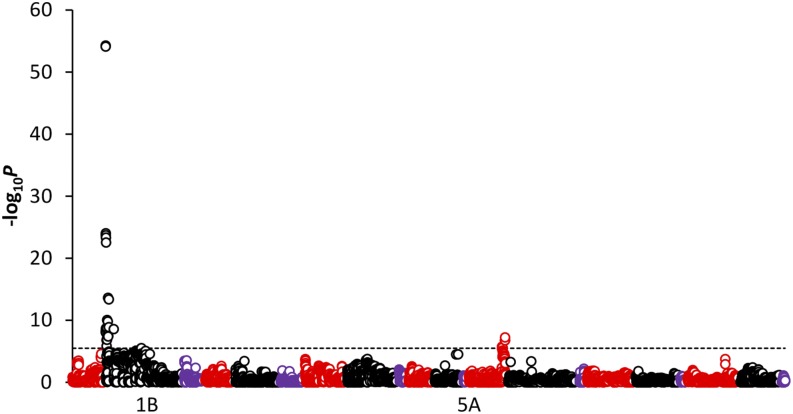
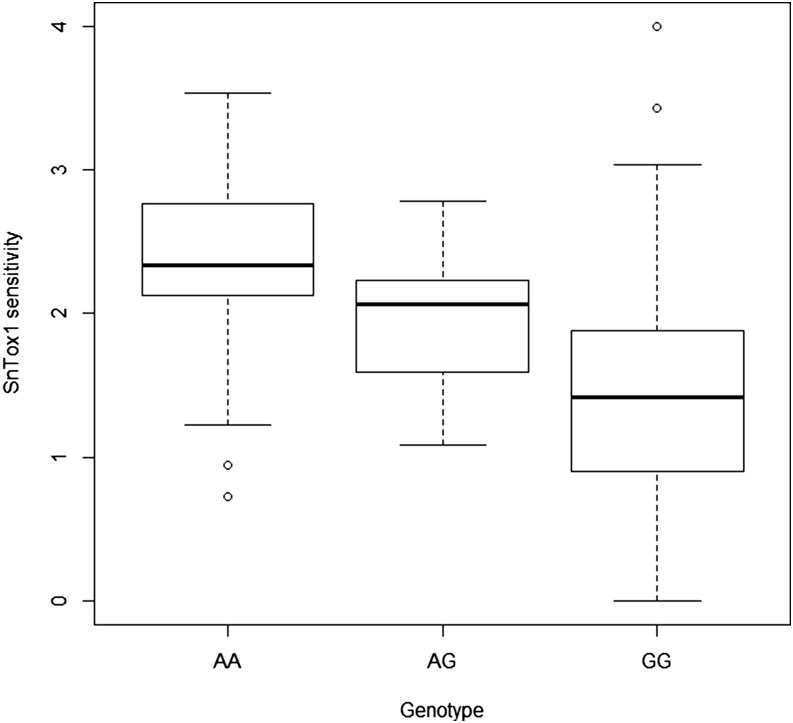
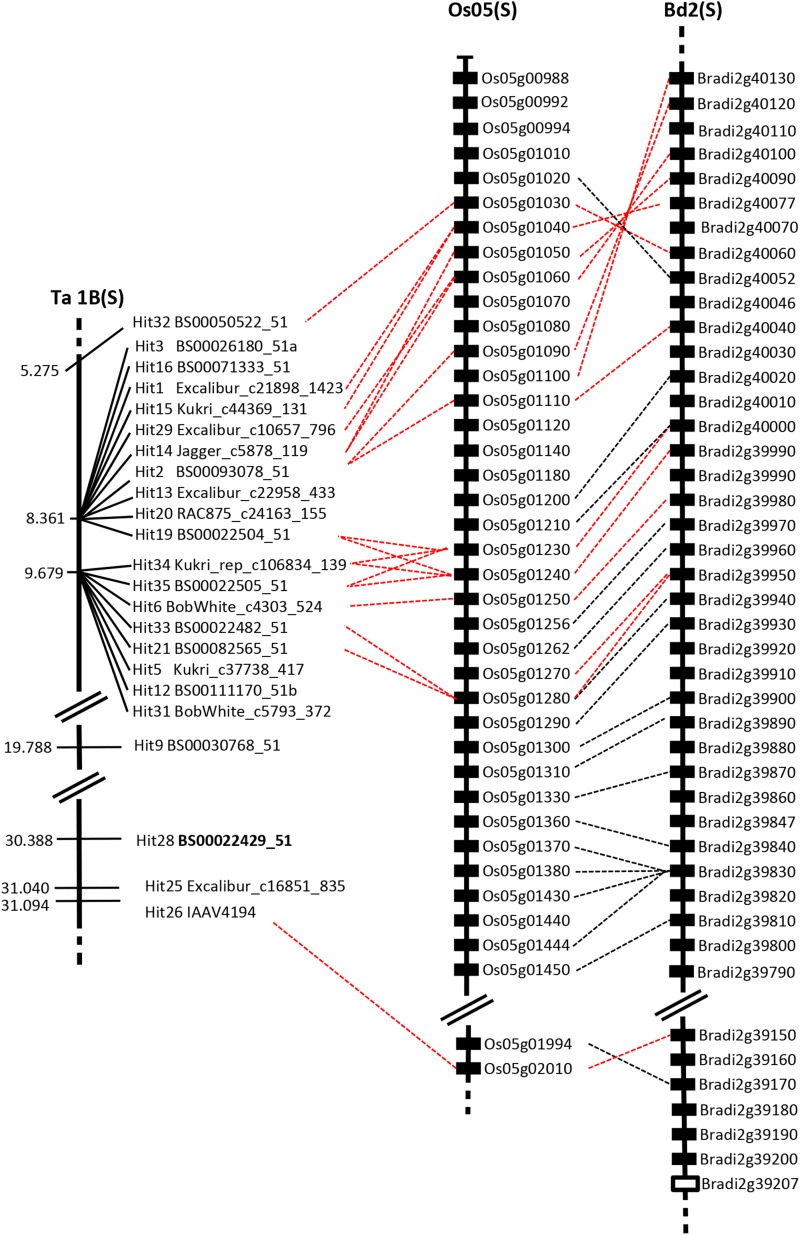
The necrotrophic fungus Parastagonospora nodorum is an important pathogen of one of the world's most economically important cereal crops, wheat (Triticum aestivum L.). P. nodorum produces necrotrophic protein effectors that mediate host cell death, providing nutrients for continuation of the infection process. The recent discovery of pathogen effectors has revolutionized disease resistance breeding for necrotrophic diseases in crop species, allowing often complex genetic resistance mechanisms to be broken down into constituent parts. To date, three effectors have been identified in P. nodorum. Here we use the effector, SnTox1, to screen 642 progeny from an eight-parent multiparent advanced generation inter-cross (i.e., MAGIC) population, genotyped with a 90,000-feature single-nucleotide polymorphism array. The MAGIC founders showed a range of sensitivity to SnTox1, with transgressive segregation evident in the progeny. SnTox1 sensitivity showed high heritability, with quantitative trait locus analyses fine-mapping the Snn1 locus to the short arm of chromosome 1B. In addition, a previously undescribed SnTox1 sensitivity locus was identified on the long arm of chromosome 5A, termed here QSnn.niab-5A.1. The peak single-nucleotide polymorphism for the Snn1 locus was converted to the KASP genotyping platform, providing breeders and researchers a simple and cheap diagnostic marker for allelic state at Snn1.
坏死营养型真菌小麦颖枯病菌(Parastagonospora nodorum)是世界上经济价值最重要的谷类作物之一小麦(Triticum aestivum L.)的一种重要病原体。小麦颖枯病菌产生坏死营养型蛋白效应子,介导宿主细胞死亡,为感染过程的持续提供营养。病原体效应子的最新发现彻底改变了作物坏死营养型病害的抗病育种,使通常复杂的遗传抗性机制能够被分解为组成部分。迄今为止,在小麦颖枯病菌中已鉴定出三种效应子。在这里,我们使用效应子SnTox1对一个由八个亲本组成的多亲本高代杂交(即MAGIC)群体的642个后代进行筛选,该群体用一个具有90,000个特征的单核苷酸多态性阵列进行基因分型。MAGIC群体的创始亲本对SnTox1表现出一系列敏感性,后代中存在超亲分离现象。SnTox1敏感性表现出高遗传力,通过数量性状基因座分析将Snn1基因座精细定位到1B染色体的短臂上。此外,在5A染色体的长臂上鉴定出一个以前未描述的SnTox1敏感性基因座,在这里称为QSnn.niab - 5A.1。Snn1基因座的峰值单核苷酸多态性被转换到KASP基因分型平台上,为育种者和研究人员提供了一个简单且廉价的Snn1等位基因状态诊断标记。