Okwa Iniviefien B, Akindele Abidemi J, Agbaje Esther O, Oshinuga Oladoyin T, Anunobi Chidozie C, Adeyemi Olufunmilayo O
Department of Pharmacology, Faculty of Basic Medical Sciences, College of Medicine, University of Lagos, P.M.B. 12003, Lagos, Nigeria.
Department of Morbid Anatomy, Faculty of Basic Medical Sciences, College of Medicine, University of Lagos, P.M.B. 12003, Lagos, Nigeria.
EXCLI J. 2013 Mar 14;12:231-50. eCollection 2013.
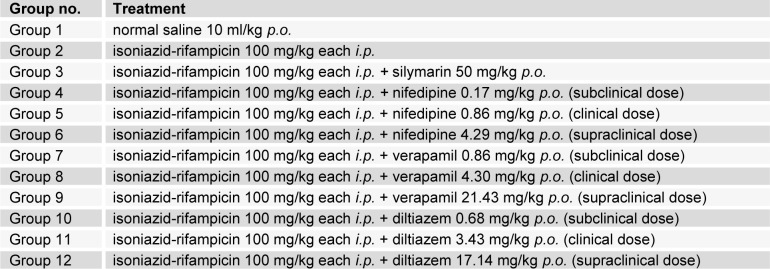
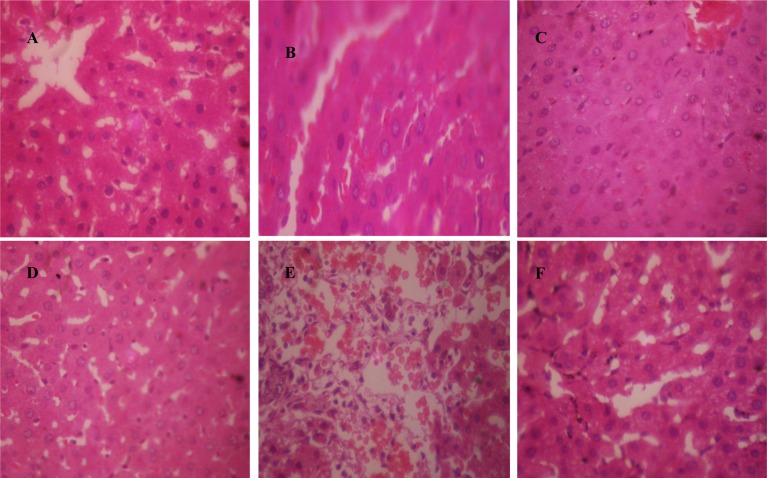
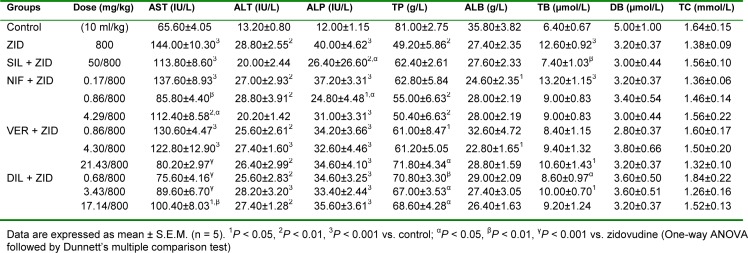
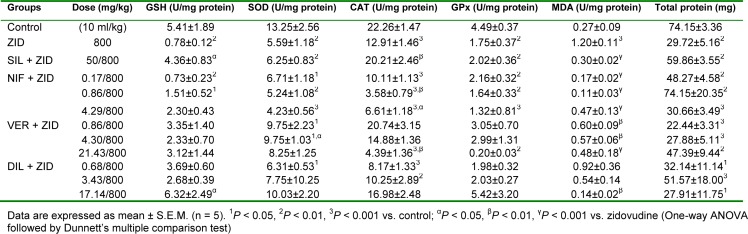
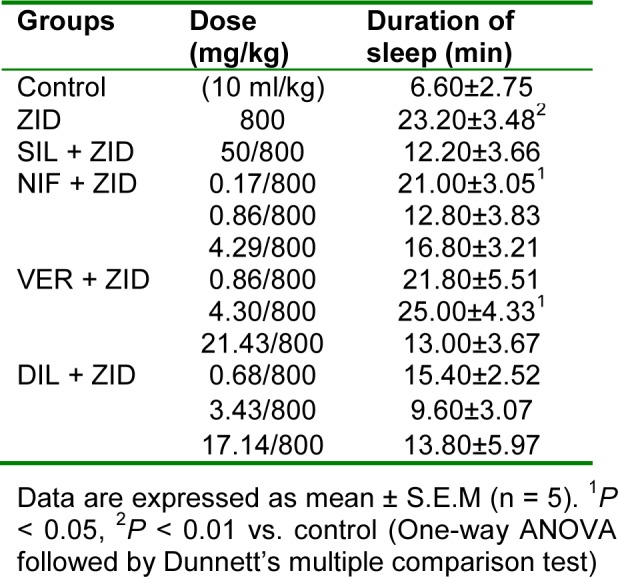
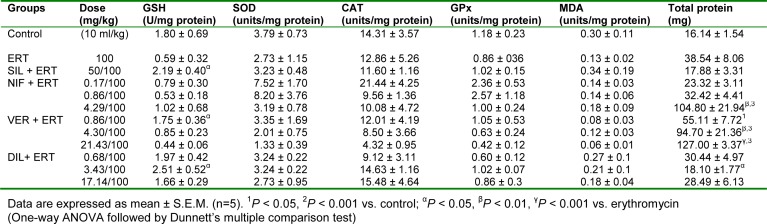
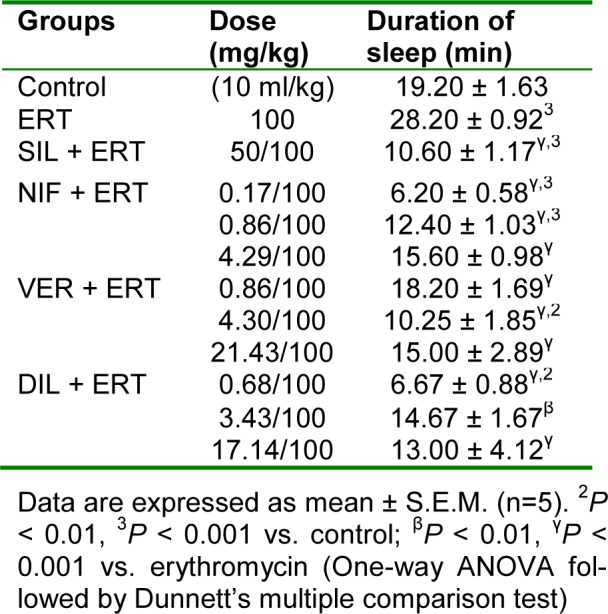
Drug-related hepatotoxicity is the leading cause of acute liver failure, and hepatic problems are responsible for a significant number of liver transplantations and deaths worldwide. Calcium has been associated with various metabolic processes that lead to cell death and apoptosis, and increased cytosolic Ca(2+) has been implicated in hepatotoxicity. This study was designed to investigate the effects of calcium channel blockers (CCBs) on isoniazid-rifampicin, zidovudine and erythromycin-induced hepatotoxicity in rats. Treatment groups comprised control, hepatotoxicant, hepatotoxicant along with each of silymarin, nifedipine, verapamil and diltiazem at subclinical, clinical and supraclinical doses. A day to the end of treatment for each model, rats were subjected to the hexobarbitone-induced hypnosis test. On the last days of treatment, blood samples were collected and serum was analyzed for relevant biochemical parameters. Animals were sacrificed after blood collection and livers were harvested, and samples obtained for in vivo antioxidant indices assay and histopathology. The hepatotoxicants significantly increased serum levels of aspartate aminotransferase (AST), alanine aminotransferase (ALT) and alkaline phosphatase (ALP), as well as duration of sleep in the hypnosis test. These drugs significantly reduced the hepatic levels of reduced glutathione (GSH), superoxide dismutase (SOD), catalase (CAT), glutathione peroxidase (GPx) and increased the level of malondialdehyde (MDA). The CCBs at the various doses significantly reversed the effects of isoniazid-rifampicin, zidovudine and erythromycin. The results obtained in this study suggest that the CCBs possess hepatoprotective activity in drug-induced hepatotoxicity and may be beneficial at the subclinical and clinical doses.
药物性肝毒性是急性肝衰竭的主要原因,肝脏问题导致了全球大量的肝移植和死亡。钙与导致细胞死亡和凋亡的各种代谢过程有关,胞质Ca(2+)升高与肝毒性有关。本研究旨在探讨钙通道阻滞剂(CCB)对异烟肼-利福平、齐多夫定和红霉素诱导的大鼠肝毒性的影响。治疗组包括对照组、肝毒性药物组、肝毒性药物与水飞蓟宾、硝苯地平、维拉帕米和地尔硫䓬在亚临床、临床和超临床剂量下联合使用的组。在每个模型治疗结束前一天,对大鼠进行己巴比妥诱导的催眠试验。在治疗的最后一天,采集血样并分析血清中的相关生化参数。采血后处死动物,摘取肝脏,获取样本进行体内抗氧化指标检测和组织病理学检查。肝毒性药物显著提高了血清天冬氨酸转氨酶(AST)、丙氨酸转氨酶(ALT)和碱性磷酸酶(ALP)水平,以及催眠试验中的睡眠时间。这些药物显著降低了肝脏中还原型谷胱甘肽(GSH)、超氧化物歧化酶(SOD)、过氧化氢酶(CAT)、谷胱甘肽过氧化物酶(GPx)的水平,并增加了丙二醛(MDA)的水平。不同剂量的CCB显著逆转了异烟肼-利福平、齐多夫定和红霉素的作用。本研究结果表明,CCB在药物性肝毒性中具有肝保护活性,在亚临床和临床剂量下可能有益。