Clinical Department of Immunology and Rheumatology, Hannover Medical School Germany.
Chair of Experimental Biomedicine University Hospital and Rudolf Virchow Center DFG Research Center for Experimental Biomedicine, University of Würzburg Würzburg, Germany.
Immun Inflamm Dis. 2015 Sep;3(3):154-70. doi: 10.1002/iid3.56. Epub 2015 May 12.
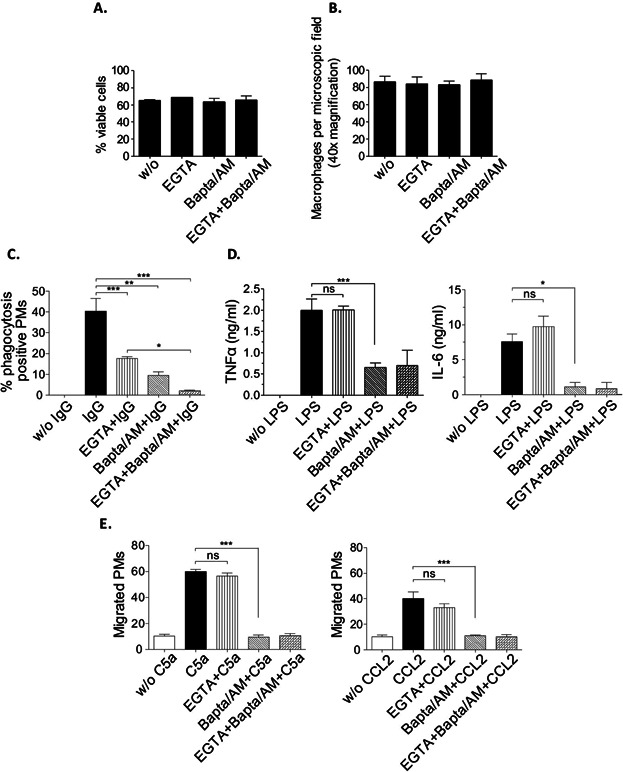
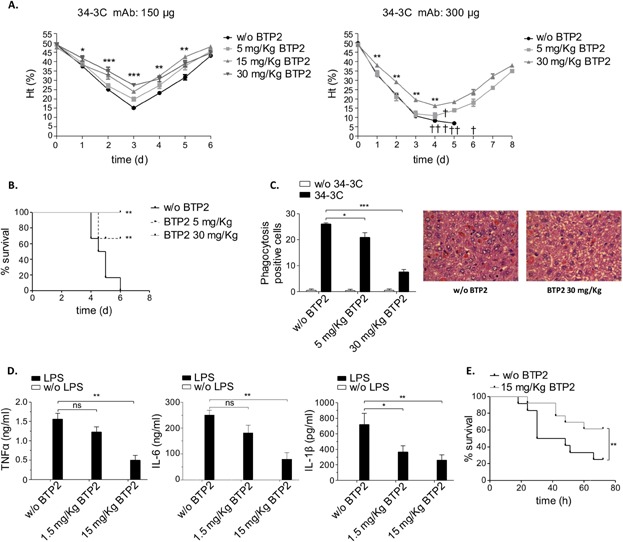
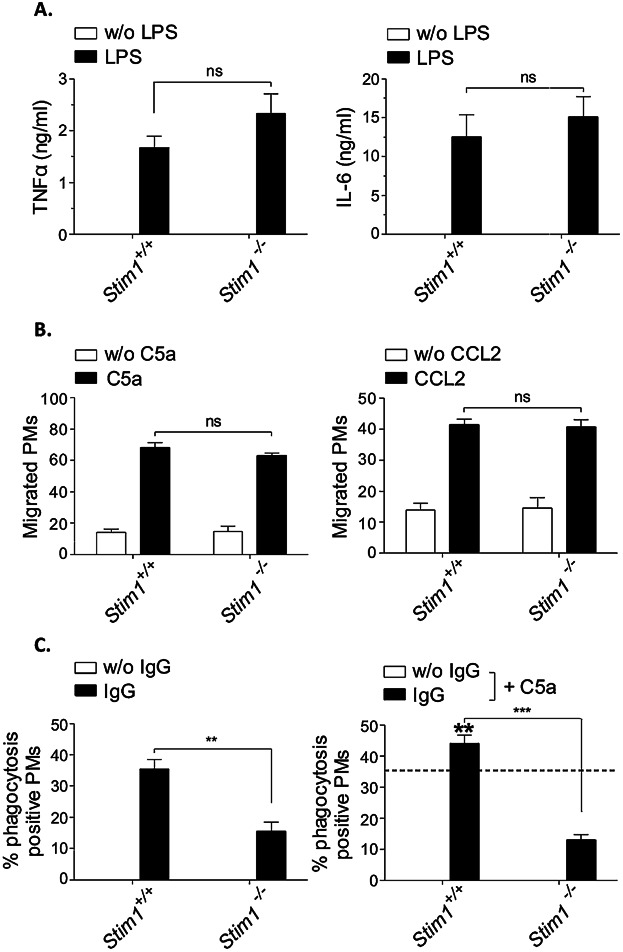
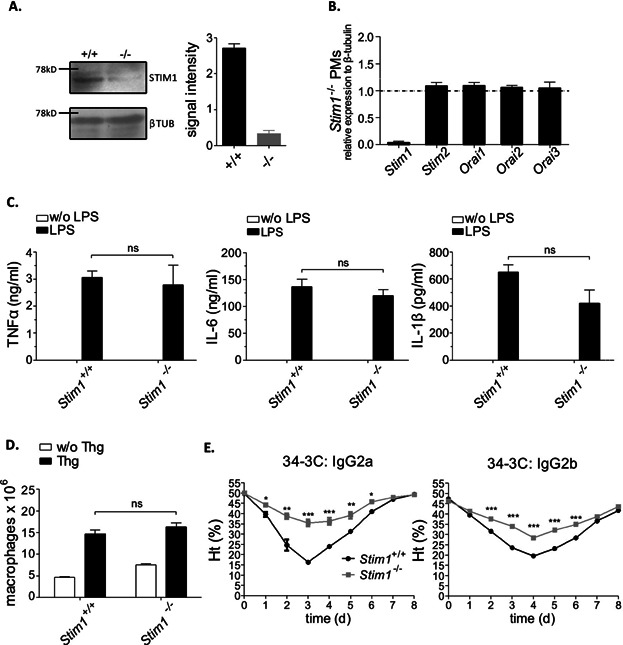
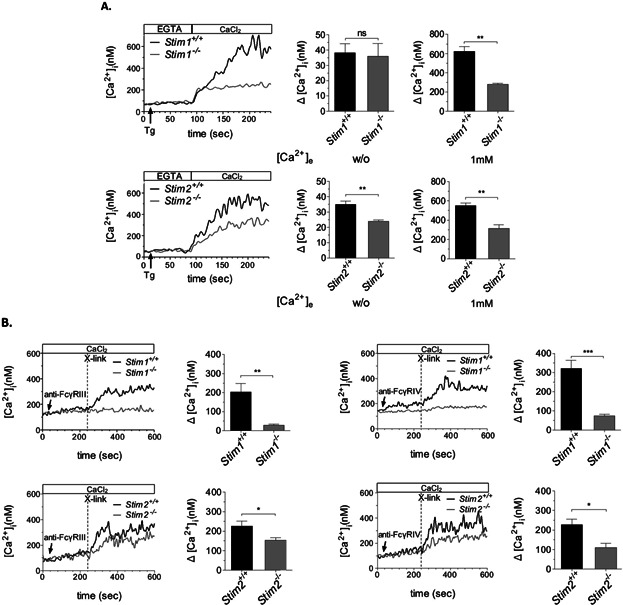
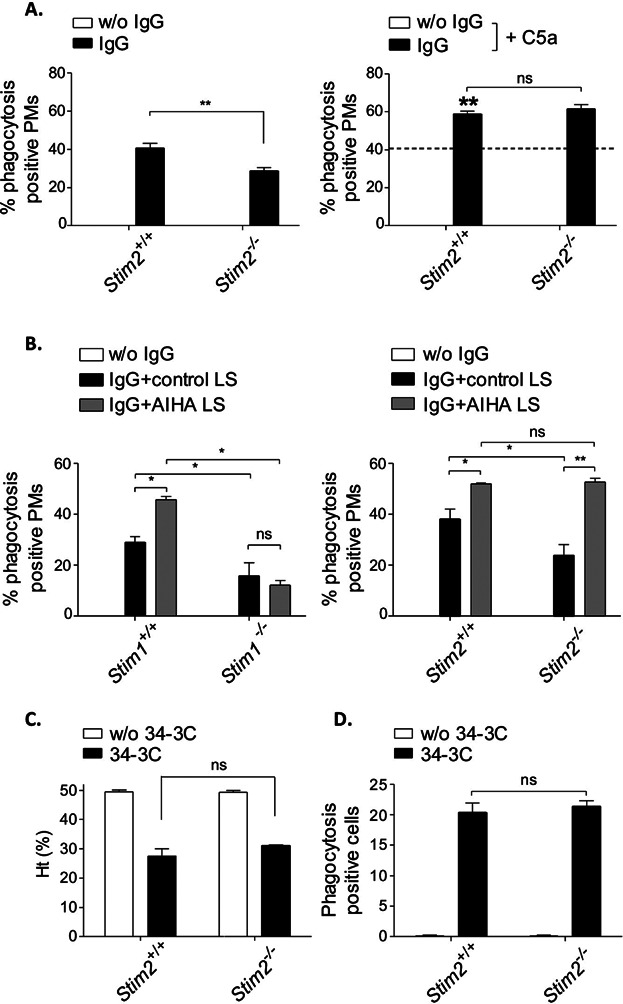
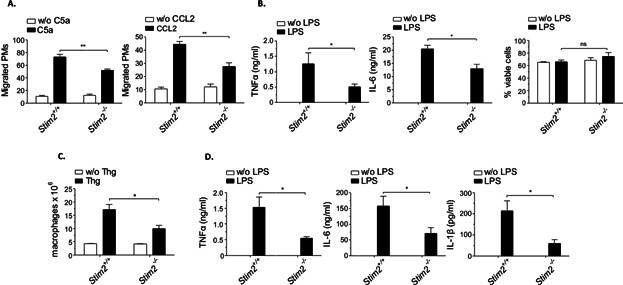
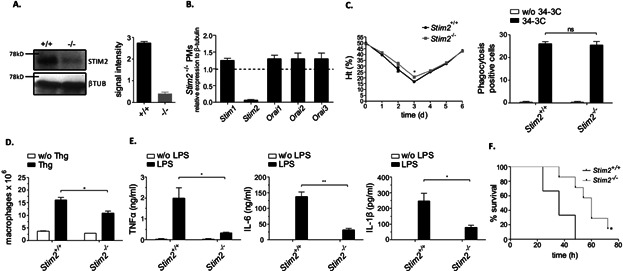
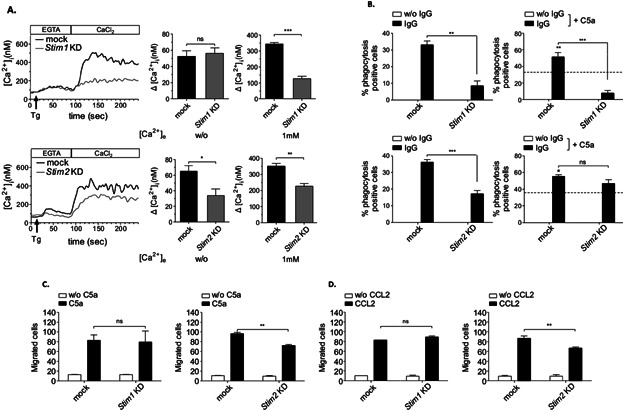
Calcium (Ca(2+)) signaling in immune cells, including macrophages, controls a wide range of effector functions that are critical for host defense and contribute to inflammation and autoimmune diseases. However, receptor-mediated Ca(2+) responses consist of complex mechanisms that make it difficult to identify the pathogenesis and develop therapy. Previous studies have revealed the importance of the Ca(2+) sensor STIM1 and store-operated Ca(2+)-entry (SOCE) for Fcγ-receptor activation and IgG-induced inflammation. Here, we identify the closely related STIM2 as mediator of cell migration and cytokine production downstream of GPCR and TLR4 activation in macrophages and show that mice lacking STIM2 are partially resistant to inflammatory responses in peritonitis and LPS-induced inflammation. Interestingly, STIM2 modulates the migratory behavior of macrophages independent from STIM1 and without a strict requirement for Ca(2+) influx. While STIM2 also contributes in part to FcγR activation, the C5a-induced amplification of IgG-mediated phagocytosis is mainly dependent on STIM1. Blockade of STIM-related functions limits mortality in experimental models of AIHA and LPS-sepsis in normal mice. These results suggest benefits of Ca(2+)-inhibition for suppression of exacerbated immune reactions and illustrate the significance of alternate functions of STIM proteins in macrophage activation and in the context of innate immune inflammation.
钙(Ca(2+))信号在免疫细胞中,包括巨噬细胞中,控制着广泛的效应功能,这些功能对于宿主防御至关重要,并有助于炎症和自身免疫性疾病。然而,受体介导的 Ca(2+)反应由复杂的机制组成,这使得难以确定发病机制并开发治疗方法。以前的研究已经揭示了 Ca(2+)传感器 STIM1 和储存操作 Ca(2+)-进入 (SOCE) 对 Fcγ-受体激活和 IgG 诱导的炎症的重要性。在这里,我们确定了与 STIM1 密切相关的 STIM2 是 GPCR 和 TLR4 激活下游巨噬细胞中细胞迁移和细胞因子产生的介质,并表明缺乏 STIM2 的小鼠在腹膜炎和 LPS 诱导的炎症中对炎症反应具有部分抗性。有趣的是,STIM2 调节巨噬细胞的迁移行为独立于 STIM1,并且不需要 Ca(2+)流入的严格要求。虽然 STIM2 部分有助于 FcγR 的激活,但 C5a 诱导的 IgG 介导的吞噬作用的放大主要依赖于 STIM1。抑制 STIM 相关功能可降低正常小鼠自身免疫性溶血性贫血和 LPS 败血症实验模型中的死亡率。这些结果表明 Ca(2+)抑制在抑制过度免疫反应方面具有益处,并说明了 STIM 蛋白在巨噬细胞激活和固有免疫炎症中的替代功能的重要性。