Fidler Miranda M, Ziff Oliver J, Wang Sarra, Cave Joshua, Janardhanan Pradeep, Winter David L, Kelly Julie, Mehta Susan, Jenkinson Helen, Frobisher Clare, Reulen Raoul C, Hawkins Michael M
Department of Public Health, Epidemiology and Biostatistics, Centre for Childhood Cancer Survivor Studies, School of Health and Population Sciences, Public Health Building, University of Birmingham, Birmingham B15 2TT, UK.
Department of Oncology, University College London Hospital, 1st Floor Central, 250 Euston Road, London NW1 2PG, UK.
Br J Cancer. 2015 Sep 29;113(7):1121-32. doi: 10.1038/bjc.2015.310.
Some previous studies have reported that survivors of childhood cancer are at an increased risk of developing long-term mental health morbidity, whilst others have reported that this is not the case. Therefore, we analysed 5-year survivors of childhood cancer using the British Childhood Cancer Survivor Study (BCCSS) to determine the risks of aspects of long-term mental health dysfunction.
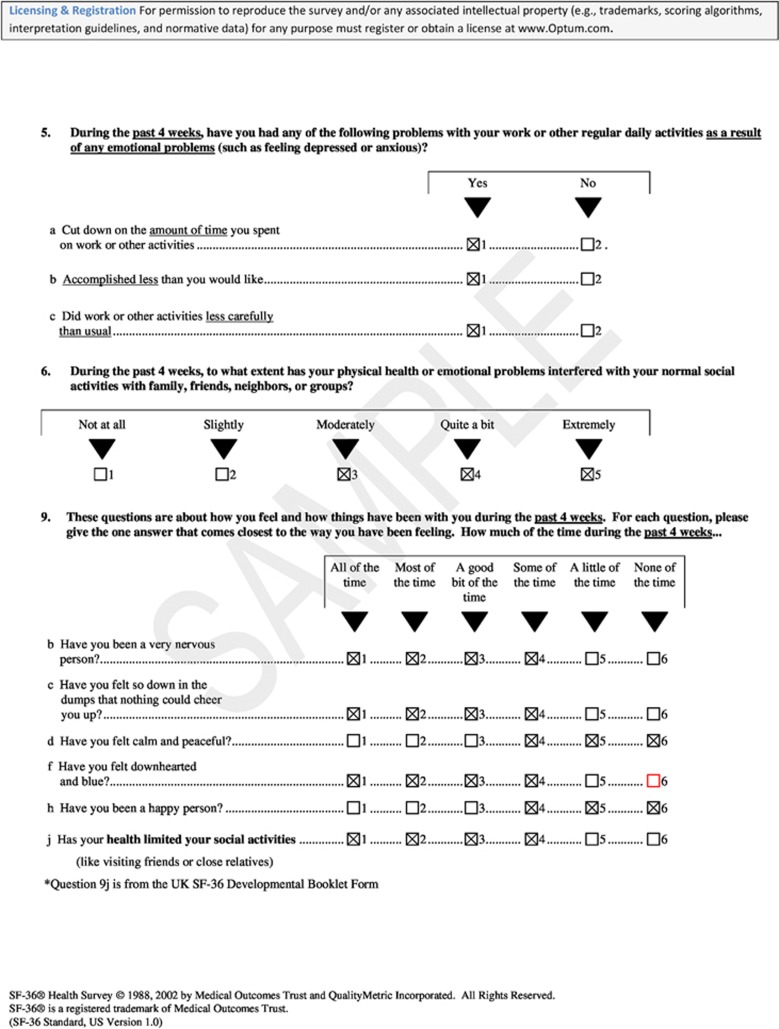
Within the BCCSS, 10 488 survivors completed a questionnaire that ascertained mental health-related information via 10 questions from the Short Form-36 survey. Internal analyses were conducted using multivariable logistic regression to determine risk factors for mental health dysfunction. External analyses were undertaken using direct standardisation to compare mental health dysfunction in survivors with UK norms.
This study has shown that overall, childhood cancer survivors had a significantly higher prevalence of mental health dysfunction for 6/10 questions analysed compared to UK norms. Central nervous system (CNS) and bone sarcoma survivors reported the greatest dysfunction, compared to expected, with significant excess dysfunction in 10 and 6 questions, respectively; the excess ranged from 4.4-22.3% in CNS survivors and 6.9-15.9% in bone sarcoma survivors. Compared to expected, excess mental health dysfunction increased with attained age; this increase was greatest for reporting 'limitations in social activities due to health', where the excess rose from 4.5% to 12.8% in those aged 16-24 and 45+, respectively. Within the internal analyses, higher levels of educational attainment and socio-economic classification were protective against mental health dysfunction.
Based upon the findings of this large population-based study, childhood cancer survivors report significantly higher levels of mental health dysfunction than those in the general population, where deficits were observed particularly among CNS and bone sarcoma survivors. Limitations were also observed to increase with age, and thus it is important to emphasise the need for mental health evaluation and services across the entire lifespan. There is evidence that low educational attainment and being unemployed or having never worked adversely impacts long-term mental health. These findings provide an evidence base for risk stratification and planning interventions.
此前一些研究报告称,儿童癌症幸存者出现长期心理健康问题的风险增加,而其他研究则报告情况并非如此。因此,我们利用英国儿童癌症幸存者研究(BCCSS)对儿童癌症5年幸存者进行了分析,以确定长期心理健康功能障碍各方面的风险。
在BCCSS中,10488名幸存者完成了一份问卷,该问卷通过来自简短健康调查问卷(Short Form-36)的10个问题确定了与心理健康相关的信息。采用多变量逻辑回归进行内部分析,以确定心理健康功能障碍的风险因素。采用直接标准化进行外部分析,以比较幸存者与英国标准人群的心理健康功能障碍情况。
本研究表明,总体而言,与英国标准人群相比,在分析的10个问题中有6个问题上,儿童癌症幸存者心理健康功能障碍的患病率显著更高。中枢神经系统(CNS)和骨肉瘤幸存者报告的功能障碍最为严重,与预期相比,分别有10个和6个问题存在显著的功能障碍过度;CNS幸存者的过度范围为4.4%-22.3%,骨肉瘤幸存者为6.9%-15.9%。与预期相比,心理健康功能障碍过度随年龄增长而增加;在报告“因健康原因导致社交活动受限”方面,这种增加最为明显,16-24岁人群和45岁及以上人群的过度率分别从4.5%升至12.8%。在内部分析中,较高的教育程度和社会经济分类对心理健康功能障碍具有保护作用。
基于这项大型基于人群的研究结果,儿童癌症幸存者报告的心理健康功能障碍水平显著高于普通人群,尤其是在中枢神经系统和骨肉瘤幸存者中存在缺陷。还观察到功能障碍随年龄增长而增加,因此强调在整个生命周期进行心理健康评估和提供服务的必要性很重要。有证据表明,低教育程度以及失业或从未工作会对长期心理健康产生不利影响。这些发现为风险分层和规划干预措施提供了证据基础。