Aguirre Claudia G, Bello Mariel S, Andrabi Nafeesa, Pang Raina D, Hendricks Peter S, Bluthenthal Ricky N, Leventhal Adam M
University of Southern California Keck School of Medicine, Los Angeles, USA.
University of Alabama at Birmingham School of Public Health, USA.
Behav Modif. 2016 Jan;40(1-2):281-302. doi: 10.1177/0145445515608146. Epub 2015 Oct 5.
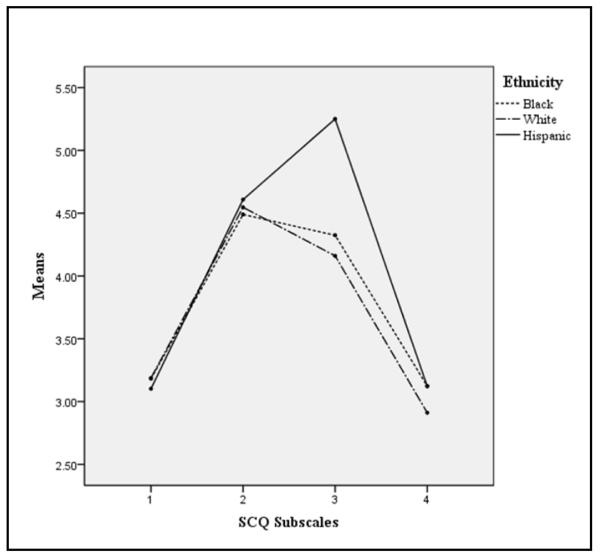
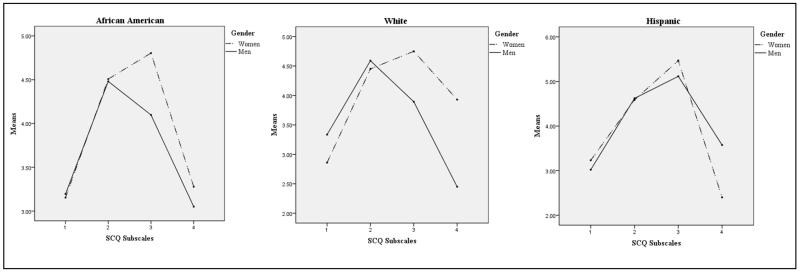
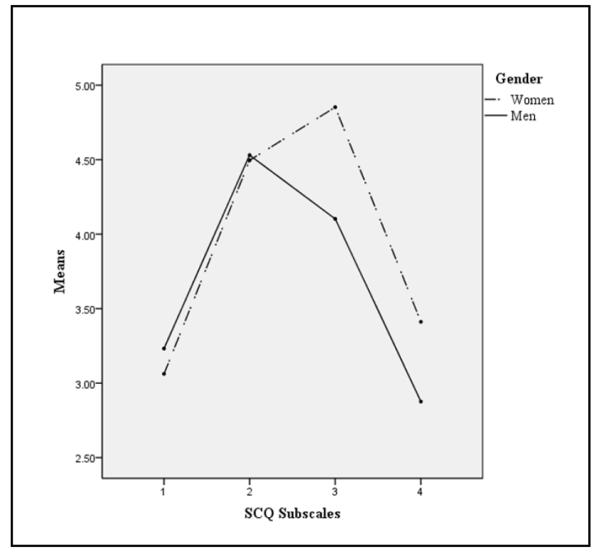
The current study utilized the intersectionality framework to explore whether smoking outcome expectancies (i.e., cognitions about the anticipated effects of smoking) were predicted by gender and ethnicity, and the gender-by-ethnicity interaction. In a cross-sectional design, daily smokers from the general community (32.2% women; non-Hispanic African American [n = 175], non-Hispanic White [n = 109], or Hispanic [n = 26]) completed self-report measures on smoking expectancies and other co-factors. Results showed that women reported greater negative reinforcement (i.e., anticipated smoking-induced negative affect reduction) and weight control (i.e., anticipated smoking-induced appetite/weight suppression) expectancies than men. Hispanic (vs. African American or White) smokers endorsed greater negative reinforcement expectancies. A gender-by-ethnicity interaction was found for weight control expectancies, such that White women reported greater weight control expectancies than White men, but no gender differences among African American and Hispanic smokers were found. These findings suggest that gender, ethnicity, and their intersectionality should be considered in research on cognitive mechanisms that may contribute to tobacco-related health disparities.
本研究运用交叉性框架,探讨吸烟结果预期(即对吸烟预期效果的认知)是否可由性别、种族以及性别与种族的交互作用预测。在一项横断面设计中,来自普通社区的每日吸烟者(32.2%为女性;非西班牙裔非裔美国人[n = 175]、非西班牙裔白人[n = 109]或西班牙裔[n = 26])完成了关于吸烟预期及其他共同因素的自我报告测量。结果显示,女性报告的负性强化(即预期吸烟导致的负面情绪减轻)和体重控制(即预期吸烟导致的食欲/体重抑制)预期高于男性。西班牙裔吸烟者(与非裔美国人或白人相比)认可更高的负性强化预期。在体重控制预期方面发现了性别与种族的交互作用,即白人女性报告的体重控制预期高于白人男性,但在非裔美国人和西班牙裔吸烟者中未发现性别差异。这些发现表明,在研究可能导致烟草相关健康差异的认知机制时,应考虑性别、种族及其交叉性。