Lu Hongyang, Kobilo Tali, Robertson Courtney, Tong Shanbao, Celnik Pablo, Pelled Galit
F. M. Kirby Research Center for Functional Brain Imaging, Kennedy Krieger Institute, Baltimore, MD, USA.
The Russell H. Morgan Department of Radiology and Radiological Science, The Johns Hopkins University School of Medicine, Baltimore, MD, USA.
Sci Rep. 2015 Oct 6;5:14769. doi: 10.1038/srep14769.
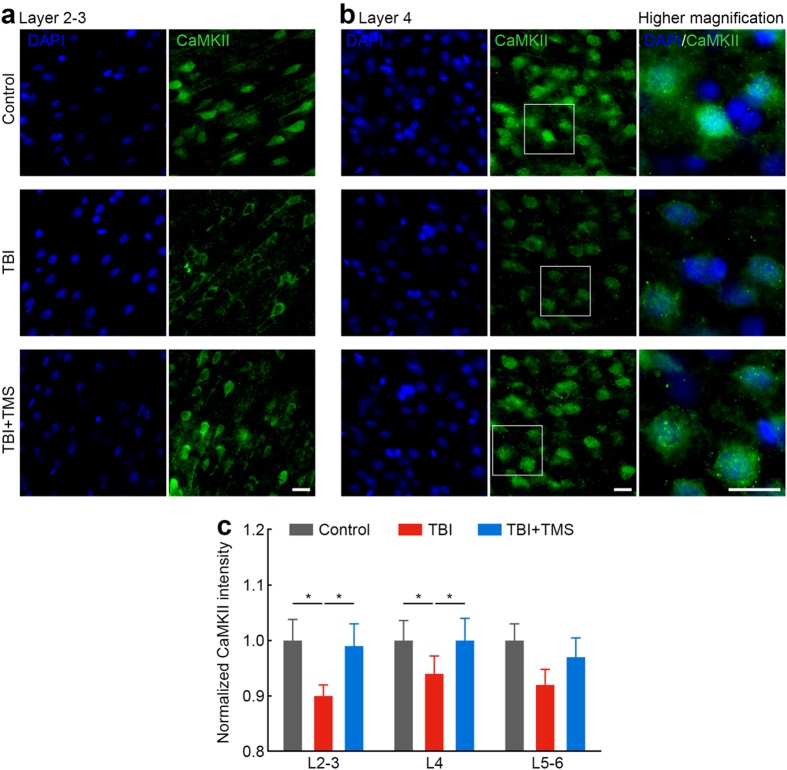
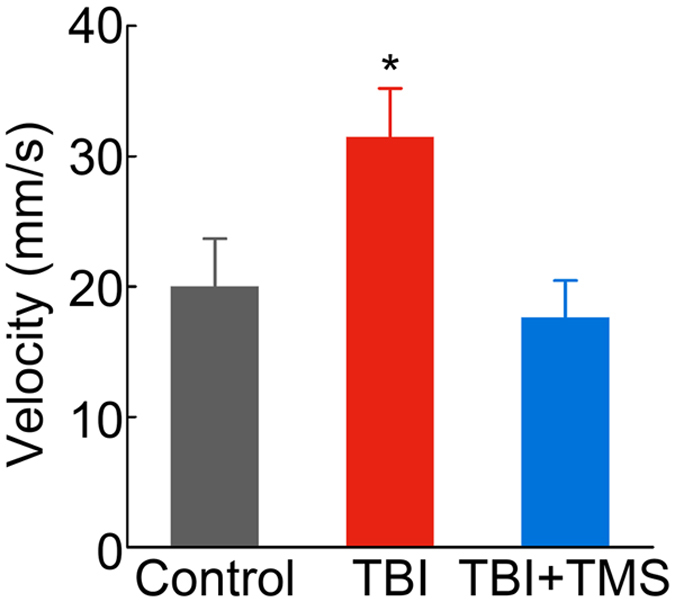
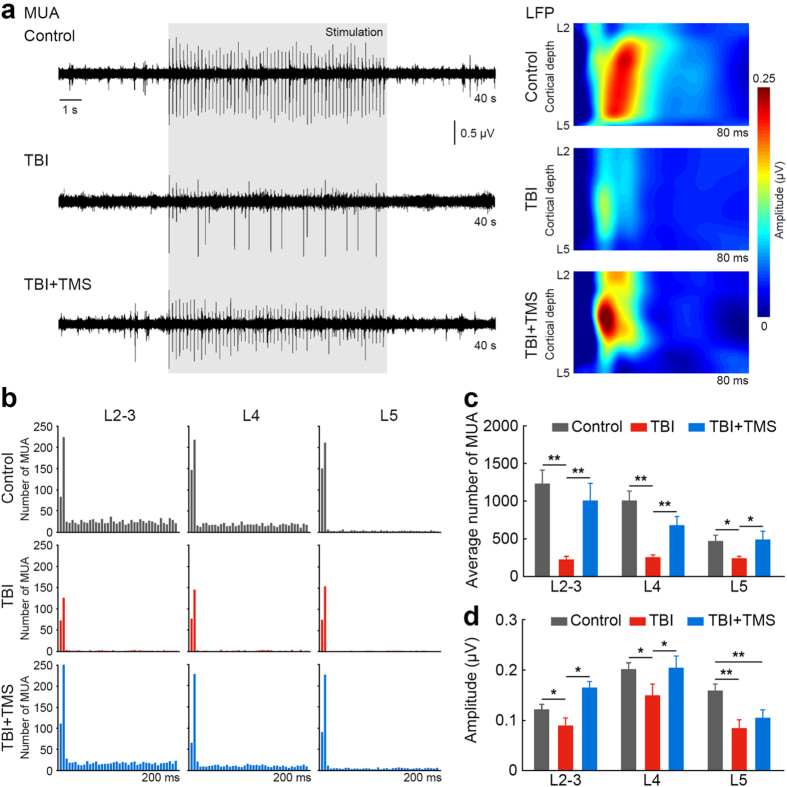
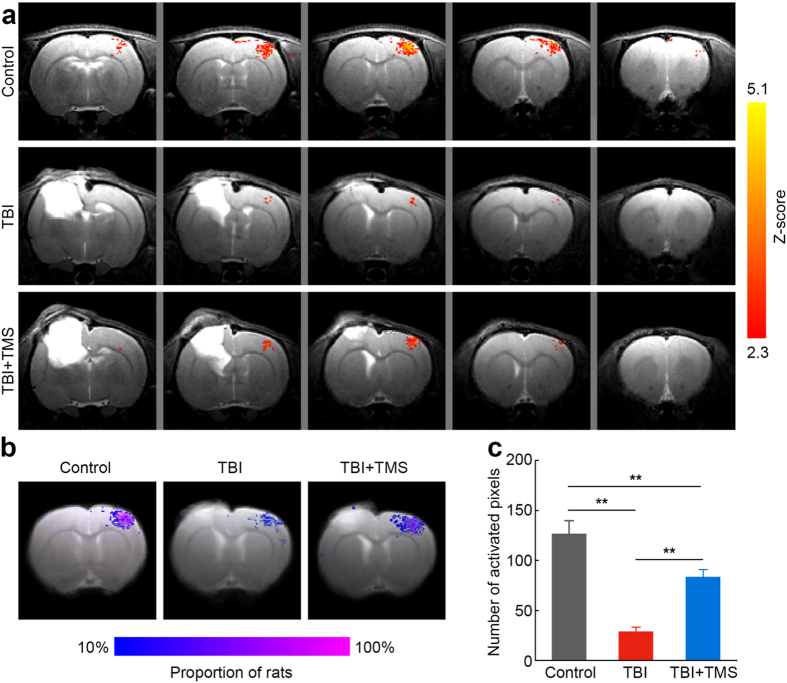
Traumatic brain injury (TBI) is the leading cause of death and disability among children in the United States. Affected children will often suffer from emotional, cognitive and neurological impairments throughout life. In the controlled cortical impact (CCI) animal model of pediatric TBI (postnatal day 16-17) it was demonstrated that injury results in abnormal neuronal hypoactivity in the non-injured primary somatosensory cortex (S1). It materializes that reshaping the abnormal post-injury neuronal activity may provide a suitable strategy to augment rehabilitation. We tested whether high-frequency, non-invasive transcranial magnetic stimulation (TMS) delivered twice a week over a four-week period can rescue the neuronal activity and improve the long-term functional neurophysiological and behavioral outcome in the pediatric CCI model. The results show that TBI rats subjected to TMS therapy showed significant increases in the evoked-fMRI cortical responses (189%), evoked synaptic activity (46%), evoked neuronal firing (200%) and increases expression of cellular markers of neuroplasticity in the non-injured S1 compared to TBI rats that did not receive therapy. Notably, these rats showed less hyperactivity in behavioral tests. These results implicate TMS as a promising approach for reversing the adverse neuronal mechanisms activated post-TBI. Importantly, this intervention could readily be translated to human studies.
创伤性脑损伤(TBI)是美国儿童死亡和残疾的主要原因。受影响的儿童一生中常常会遭受情感、认知和神经功能障碍。在小儿TBI(出生后第16 - 17天)的控制性皮质撞击(CCI)动物模型中,已证明损伤会导致未受伤的初级体感皮层(S1)出现异常的神经元活动减退。事实表明,重塑损伤后异常的神经元活动可能提供一种合适的康复增强策略。我们测试了在四周内每周两次进行高频、非侵入性经颅磁刺激(TMS)是否能挽救小儿CCI模型中的神经元活动,并改善长期功能性神经生理学和行为结果。结果显示,与未接受治疗的TBI大鼠相比,接受TMS治疗的TBI大鼠在诱发功能磁共振成像皮质反应(增加189%)、诱发突触活动(增加46%)、诱发神经元放电(增加200%)以及未受伤的S1中神经可塑性细胞标志物的表达方面均有显著增加。值得注意的是,这些大鼠在行为测试中表现出较少的多动。这些结果表明TMS是一种有前景的方法,可逆转TBI后激活的不良神经元机制。重要的是,这种干预措施可以很容易地转化为人体研究。