Church David D, Hoffman Jay R, LaMonica Michael B, Riffe Joshua J, Hoffman Mattan W, Baker Kayla M, Varanoske Alyssa N, Wells Adam J, Fukuda David H, Stout Jeffrey R
Institute of Exercise Physiology and Wellness, Sport and Exercise Science, University of Central Florida, 12494 University Blvd, Orlando, FL 32816-1250 USA.
J Int Soc Sports Nutr. 2015 Oct 6;12:37. doi: 10.1186/s12970-015-0098-3. eCollection 2015.
The purpose of this study was to examine the ergogenic benefits of Turkish coffee consumed an hour before exercise. In addition, metabolic, cardiovascular, and subjective measures of energy, focus and alertness were examined in healthy, recreationally active adults who were regular caffeine consumers (>200 mg per day).
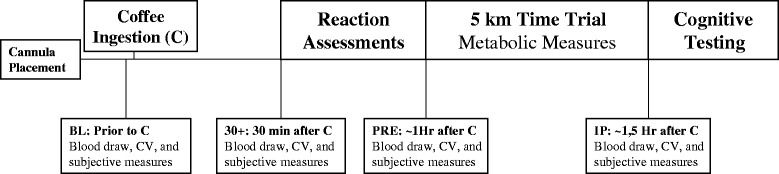
Twenty males (n = 10) and females (n = 10), age 24.1 ± 2.9 y; height 1.70 ± 0.09 m; body mass 73.0 ± 13.0 kg (mean ± SD), ingested both Turkish coffee [3 mg · kg(-1) BW of caffeine, (TC)], and decaffeinated Turkish coffee (DC) in a double-blind, randomized, cross-over design. Performance measures included a 5 km time trial, upper and lower body reaction to visual stimuli, and multiple object tracking. Plasma caffeine concentrations, blood pressure (BP), heart rate and subjective measures of energy, focus and alertness were assessed at baseline (BL), 30-min following coffee ingestion (30+), prior to endurance exercise (PRE) and immediately-post 5 km (IP). Metabolic measures [VO2, V E , and respiratory exchange rate (RER)] were measured during the 5 km.
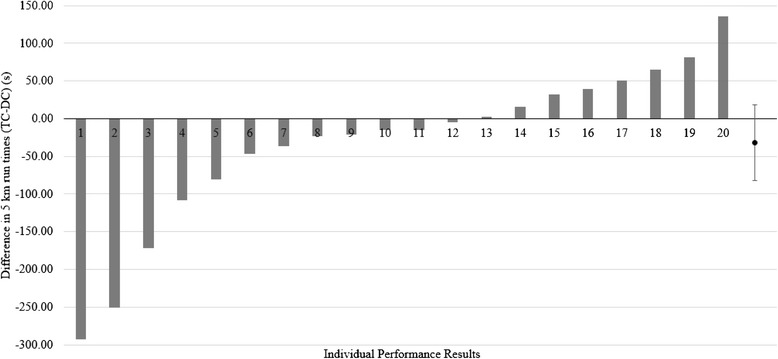
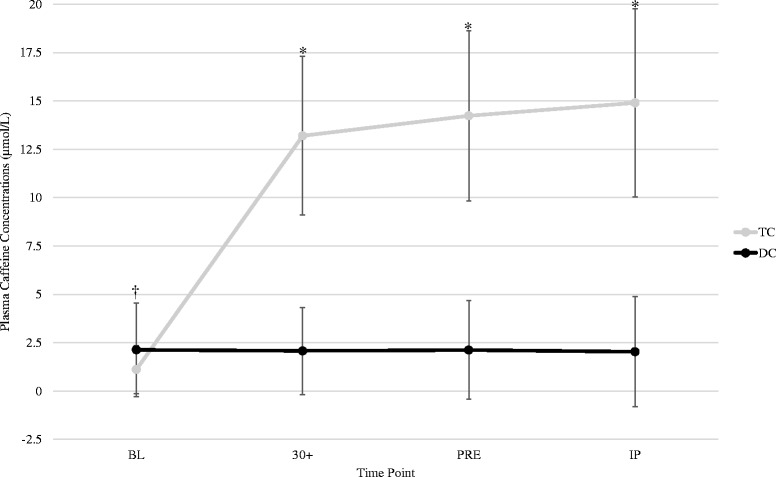
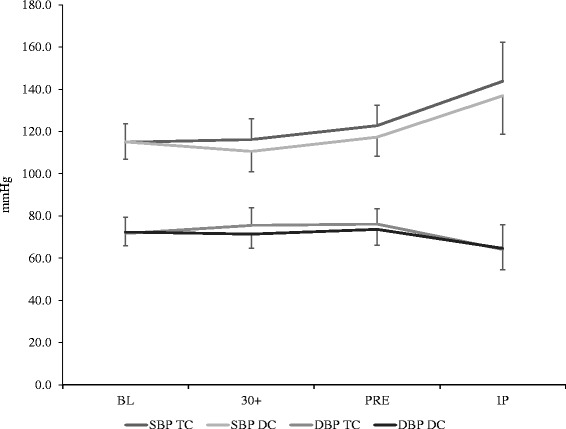
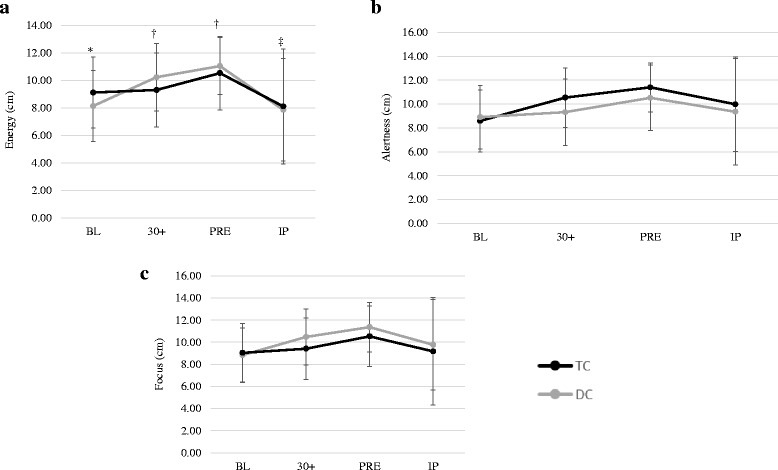
Plasma caffeine concentrations were significantly greater during TC (p < 0.001) at 30+, PRE, and IP compared to DC. Significantly higher energy levels were reported at 30+ and PRE for TC compared to DC. Upper body reaction performance (p = 0.023) and RER (p = 0.019) were significantly higher for TC (85.1 ± 11.6 "hits," and 0.98 ± 0.05 respectively) compared to DC (81.2 ± 13.7 "hits," and 0.96 ± 0.05, respectively). Although no significant differences (p = 0.192) were observed in 5 km run time, 12 of the 20 subjects ran faster (p = 0.012) during TC (1662 ± 252 s) compared to DC (1743 ± 296 s). Systolic BP was significantly elevated during TC in comparison to DC. No other differences (p > 0.05) were noted in any of the other performance or metabolic measures.
Acute ingestion of TC resulted in a significant elevation in plasma caffeine concentrations within 30-min of consumption. TC ingestion resulted in significant performance benefits in reaction time and an increase in subjective feelings of energy in habitual caffeine users. No significant differences were noted in time for the 5 km between trials, however 60 % of the participants performed the 5 km faster during the TC trial and were deemed responders. When comparing TC to DC in responders only, significantly faster times were noted when consuming TC compared to DC. No significant benefits were noted in measures of cognitive function.
本研究旨在探讨运动前一小时饮用土耳其咖啡的促力效果。此外,还对日常摄入咖啡因(>200毫克/天)的健康、有休闲运动习惯的成年人的能量代谢、心血管功能以及能量、注意力和警觉性的主观指标进行了检测。
选取20名男性(n = 10)和女性(n = 10),年龄24.1±2.9岁;身高1.70±0.09米;体重73.0±13.0千克(均值±标准差),采用双盲、随机、交叉设计,分别摄入土耳其咖啡[3毫克·千克-1体重的咖啡因,(TC)]和脱咖啡因土耳其咖啡(DC)。性能指标包括5公里计时赛、上下肢对视觉刺激的反应以及多目标追踪。在基线(BL)、摄入咖啡后30分钟(30+)、耐力运动前(PRE)和5公里跑后即刻(IP)评估血浆咖啡因浓度、血压(BP)、心率以及能量、注意力和警觉性的主观指标。在5公里跑步过程中测量代谢指标[摄氧量(VO2)、每分通气量(VE)和呼吸交换率(RER)]。
与DC相比,TC组在30+、PRE和IP时的血浆咖啡因浓度显著更高(p < 0.001)。与DC相比,TC组在30+和PRE时报告的能量水平显著更高。与DC组(分别为81.2±13.7次“命中”和0.96±0.05)相比,TC组的上肢反应性能(p = 0.023)和RER(p = 0.019)显著更高(分别为85.1±11.6次“命中”和0.98±0.05)。尽管在5公里跑步时间上未观察到显著差异(p = 0.192),但20名受试者中有12名在TC组(1662±252秒)比在DC组(1743±296秒)跑得更快(p = 0.012)。与DC相比,TC组的收缩压显著升高。在任何其他性能或代谢指标中均未发现其他差异(p > 0.05)。
急性摄入TC导致饮用后30分钟内血浆咖啡因浓度显著升高。摄入TC对反应时间有显著的性能提升效果,并增加了习惯性咖啡因使用者的主观能量感受。两次试验的5公里跑时间无显著差异,然而60%的参与者在TC试验中5公里跑得更快,被视为反应者。仅在反应者中比较TC和DC时,发现饮用TC时的时间明显快于DC。在认知功能指标上未发现显著益处。