Izquierdo Eduardo J, Williams Paul L, Beer Randall D
Cognitive Science Program, Indiana University, Bloomington, Indiana, United States of America; School of Informatics and Computing, Indiana University, Bloomington, Indiana, United States of America.
Cognitive Science Program, Indiana University, Bloomington, Indiana, United States of America.
PLoS One. 2015 Oct 14;10(10):e0140397. doi: 10.1371/journal.pone.0140397. eCollection 2015.
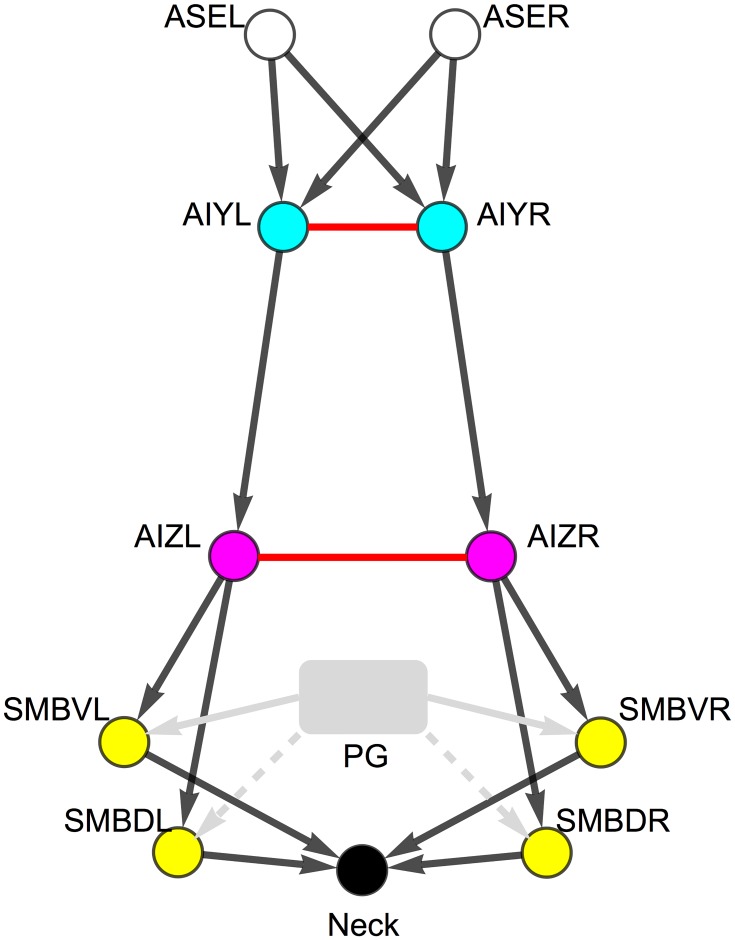
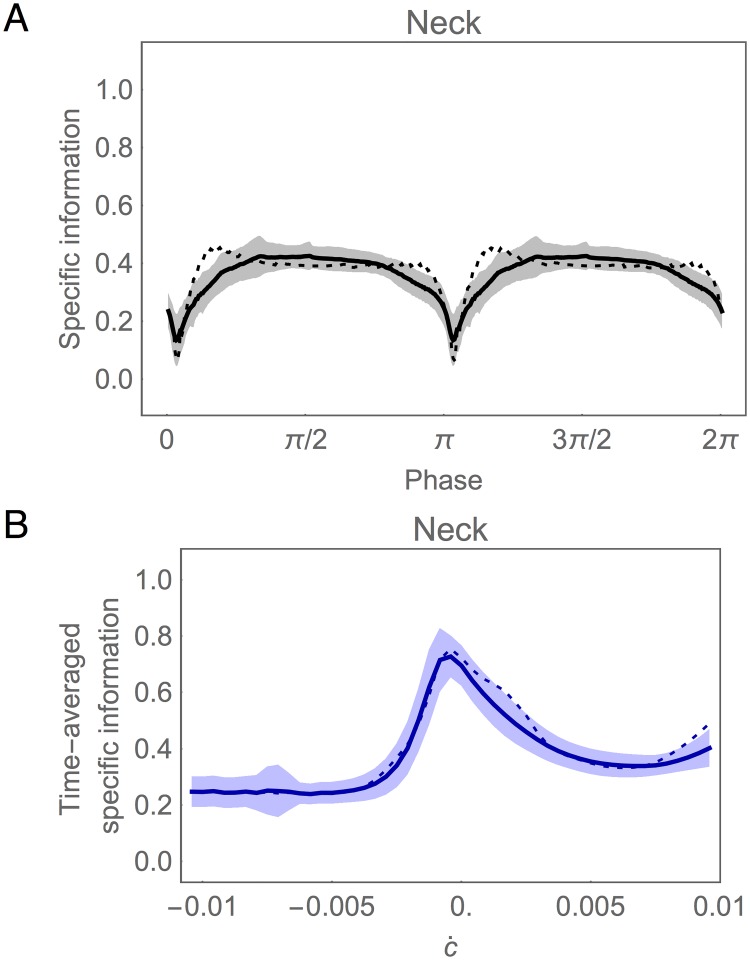
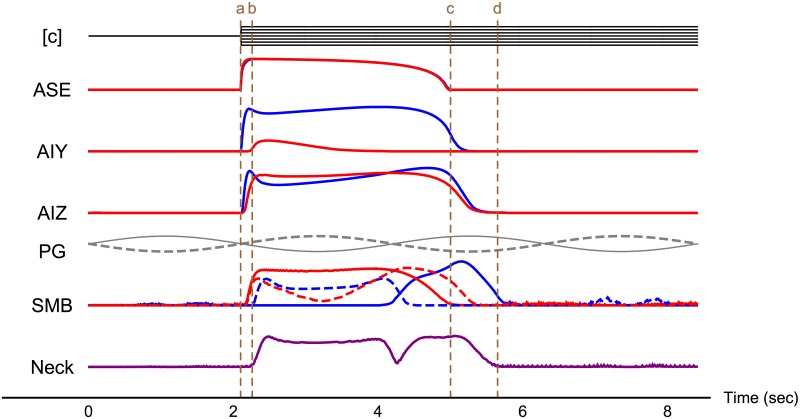
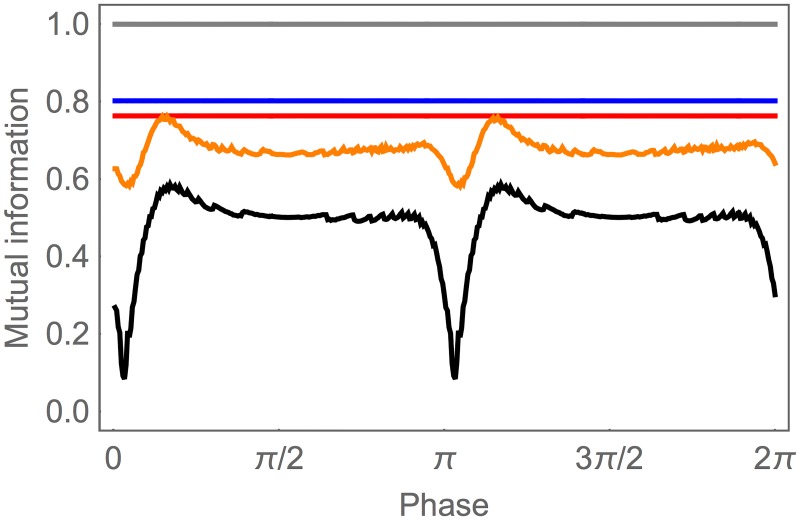
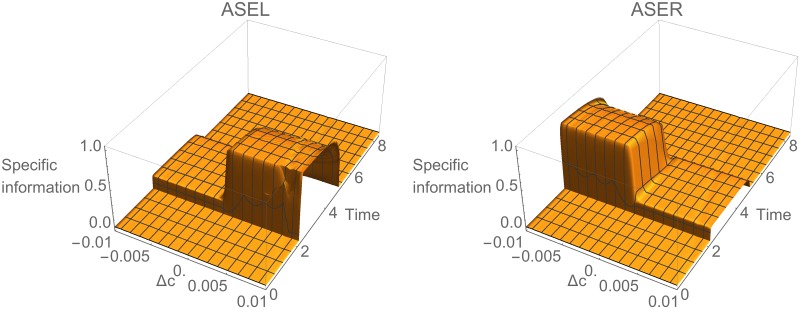
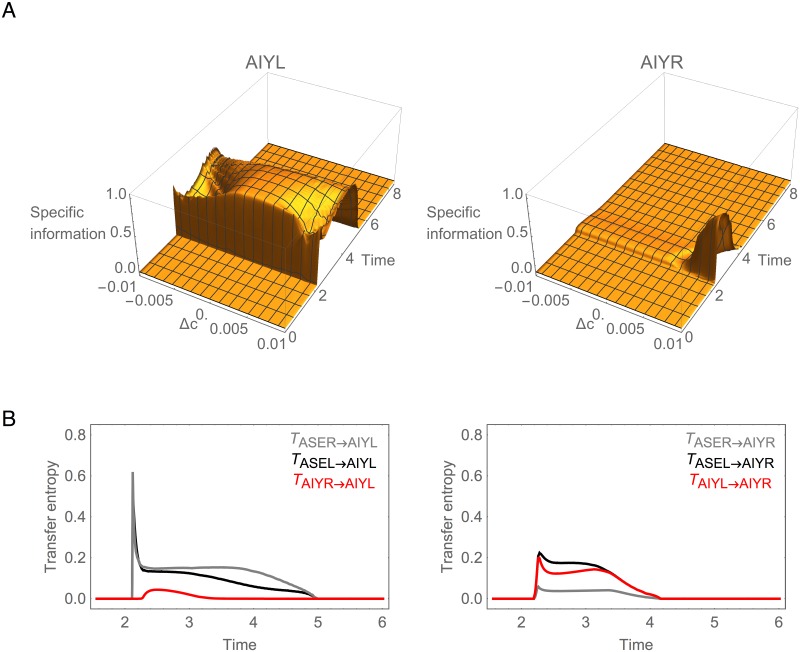
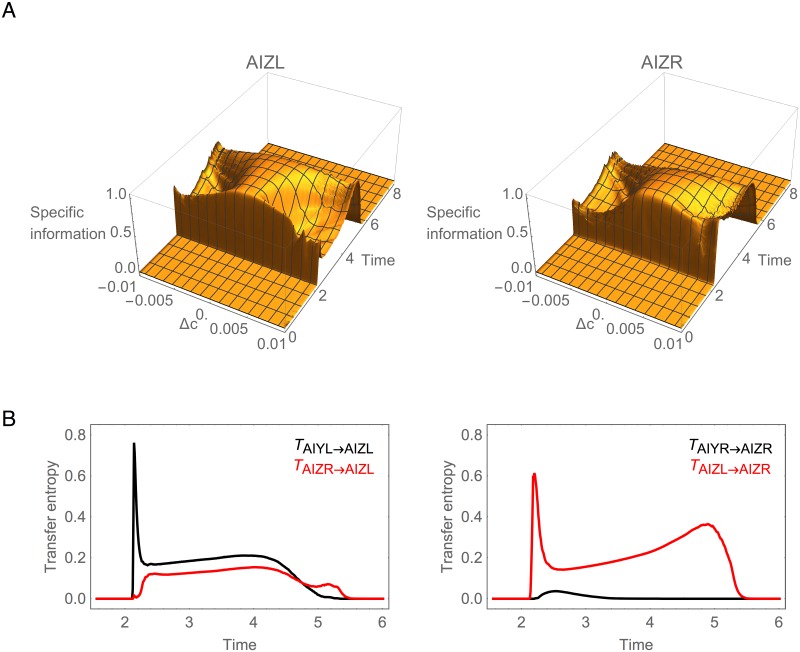
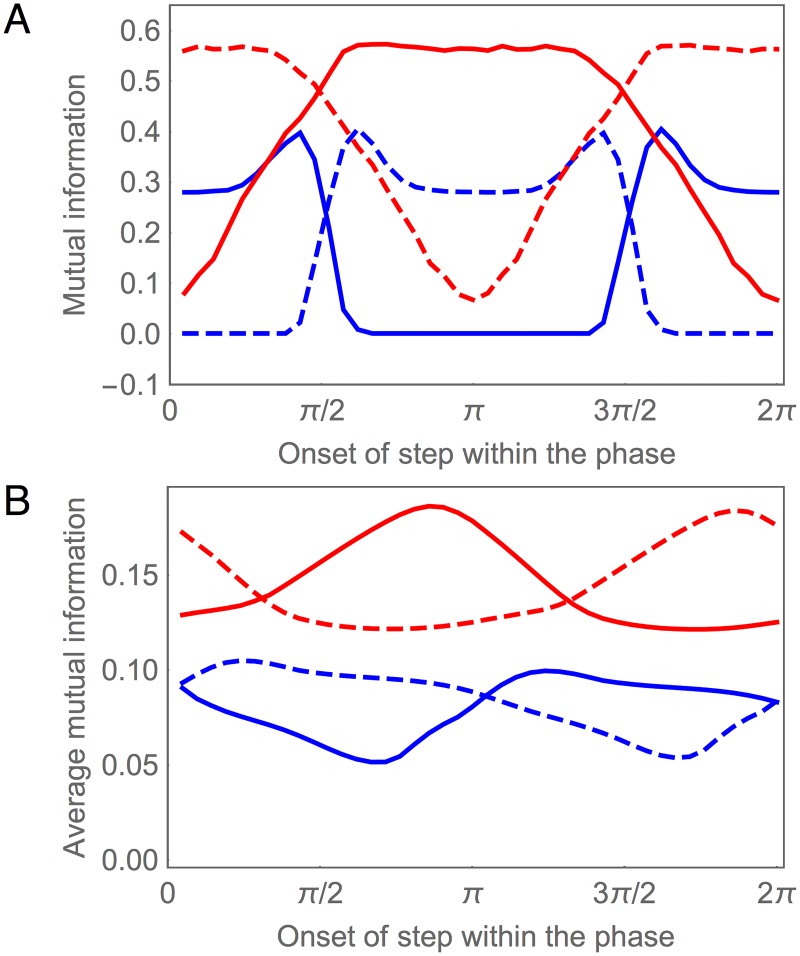
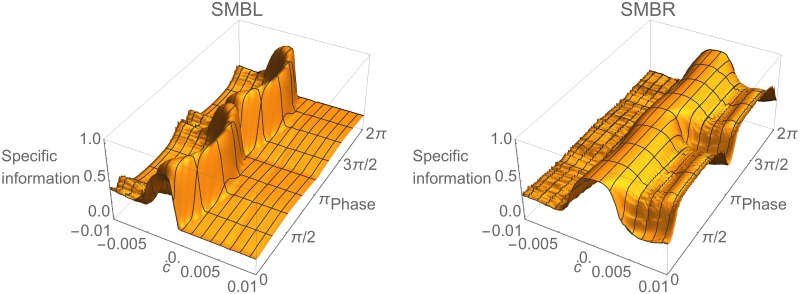
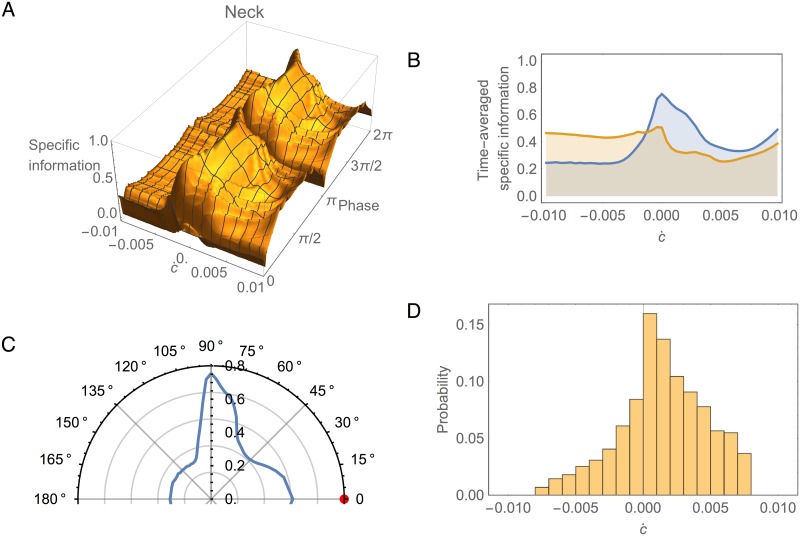
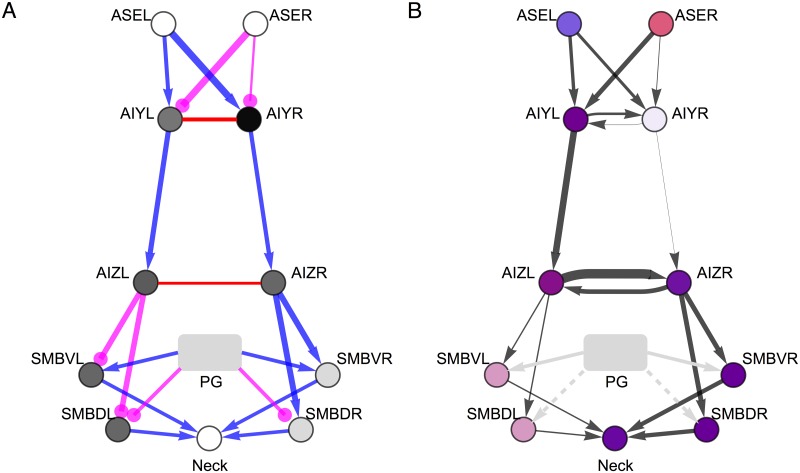
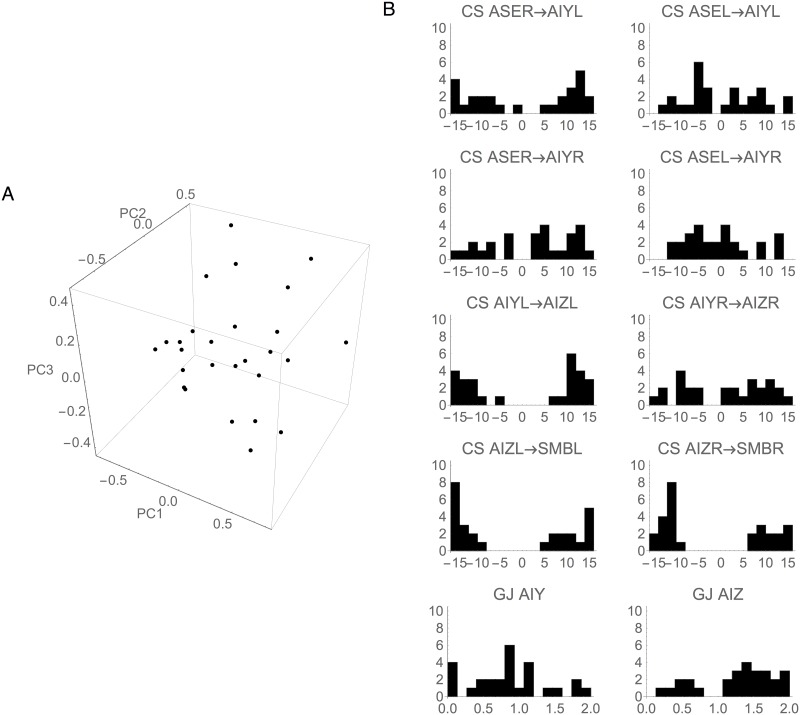
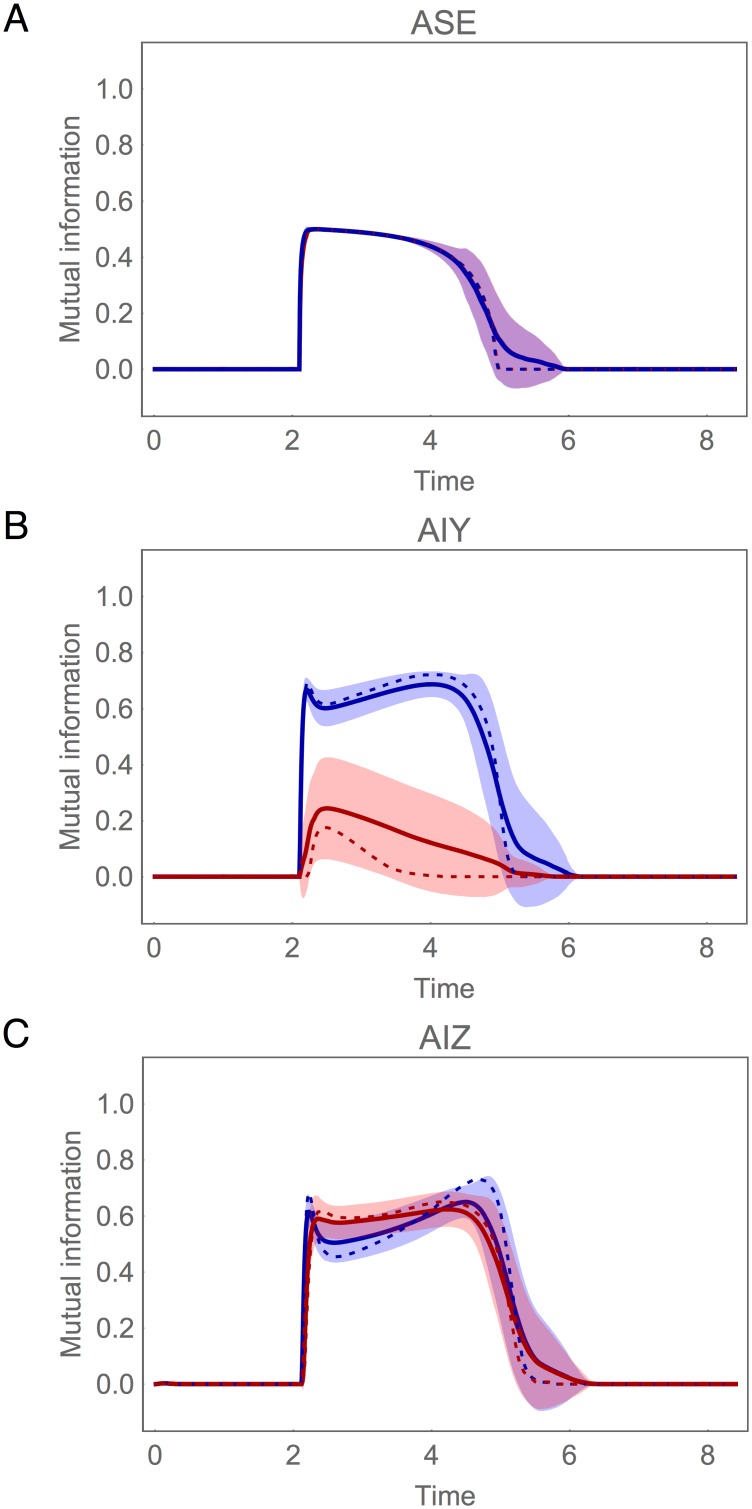
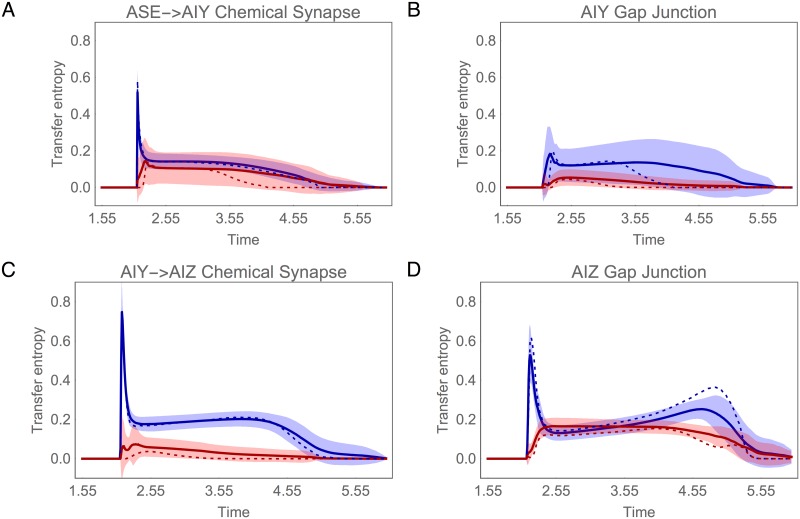
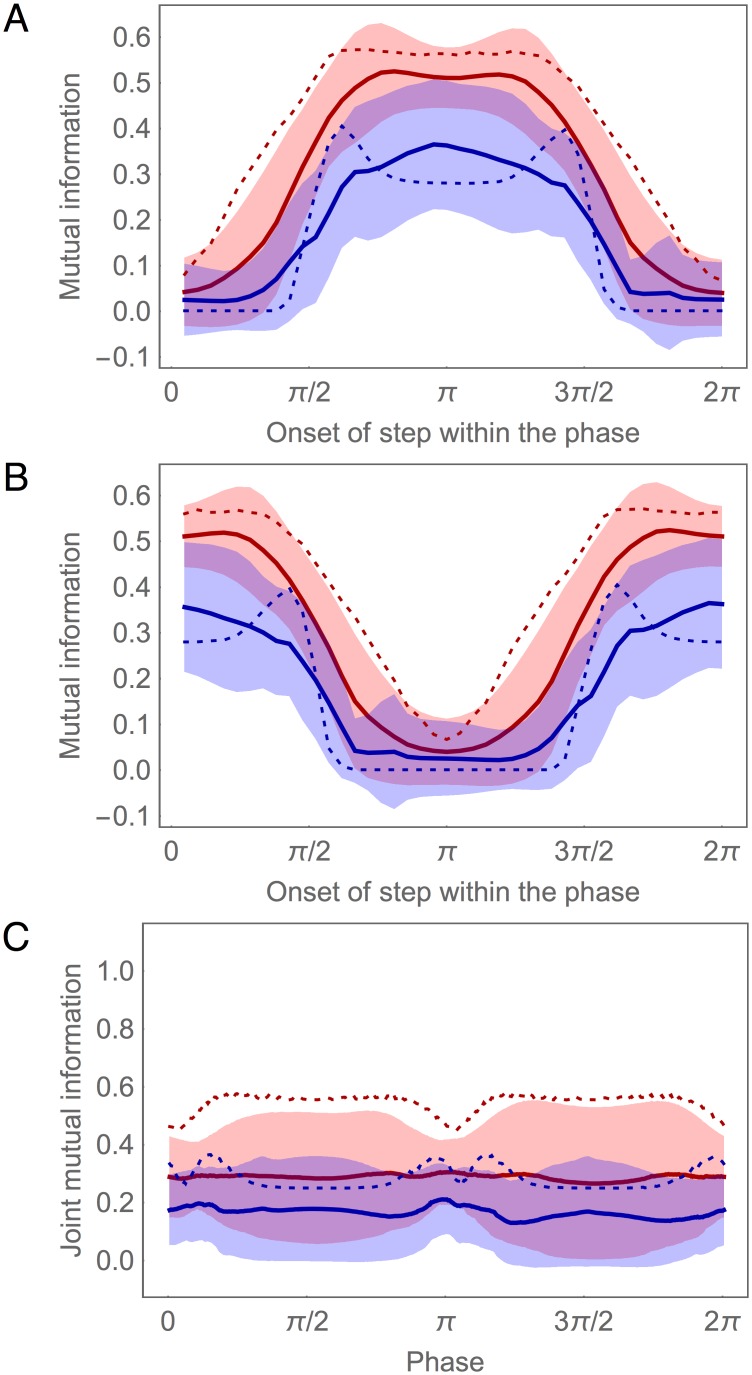
Understanding how information about external stimuli is transformed into behavior is one of the central goals of neuroscience. Here we characterize the information flow through a complete sensorimotor circuit: from stimulus, to sensory neurons, to interneurons, to motor neurons, to muscles, to motion. Specifically, we apply a recently developed framework for quantifying information flow to a previously published ensemble of models of salt klinotaxis in the nematode worm Caenorhabditis elegans. Despite large variations in the neural parameters of individual circuits, we found that the overall information flow architecture circuit is remarkably consistent across the ensemble. This suggests structural connectivity is not necessarily predictive of effective connectivity. It also suggests information flow analysis captures general principles of operation for the klinotaxis circuit. In addition, information flow analysis reveals several key principles underlying how the models operate: (1) Interneuron class AIY is responsible for integrating information about positive and negative changes in concentration, and exhibits a strong left/right information asymmetry. (2) Gap junctions play a crucial role in the transfer of information responsible for the information symmetry observed in interneuron class AIZ. (3) Neck motor neuron class SMB implements an information gating mechanism that underlies the circuit's state-dependent response. (4) The neck carries more information about small changes in concentration than about large ones, and more information about positive changes in concentration than about negative ones. Thus, not all directions of movement are equally informative for the worm. Each of these findings corresponds to hypotheses that could potentially be tested in the worm. Knowing the results of these experiments would greatly refine our understanding of the neural circuit underlying klinotaxis.
理解外部刺激信息如何转化为行为是神经科学的核心目标之一。在此,我们描述了通过一个完整的感觉运动回路的信息流:从刺激到感觉神经元,再到中间神经元,到运动神经元,到肌肉,最后到运动。具体而言,我们将最近开发的一种用于量化信息流的框架应用于先前发表的线虫秀丽隐杆线虫盐趋 klinotaxis 模型的集合。尽管各个回路的神经参数存在很大差异,但我们发现整个信息流架构回路在整个集合中非常一致。这表明结构连通性不一定能预测有效连通性。这也表明信息流分析捕捉到了 klinotaxis 回路的一般运作原则。此外,信息流分析揭示了模型运作背后的几个关键原则:(1) 中间神经元类 AIY 负责整合关于浓度正负变化的信息,并表现出强烈的左右信息不对称。(2) 间隙连接在负责中间神经元类 AIZ 中观察到的信息对称的信息传递中起关键作用。(3) 颈部运动神经元类 SMB 实现了一种信息门控机制,该机制是回路状态依赖性反应的基础。(4) 颈部携带的关于浓度小变化的信息比大变化的多,关于浓度正变化的信息比负变化的多。因此,并非所有运动方向对蠕虫来说都同样具有信息量。这些发现中的每一个都对应着可能在线虫中进行测试的假设。了解这些实验的结果将极大地完善我们对 klinotaxis 潜在神经回路的理解。