Fetoni A R, Paciello F, Mezzogori D, Rolesi R, Eramo S L M, Paludetti G, Troiani D
Department of Head and Neck Surgery, Università Cattolica, School of Medicine, Largo F Vito 1, Rome 00168, Italy.
Institute of Human Physiology, Università Cattolica, School of Medicine, Largo F Vito 1, Rome 00168, Italy.
Br J Cancer. 2015 Nov 17;113(10):1434-44. doi: 10.1038/bjc.2015.359. Epub 2015 Oct 15.
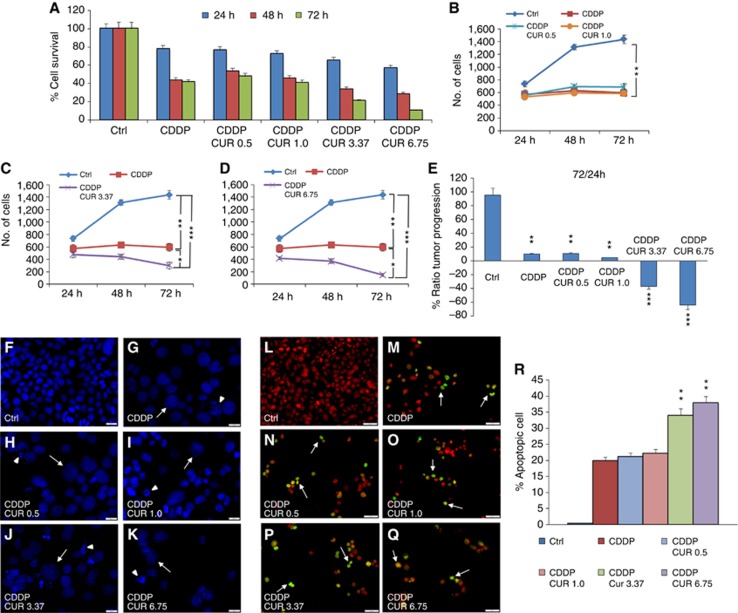
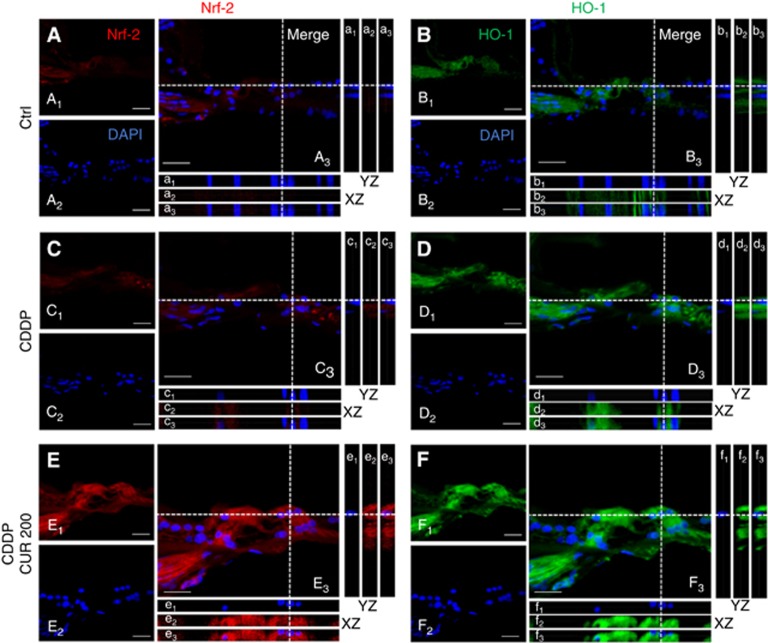
In oncology, an emerging paradigm emphasises molecularly targeted approaches for cancer prevention and therapy and the use of adjuvant chemotherapeutics to overcome cisplatin limitations. Owing to their safe use, some polyphenols, such as curcumin, modulate important pathways or molecular targets in cancers. This paper focuses on curcumin as an adjuvant molecule to cisplatin by analysing its potential implications on the molecular targets, signal transducer and activator of transcription 3 (STAT3) and NF-E2 p45-related factor 2 (Nrf-2), in tumour progression and cisplatin resistance in vitro and the adverse effect ototoxicity in vivo.
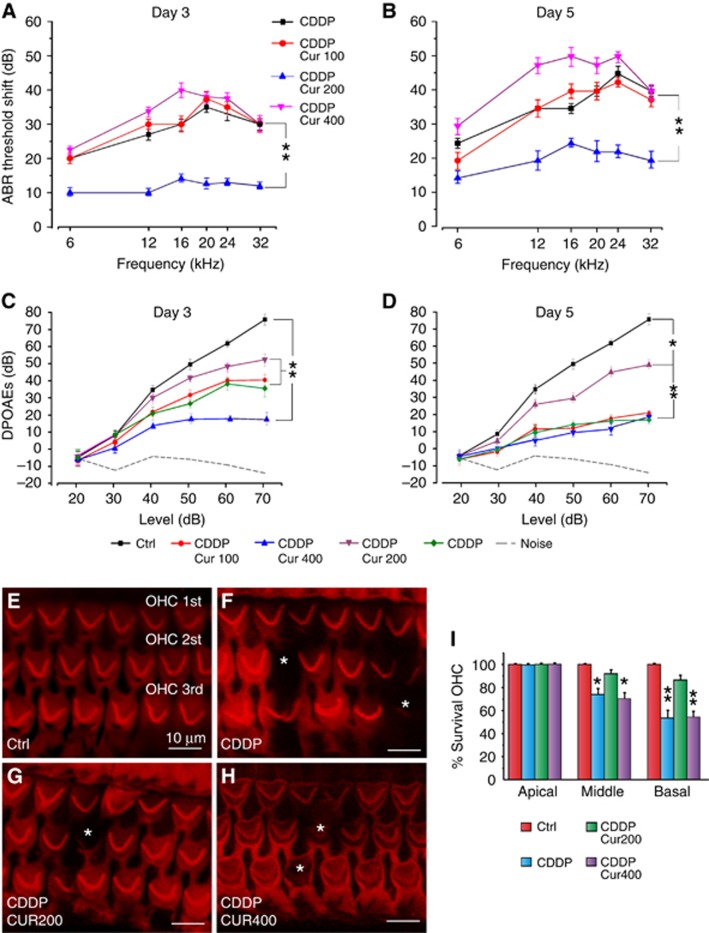
The effects of curcumin and/or cisplatin treatment have been evaluated in head and neck squamous cell carcinoma as well as in a rat model of cisplatin-induced ototoxicity by using immunofluorescence, western blot, and functional and morphological analysis.
This study demonstrates that curcumin attenuates all stages of tumour progression (survival, proliferation) and, by targeting pSTAT3 and Nrf-2 signalling pathways, provides chemosensitisation to cisplatin in vitro and protection from its ototoxic adverse effects in vivo.
These results indicate that curcumin can be used as an efficient adjuvant to cisplatin cancer therapy. This treatment strategy in head and neck cancer could mediate cisplatin chemoresistance by modulating therapeutic targets (STAT3 and Nrf2) and, at the same time, reduce cisplatin-related ototoxic adverse effects.
在肿瘤学领域,一种新兴的模式强调采用分子靶向方法进行癌症预防和治疗,并使用辅助化疗药物来克服顺铂的局限性。由于一些多酚类物质(如姜黄素)使用安全,它们可调节癌症中的重要信号通路或分子靶点。本文通过分析姜黄素对体外肿瘤进展和顺铂耐药性以及体内耳毒性不良反应中分子靶点、信号转导和转录激活因子3(STAT3)和NF-E2 p45相关因子2(Nrf-2)的潜在影响,重点研究姜黄素作为顺铂辅助分子的作用。
通过免疫荧光、蛋白质印迹以及功能和形态学分析,评估姜黄素和/或顺铂治疗对头颈部鳞状细胞癌以及顺铂诱导的耳毒性大鼠模型的影响。
本研究表明,姜黄素可减轻肿瘤进展的各个阶段(存活、增殖),并通过靶向pSTAT3和Nrf-2信号通路,在体外使肿瘤对顺铂产生化学增敏作用,并在体内保护机体免受顺铂耳毒性不良反应的影响。
这些结果表明,姜黄素可作为顺铂癌症治疗的有效辅助药物。这种头颈部癌症治疗策略可通过调节治疗靶点(STAT3和Nrf2)介导顺铂化疗耐药性,同时减少顺铂相关的耳毒性不良反应。