Liu Jing, Li Feng, Tang Xu-Dong, Ma Jie, Ma Xin, Ge Dong-Yu, Li Gen-Mao, Wang Yong
School of Preclinical Medicine, Beijing University of Chinese Medicine, Beijing, China.
Digestive Department, Xiyuan Hospital, Affiliated with Chinese Academy of TCM, Beijing, China.
BMC Complement Altern Med. 2015 Oct 27;15:387. doi: 10.1186/s12906-015-0913-z.
Chinese medicine xiangshaliujunzi decoction (XSLJZD) plays a key role in treating functional dyspepsia (FD), a common clinical gastrointestinal disorder. However, the mechanism of this disease is unclear. Brain-gut axis regulates food intake behaviour, and this regulatory mechanism is mediated by neuropeptides. Brain-gut axis impairment and neuropeptide alteration may be the pathological mechanisms of FD, and brain-gut axis regulation may influence the action of medicine.
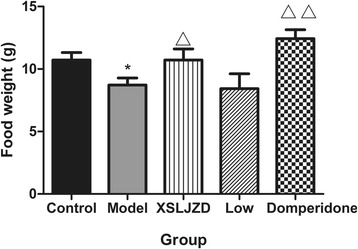
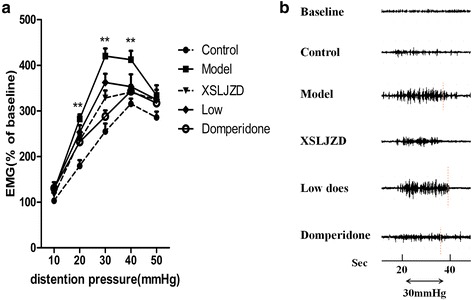
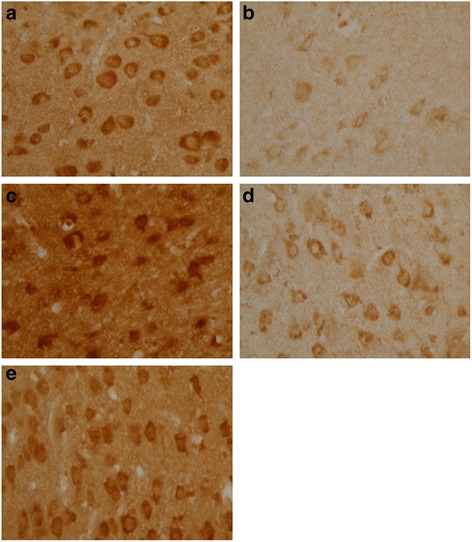
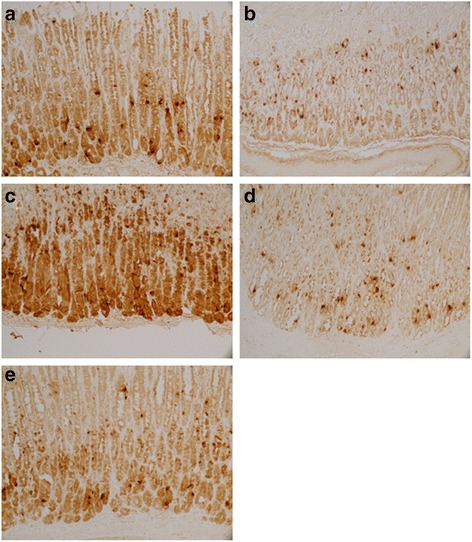
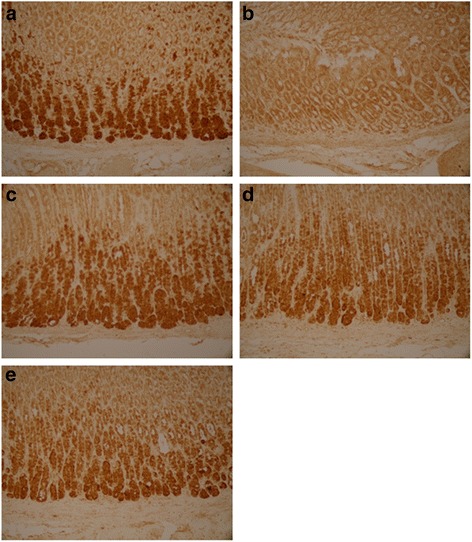
In our experiment, the effect of XSLJZD on FD was evaluated in terms of food intake, sucrose preference test and electromyogram. Changes in neuropeptides [ghrelin, cholecystokinin (CCK) and vasoactive intestinal polypeptide (VIP)] were detected through immunohistochemistry, real-time PCR and ELISA.
XSLJZD increased food intake and the percentage of sucrose preference (>75 %). However, the response to gastric detention decreased. Furthermore, XSLJZD increased ghrelin, CCK, VIP proteins and genes in the stomach. XSLJZD also increased ghrelin, CCK and VIP proteins in serum. By contrast, XSLJZD decreased the mRNA expression of these neuropeptides in the hypothalamus.
XSLJZD alleviated the symptoms of FD by upregulating the production of ghrelin, CCK and VIP and by increasing the levels of these neuropeptides in circulation. This finding can help elucidate the mechanism of FD and can provide further insight into the pharmacokinetics of XSLJZD.
中药香砂六君子汤(XSLJZD)在治疗功能性消化不良(FD)中起关键作用,功能性消化不良是一种常见的临床胃肠疾病。然而,该病的发病机制尚不清楚。脑-肠轴调节食物摄入行为,且这种调节机制由神经肽介导。脑-肠轴功能障碍和神经肽改变可能是FD的病理机制,并且脑-肠轴调节可能影响药物的作用。
在我们的实验中,通过食物摄入量、蔗糖偏好试验和肌电图评估XSLJZD对FD的影响。通过免疫组织化学、实时荧光定量PCR和酶联免疫吸附测定法检测神经肽[胃饥饿素、胆囊收缩素(CCK)和血管活性肠肽(VIP)]的变化。
XSLJZD增加了食物摄入量和蔗糖偏好百分比(>75%)。然而,对胃潴留的反应降低。此外,XSLJZD增加了胃中胃饥饿素、CCK、VIP蛋白和基因的表达。XSLJZD还增加了血清中胃饥饿素、CCK和VIP蛋白的含量。相比之下,XSLJZD降低了下丘脑这些神经肽的mRNA表达水平。
XSLJZD通过上调胃饥饿素、CCK和VIP的产生以及增加循环中这些神经肽的水平来缓解FD症状。这一发现有助于阐明FD的发病机制,并能为深入了解XSLJZD的药代动力学提供进一步的见解。