Han Shufen, Jiao Jun, Zhang Wei, Xu Jiaying, Wan Zhongxiao, Zhang Weiguo, Gao Xiaoran, Qin Liqiang
Department of Nutrition and Food Hygiene, Jiangsu Key Laboratory of Preventive and Translational Medicine for Geriatric Diseases, School of Public Health, Soochow University, 199 Renai Road, Suzhou City 215123, China.
Key Laboratory of Radiation Biology, School of Radiation Medicine and Protection, Soochow University, 199 Renai Road, Suzhou City 215123, China.
Sci Rep. 2015 Oct 29;5:15256. doi: 10.1038/srep15256.
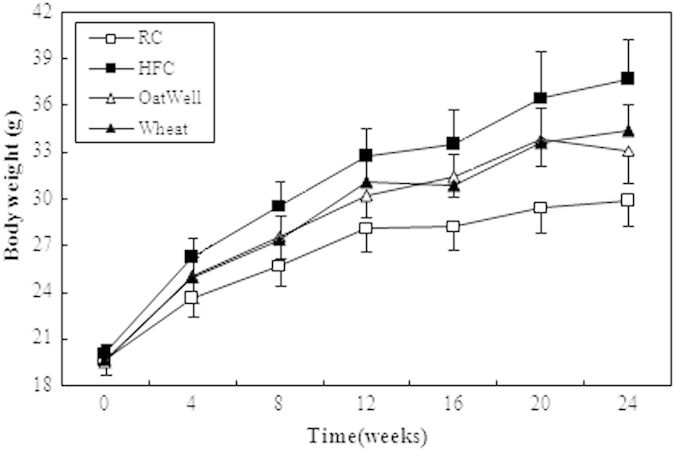
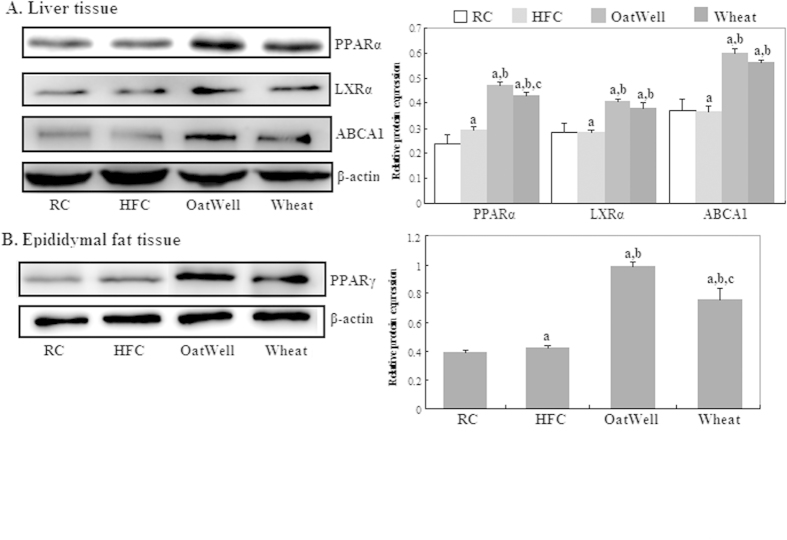
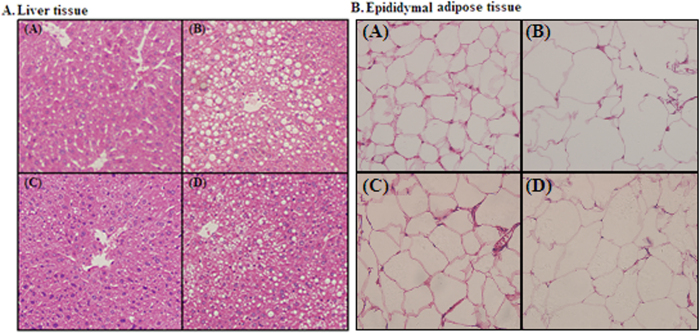
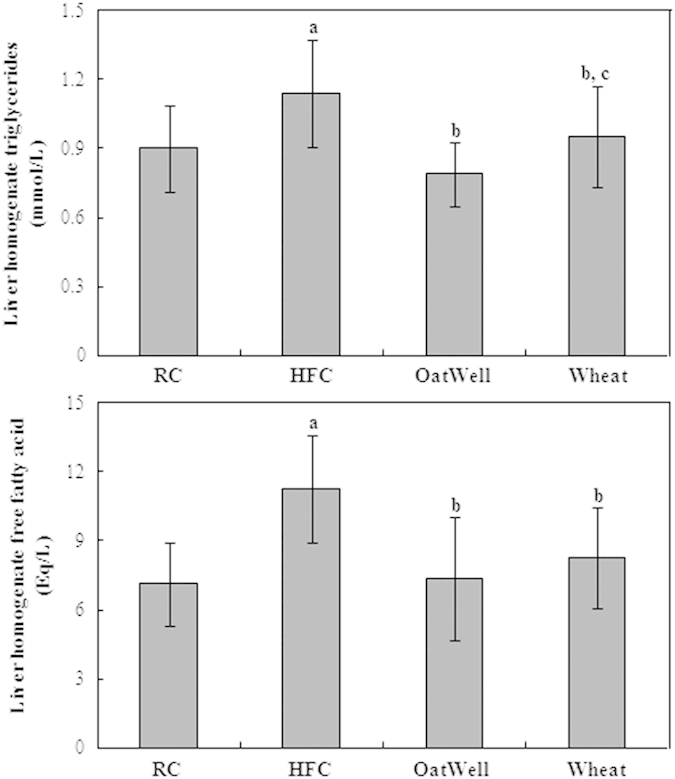
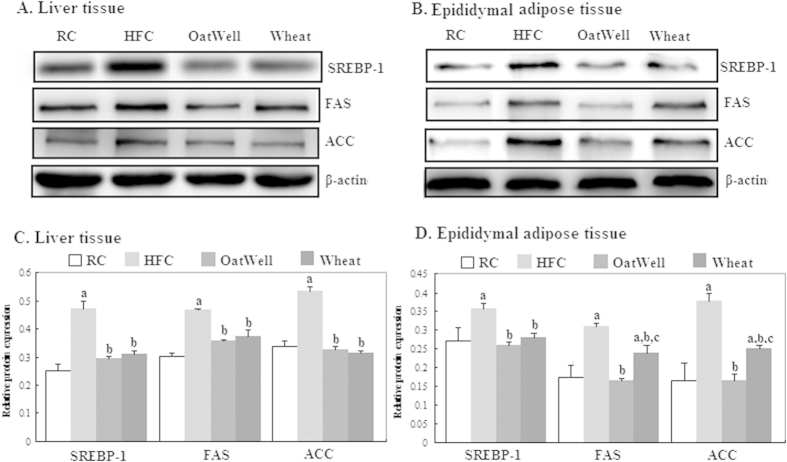
Adequate intake of dietary fibers has proven metabolic and cardiovascular benefits, molecular mechanisms remain still limited. This study was aimed to investigate the effects of cereal dietary fiber on obesity-related liver lipotoxicity in C57BL/6J mice fed a high-fat/cholesterol (HFC) diet and underlying mechanism. Forty-eight adult male C57BL/6J mice were randomly given a reference chow diet, or a high fat/cholesterol (HFC) diet supplemented with or without oat fiber or wheat bran fiber for 24 weeks. Our results showed mice fed oat or wheat bran fiber exhibited lower weight gain, lipid profiles and insulin resistance, compared with HFC diet. The two cereal dietary fibers potently decreased protein expressions of sterol regulatory element binding protein-1 and key factors involved in lipogenesis, including fatty acid synthase and acetyl-CoA carboxylase in target tissues. At molecular level, the two cereal dietary fibers augmented protein expressions of peroxisome proliferator-activated receptor alpha and gamma, liver X receptor alpha, and ATP-binding cassette transporter A1 in target tissues. Our findings indicated that cereal dietary fiber supplementation abrogated obesity-related liver lipotoxicity and dyslipidemia in C57BL/6J mice fed a HFC diet. In addition, the efficacy of oat fiber is greater than wheat bran fiber in normalizing these metabolic disorders and pathological profiles.
充足摄入膳食纤维已被证明对代谢和心血管有益,但分子机制仍很有限。本研究旨在探讨谷物膳食纤维对高脂/高胆固醇(HFC)饮食喂养的C57BL/6J小鼠肥胖相关肝脏脂毒性的影响及其潜在机制。48只成年雄性C57BL/6J小鼠被随机给予标准饲料,或添加或不添加燕麦纤维或麦麸纤维的高脂/高胆固醇(HFC)饮食,持续24周。我们的结果显示,与HFC饮食组相比,喂食燕麦或麦麸纤维的小鼠体重增加、血脂水平和胰岛素抵抗较低。两种谷物膳食纤维显著降低了目标组织中固醇调节元件结合蛋白-1以及参与脂肪生成的关键因子(包括脂肪酸合酶和乙酰辅酶A羧化酶)的蛋白表达。在分子水平上,两种谷物膳食纤维增加了目标组织中过氧化物酶体增殖物激活受体α和γ、肝脏X受体α以及ATP结合盒转运蛋白A1的蛋白表达。我们的研究结果表明,补充谷物膳食纤维可消除HFC饮食喂养的C57BL/6J小鼠肥胖相关的肝脏脂毒性和血脂异常。此外,在使这些代谢紊乱和病理状况正常化方面,燕麦纤维的功效大于麦麸纤维。