Atwell Lauren L, Zhang Zhenzhen, Mori Motomi, Farris Paige, Vetto John T, Naik Arpana M, Oh Karen Y, Thuillier Philippe, Ho Emily, Shannon Jackilen
School of Biological and Population Health Sciences, Oregon State University, Corvallis, OR, 97331.
Department of Nutrition and Food Science, California State University, Chico, 400 West 1 Avenue, Chico, CA 95929.
Cancer Prev Res (Phila). 2015 Dec;8(12):1184-1191. doi: 10.1158/1940-6207.CAPR-15-0119. Epub 2015 Oct 28.
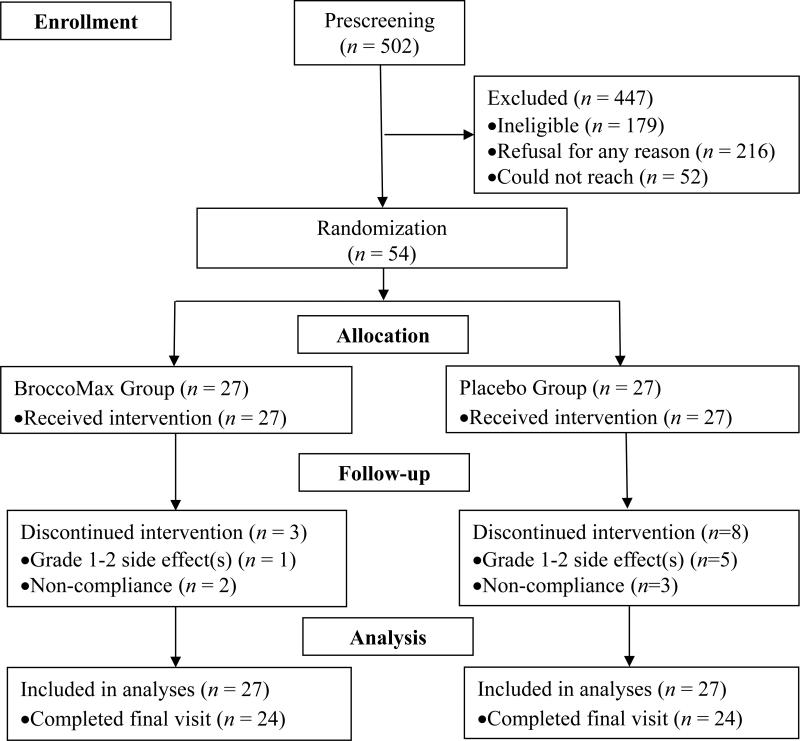
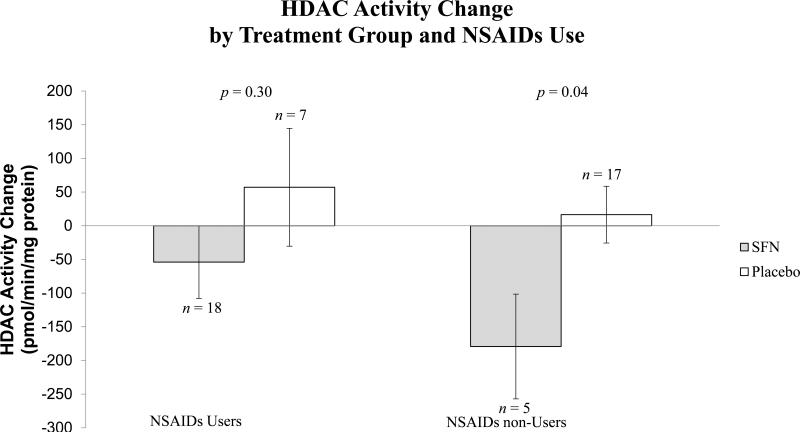
Epidemiologic studies suggest a protective effect of cruciferous vegetables on breast cancer. Sulforaphane (SFN), an active food component derived from crucifers, has been shown to be effective in breast cancer chemoprevention. This study evaluated the chemopreventive effect of SFN on selective biomarkers from blood and breast tissues. In a 2- to 8-week double-blinded, randomized controlled trial, 54 women with abnormal mammograms and scheduled for breast biopsy were randomized to consume a placebo or a glucoraphanin (GFN) supplement providing SFN (n = 27). Plasma and urinary SFN metabolites, peripheral blood mononuclear cell (PBMC) histone deacetylase (HDAC) activity, and tissue biomarkers (H3K18ac, H3K9ac, HDAC3, HDAC6, Ki-67, p21) were measured before and after the intervention in benign, ductal carcinoma in situ, or invasive ductal carcinoma breast tissues. Within the supplement group, Ki-67 (P = 0.003) and HDAC3 (P = 0.044) levels significantly decreased in benign tissue. Pre-to-postintervention changes in these biomarkers were not significantly different between treatment groups after multiple comparison adjustment. GFN supplementation was associated with a significant decrease in PBMC HDAC activity (P = 0.04). No significant associations were observed between SFN and examined tissue biomarkers when comparing treatment groups. This study provides evidence that GFN supplementation for a few weeks is safe but may not be sufficient for producing changes in breast tissue tumor biomarkers. Future studies employing larger sample sizes should evaluate alternative dosing and duration regimens to inform dietary SFN strategies in breast cancer chemoprevention.
流行病学研究表明十字花科蔬菜对乳腺癌具有保护作用。萝卜硫素(SFN)是一种源自十字花科植物的活性食物成分,已被证明在乳腺癌化学预防中有效。本研究评估了SFN对血液和乳腺组织中选择性生物标志物的化学预防作用。在一项为期2至8周的双盲、随机对照试验中,54名乳房X光检查异常并计划进行乳房活检的女性被随机分为两组,分别服用安慰剂或提供SFN的萝卜硫苷(GFN)补充剂(n = 27)。在良性、原位导管癌或浸润性导管癌乳腺组织干预前后,测量血浆和尿液中的SFN代谢产物、外周血单核细胞(PBMC)组蛋白脱乙酰酶(HDAC)活性以及组织生物标志物(H3K18ac、H3K9ac、HDAC3、HDAC6、Ki-67、p21)。在补充剂组中,良性组织中的Ki-67(P = 0.003)和HDAC3(P = 0.044)水平显著降低。经过多重比较调整后,治疗组之间这些生物标志物干预前后的变化没有显著差异。补充GFN与PBMC的HDAC活性显著降低相关(P = 0.04)。比较治疗组时,未观察到SFN与所检测的组织生物标志物之间存在显著关联。本研究提供的证据表明,补充GFN几周是安全的,但可能不足以引起乳腺组织肿瘤生物标志物的变化。未来采用更大样本量的研究应评估替代剂量和疗程方案,以为乳腺癌化学预防中的膳食SFN策略提供参考。