Lacouture Anthony, Breton Eric, Guichard Anne, Ridde Valéry
EHESP French School of Public Health, Sorbonne Paris Cité, Rennes, France.
CNRS, UMR CRAPE Centre for Research on Political Action in Europe-6051, Rennes, France.
Implement Sci. 2015 Oct 30;10:153. doi: 10.1186/s13012-015-0345-7.
Public health interventions are complex by nature, and their evaluation requires unpacking their intervention logic and their interactions with open social systems. By focusing on the interrelationships between context, mechanism, and outcome, Pawson and Tilley's realist approach appears a promising innovation for public health-related evaluation works. However, and as expected of any methodological innovation, this approach is being constructed gradually by answering the multiple challenges to its operationalization that fall in its path. One of these challenges, users of this approach agree on, is the necessity of clarifying its key concept of mechanism.
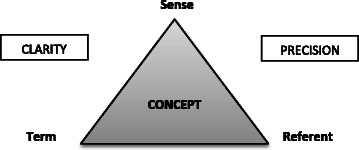
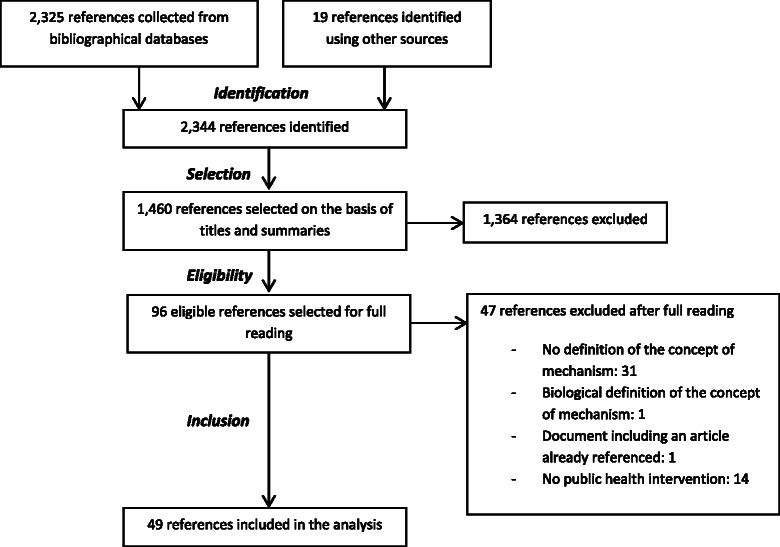
We first collected the definitions of mechanism from published works of Pawson and colleagues. Secondly, a scoping review was conducted to identify the ones quoted by users of the realist approach for evaluating public health interventions (1997-2012). We then appraised the clarity and precision of this concept against the three dimensions defined by Daigneault and Jacobs "term, sense and referent."
Of the 2344 documents identified in the scoping review, 49 documents were included. Term: Users of the realist approach use adjectives qualifying the term mechanism that were not specifically endorsed by Pawson and colleagues. Sense: None of the attributes stated by Pawson and colleagues has been listed in all of the documents analyzed, and some contributions clarified its attributes. Referent: The concept of mechanism within a realist approach can be ascribed to theory-based evaluation, complex social interventions, and critical realism.
This review led us to reconsider the concept of mechanism within the realist approach by confronting the theoretical stance of its proponents to the practical one of its users. This resulted in a clearer, more precise definition of the concept of mechanism which may in turn trigger further improvements in the way the realist approach is applied in evaluative practice in public health and potentially beyond. A mechanism is hidden but real, is an element of reasoning and reactions of agents in regard to the resources available in a given context to bring about changes through the implementation of an intervention, and evolves within an open space-time and social system of relationships.
公共卫生干预本质上是复杂的,对其进行评估需要剖析其干预逻辑以及与开放社会系统的相互作用。通过关注背景、机制和结果之间的相互关系,帕森斯和蒂利的现实主义方法似乎是公共卫生相关评估工作中一项有前景的创新。然而,正如任何方法创新所预期的那样,这种方法是在应对其实施过程中遇到的多重挑战时逐步构建起来的。该方法的使用者一致认为,这些挑战之一是有必要阐明其关键概念“机制”。
我们首先从帕森斯及其同事已发表的著作中收集“机制”的定义。其次,进行了一项范围综述,以确定现实主义方法使用者(1997 - 2012年)在评估公共卫生干预时所引用的定义。然后,我们根据戴格诺和雅各布斯定义的“术语、意义和所指对象”三个维度,评估这一概念的清晰度和精确性。
在范围综述中确定的2344份文献中,有49份文献被纳入。术语:现实主义方法的使用者使用了一些限定“机制”一词的形容词,而这些形容词并未得到帕森斯及其同事的特别认可。意义:帕森斯及其同事所阐述的属性,在所有分析的文献中均未全部列出,且一些文献对其属性进行了阐明。所指对象:现实主义方法中的“机制”概念可归因于基于理论的评估、复杂的社会干预和批判现实主义。
通过将现实主义方法支持者的理论立场与使用者的实际立场相对照,本次综述促使我们重新思考现实主义方法中的“机制”概念。这导致对“机制”概念有了更清晰、更精确的定义,这反过来可能会促使现实主义方法在公共卫生评估实践以及可能更广泛领域的应用方式得到进一步改进。机制是隐藏但真实存在的,是行动者在特定背景下针对可用资源进行推理和反应的要素,旨在通过实施干预带来改变,并且在开放的时空和社会关系系统中演变。