Jobst Markus A, Milles Lukas F, Schoeler Constantin, Ott Wolfgang, Fried Daniel B, Bayer Edward A, Gaub Hermann E, Nash Michael A
Lehrstuhl für Angewandte Physik, Ludwig-Maximilians-University, Munich, Germany.
Center for Nanoscience, Ludwig-Maximilians-University, Munich, Germany.
Elife. 2015 Oct 31;4:e10319. doi: 10.7554/eLife.10319.
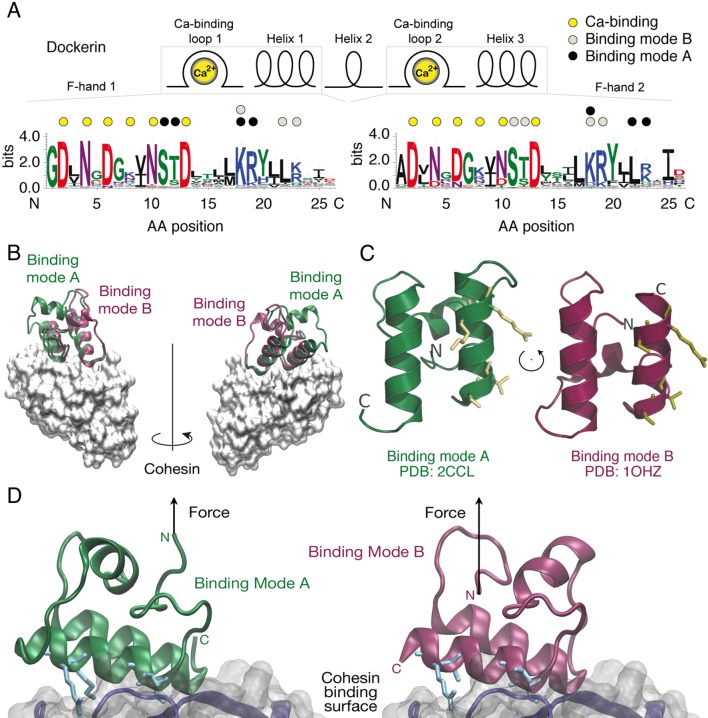
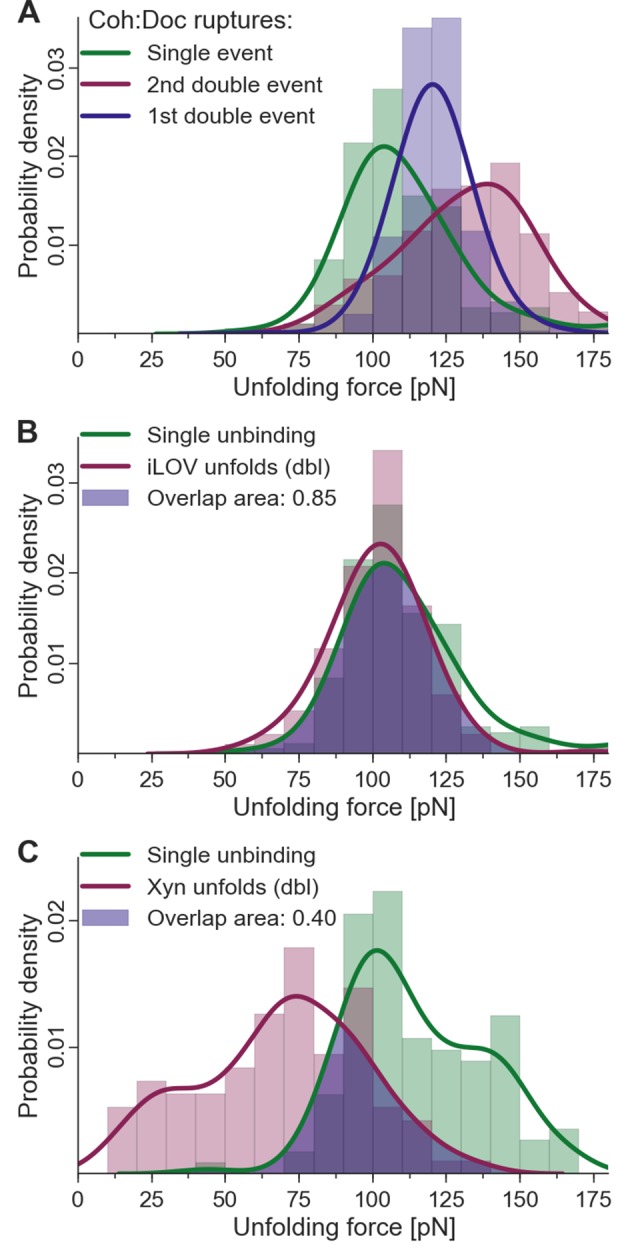
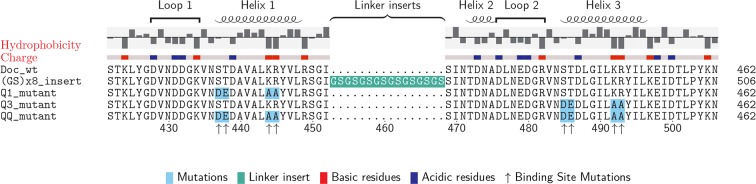
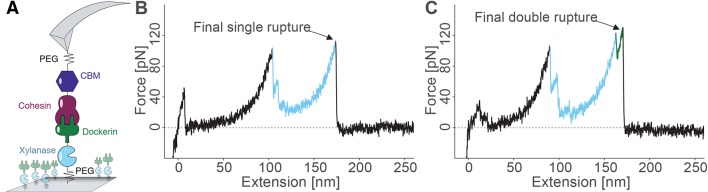
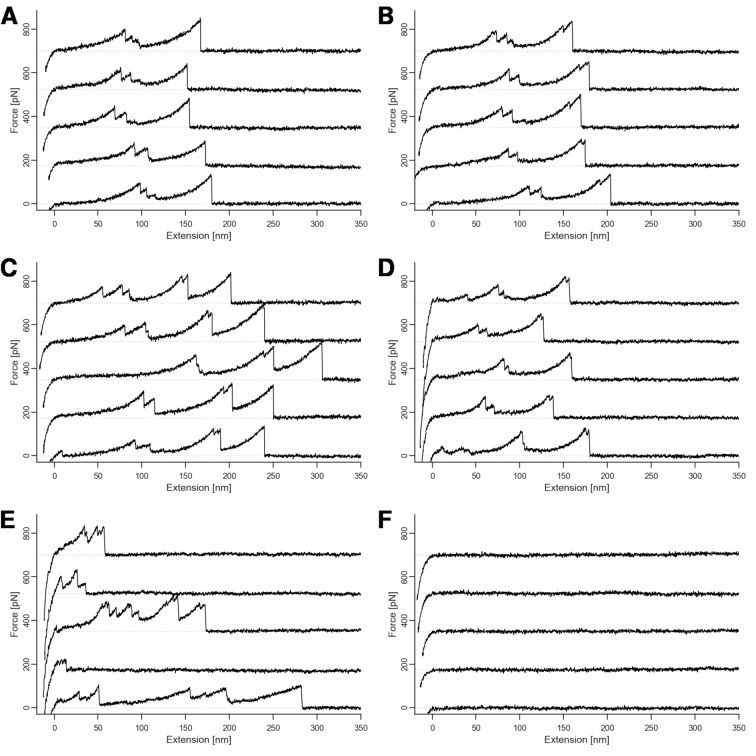
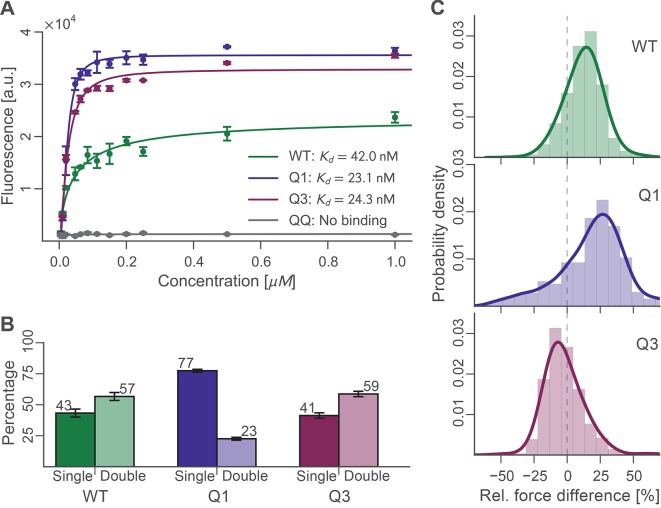
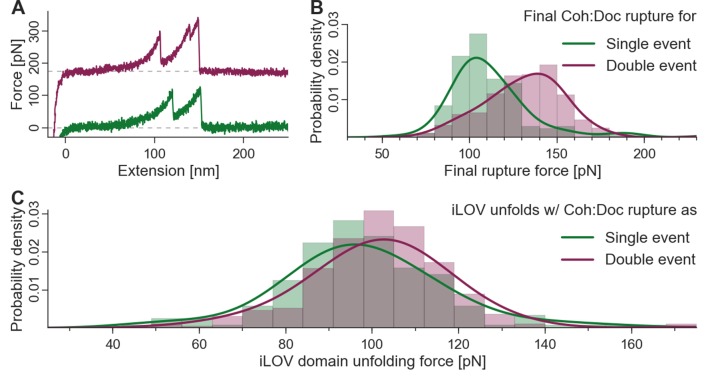
Receptor-ligand pairs are ordinarily thought to interact through a lock and key mechanism, where a unique molecular conformation is formed upon binding. Contrary to this paradigm, cellulosomal cohesin-dockerin (Coh-Doc) pairs are believed to interact through redundant dual binding modes consisting of two distinct conformations. Here, we combined site-directed mutagenesis and single-molecule force spectroscopy (SMFS) to study the unbinding of Coh:Doc complexes under force. We designed Doc mutations to knock out each binding mode, and compared their single-molecule unfolding patterns as they were dissociated from Coh using an atomic force microscope (AFM) cantilever. Although average bulk measurements were unable to resolve the differences in Doc binding modes due to the similarity of the interactions, with a single-molecule method we were able to discriminate the two modes based on distinct differences in their mechanical properties. We conclude that under native conditions wild-type Doc from Clostridium thermocellum exocellulase Cel48S populates both binding modes with similar probabilities. Given the vast number of Doc domains with predicted dual binding modes across multiple bacterial species, our approach opens up new possibilities for understanding assembly and catalytic properties of a broad range of multi-enzyme complexes.
受体-配体对通常被认为是通过锁钥机制相互作用的,即结合时会形成独特的分子构象。与这种范式相反,纤维小体的粘着蛋白-对接蛋白(Coh-Doc)对被认为是通过由两种不同构象组成的冗余双重结合模式相互作用的。在这里,我们结合定点诱变和单分子力谱(SMFS)来研究Coh:Doc复合物在力作用下的解离。我们设计了Doc突变以消除每种结合模式,并使用原子力显微镜(AFM)悬臂比较了它们从Coh解离时的单分子解折叠模式。尽管由于相互作用的相似性,平均整体测量无法分辨Doc结合模式的差异,但通过单分子方法,我们能够根据它们力学性质的明显差异区分这两种模式。我们得出结论,在天然条件下,来自嗜热栖热菌外切葡聚糖酶Cel48S的野生型Doc以相似的概率占据两种结合模式。鉴于在多种细菌物种中存在大量预测具有双重结合模式的Doc结构域,我们的方法为理解广泛的多酶复合物的组装和催化特性开辟了新的可能性。