Graduate School of Medical Technology and Health Welfare Sciences, Hiroshima International University, Hiroshima, Japan. ; Department of Physical Therapy, Hokkaido Chitose Institute of Rehabilitation Technology, Hokkaido, Japan.
Department of Sport Education, School of Lifelong Sport, Hokusho University, Hokkaido, Japan.
Orthop J Sports Med. 2013 Dec 27;1(7):2325967113518163. doi: 10.1177/2325967113518163. eCollection 2013 Dec.
Lateral ankle sprain (LAS) is one of the most common injuries in sports. Despite extensive research, intrinsic factors that predict initial and recurrent noncontact LAS remain undefined.
To identify the predictive factors of initial and recurrent noncontact LAS, focusing on ankle flexibility and/or alignment in collegiate athletes.
Case-control study; Level of evidence, 3.
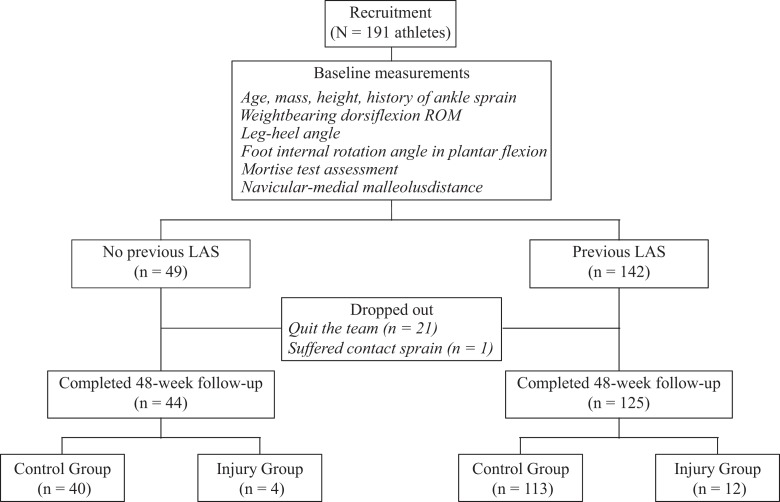
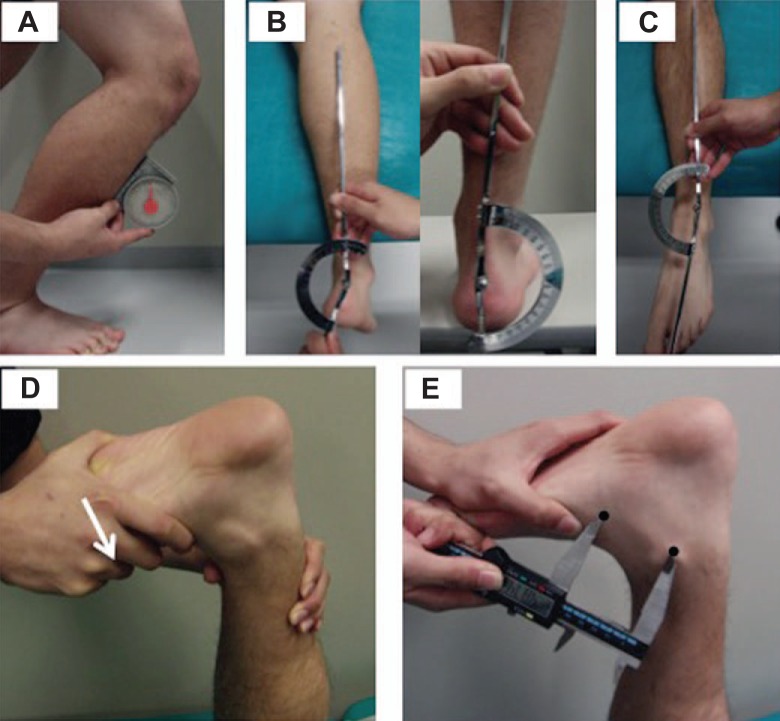
A total of 191 athletes were assessed during the preseason for factors predictive of noncontact LAS. The baseline measurements included weightbearing dorsiflexion range of motion (ROM), leg-heel angle, foot internal rotation angle in plantar flexion, classification according to the mortise test, and navicular-medial malleolus (NMM) distance. Occurrence of noncontact LAS and participation in practice and games were prospectively recorded for 11 months.
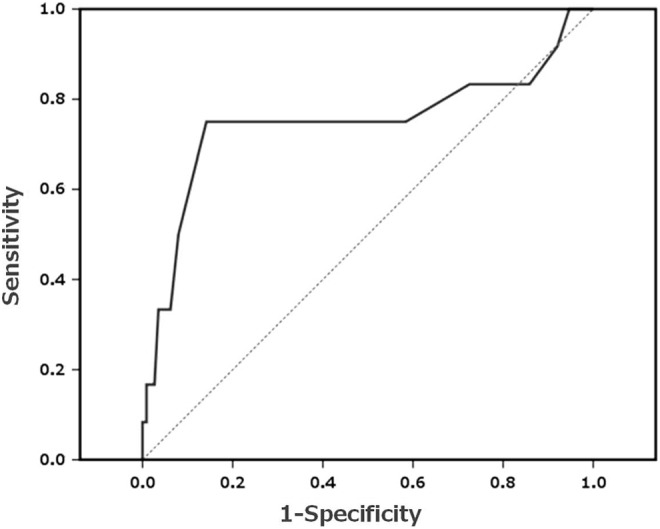
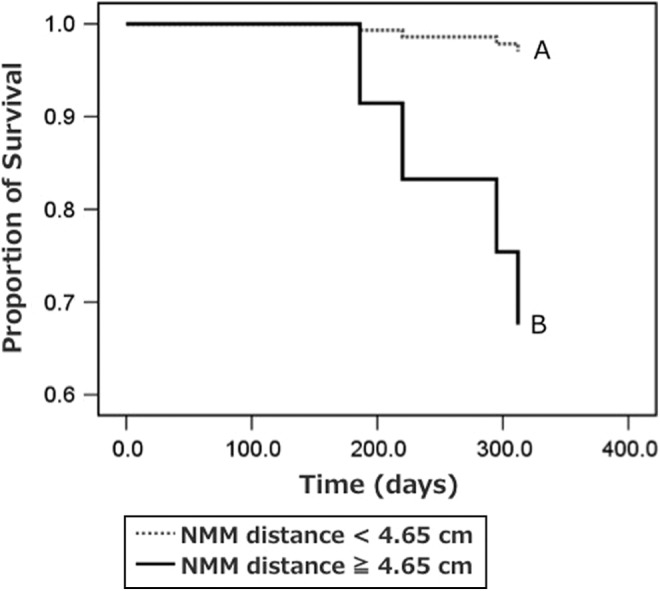
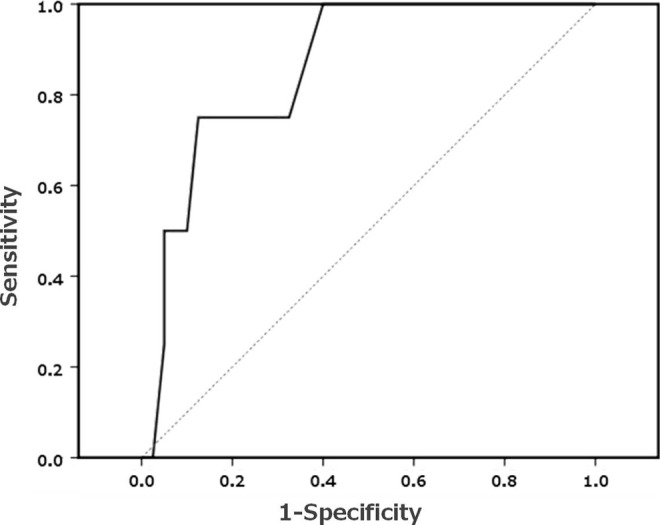
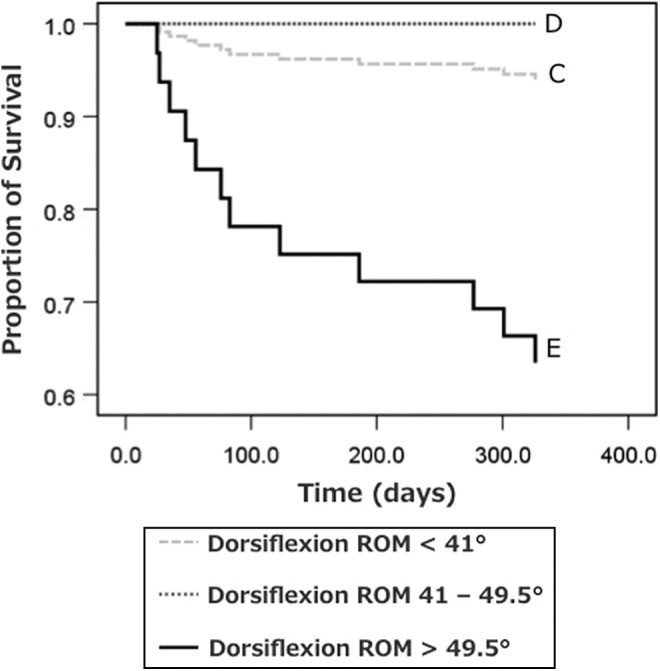
Of the 191 athletes assessed, 169 (145 males, 24 females) completed the study; 125 athletes had a history of ankle sprain. During the observational period, 16 athletes suffered noncontact LAS (0.58 per 1000 athlete-exposures) consisting of 4 initial sprains and 12 recurrences. The hazard ratio estimated by a Cox regression analysis showed that athletes with an NMM distance ≥4.65 cm were 4.14 times more likely to suffer an initial noncontact LAS than were athletes with a shorter NMM distance (95% confidence interval, 1.12-14.30) and that athletes with a weightbearing dorsiflexion ROM >49.5° were 1.12 times as likely to suffer a recurrent noncontact LAS compared with athletes with a lower ROM (95% confidence interval, 1.05-1.20).
NMM distance predicts initial noncontact LAS, and weightbearing dorsiflexion ROM predicts recurrent noncontact LAS.
外侧踝关节扭伤(LAS)是运动中最常见的损伤之一。尽管进行了广泛的研究,但预测初次和复发性非接触性 LAS 的内在因素仍未确定。
确定预测初次和复发性非接触性 LAS 的因素,重点关注大学生运动员的踝关节柔韧性和/或对线。
病例对照研究;证据水平,3 级。
在赛季前,共有 191 名运动员接受了非接触性 LAS 预测因素的评估。基线测量包括负重背屈活动度(ROM)、跟距角、跖屈时足内旋角度、距骨测试分类以及距骨-内踝(NMM)距离。前瞻性记录非接触性 LAS 的发生情况以及参加练习和比赛的情况,为期 11 个月。
在接受评估的 191 名运动员中,有 169 名(145 名男性,24 名女性)完成了研究;125 名运动员有踝关节扭伤史。在观察期间,有 16 名运动员遭受了非接触性 LAS(0.58 例/1000 名运动员暴露),包括 4 例初次扭伤和 12 例复发。Cox 回归分析估计的风险比显示,NMM 距离≥4.65cm 的运动员初次发生非接触性 LAS 的可能性是 NMM 距离较短的运动员的 4.14 倍(95%置信区间,1.12-14.30),且负重背屈 ROM>49.5°的运动员发生复发性非接触性 LAS 的可能性是 ROM 较低的运动员的 1.12 倍(95%置信区间,1.05-1.20)。
NMM 距离预测初次非接触性 LAS,负重背屈 ROM 预测复发性非接触性 LAS。