Sato Chiho, Sekiguchi Atsushi, Kawai Masaaki, Kotozaki Yuka, Nouchi Rui, Tada Hiroshi, Takeuchi Hikaru, Ishida Takanori, Taki Yasuyuki, Kawashima Ryuta, Ohuchi Noriaki
Department of Functional Brain Imaging, Institute of Development, Aging and Cancer (IDAC), Tohoku University, Sendai, Japan.
Division of Surgical Oncology, Graduate School of Medicine, Tohoku University, Sendai, Japan.
PLoS One. 2015 Nov 4;10(11):e0140655. doi: 10.1371/journal.pone.0140655. eCollection 2015.
The primary purpose of this study was to clarify the influence of the early response to surgery on brain structure and cognitive function in patients with breast cancer. It was hypothesized that the structure of the thalamus would change during the early response after surgery due to the effects of anesthesia and would represent one aspect of an intermediate phenotype of postoperative cognitive dysfunction (POCD).
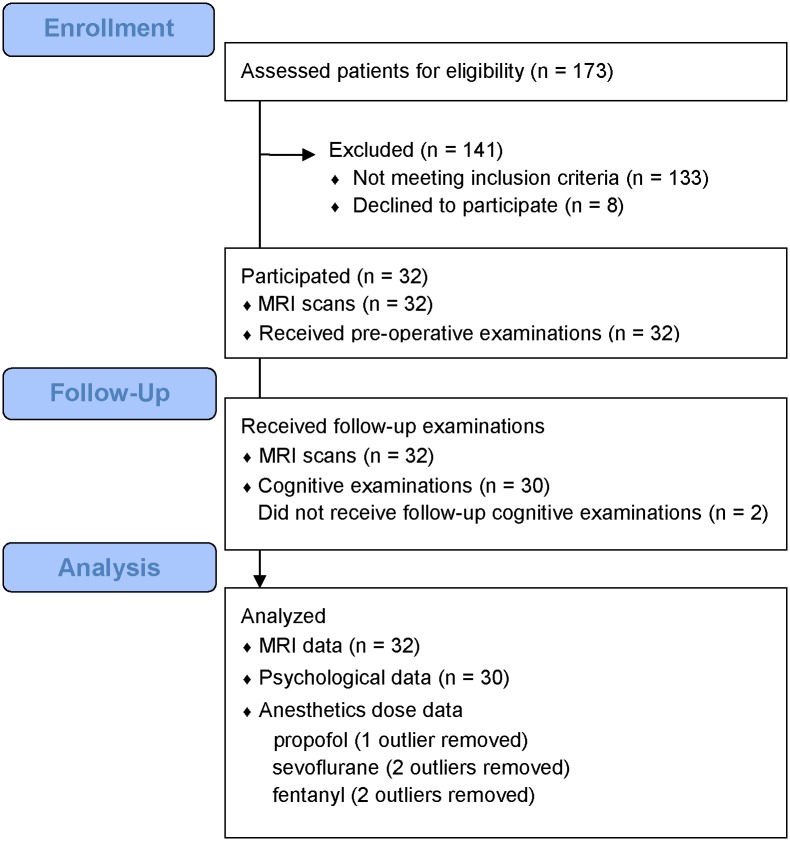
We examined 32 postmenopausal females with breast cancer and 20 age-matched controls. We assessed their cognitive function (attention, memory, and executive function), and performed brain structural MRI 1.5 ± 0.5 days before and 5.6 ± 1.2 days after surgery.
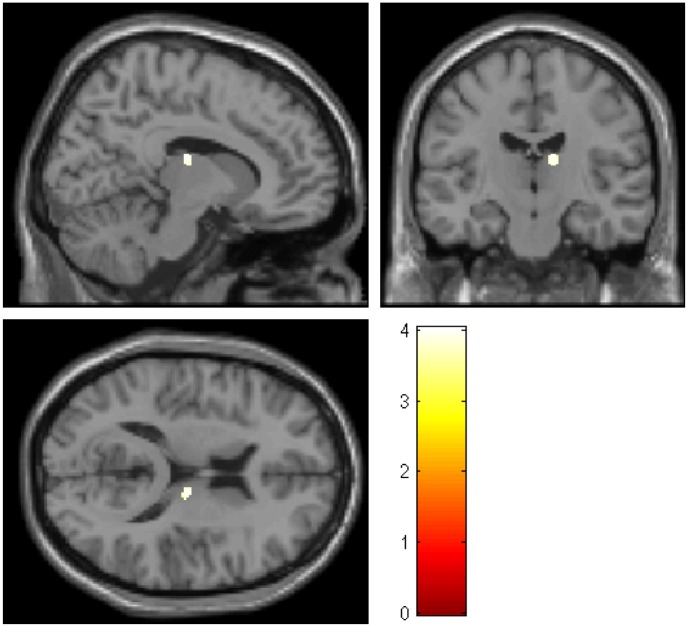
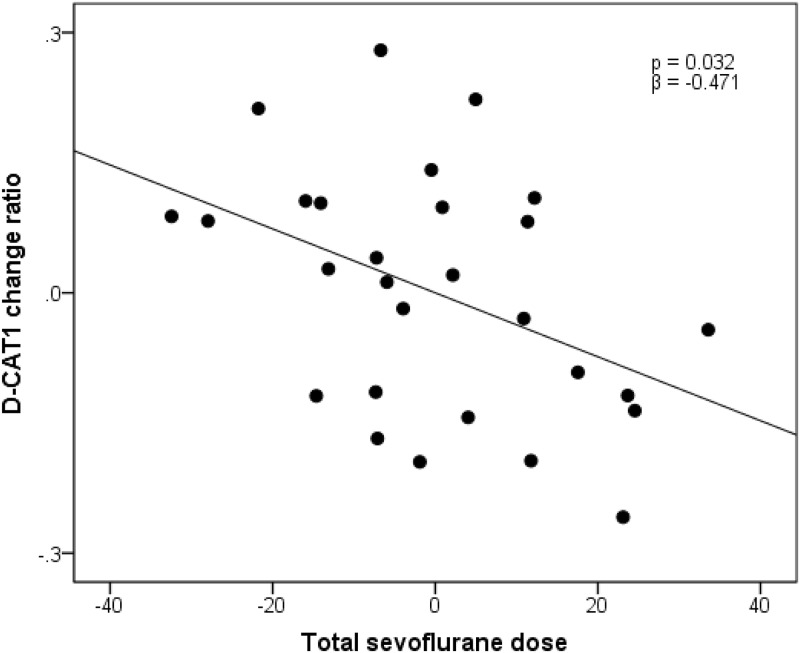
We found a significant interaction between regional grey matter volume (rGMV) in the thalamus (P < 0.05, familywise error (FWE), small volume correction (SVC)) and one attention domain subtest (P = 0.001, Bonferroni correction) after surgery in the patient group compared with the control group. Furthermore, the changes in attention were significantly associated with sevoflurane anesthetic dose (r2 = 0.247, β = ‒0.471, P = 0.032) and marginally associated with rGMV changes in the thalamus (P = 0.07, FWE, SVC) in the Pt group.
Our findings suggest that alterations in brain structure, particularly in the thalamus, may occur shortly after surgery and may be associated with attentional dysfunction. This early postoperative response to anesthesia may represent an intermediate phenotype of POCD. It was assumed that patients experiencing other risk factors of POCD, such as the severity of surgery, the occurrence of complications, and pre-existing cognitive impairments, would develop clinical POCD with broad and multiple types of cognitive dysfunction.
本研究的主要目的是阐明乳腺癌患者手术早期反应对脑结构和认知功能的影响。研究假设,由于麻醉作用,丘脑结构在术后早期反应过程中会发生变化,并且这将代表术后认知功能障碍(POCD)中间表型的一个方面。
我们检查了32名绝经后乳腺癌女性和20名年龄匹配的对照者。我们评估了他们的认知功能(注意力、记忆力和执行功能),并在手术前1.5±0.5天和手术后5.6±1.2天进行了脑部结构MRI检查。
与对照组相比,患者组术后丘脑区域灰质体积(rGMV)(P<0.05,家族性错误率(FWE),小体积校正(SVC))与一个注意力领域子测试(P = 0.001,Bonferroni校正)之间存在显著交互作用。此外,在患者组中,注意力变化与七氟烷麻醉剂量显著相关(r2 = 0.247,β = -0.471,P = 0.032),与丘脑rGMV变化存在边缘相关性(P = 0.07,FWE,SVC)。
我们的研究结果表明,脑结构改变,特别是丘脑结构改变,可能在手术后不久发生,并且可能与注意力功能障碍有关。这种术后早期对麻醉的反应可能代表POCD的中间表型。据推测,经历POCD其他风险因素(如手术严重程度、并发症发生情况和既往存在的认知障碍)的患者将发展为具有广泛和多种类型认知功能障碍的临床POCD。