Kalolo Albino, Kibusi Stephen Matthew
Department of Community Health, St. Francis University college of Health and Allied Sciences, P.O.Box 175, Ifakara, Tanzania.
School of Nursing and Public Health, College of Health Sciences, The University of Dodoma, P.O. Box 395, Dodoma, Tanzania.
Reprod Health. 2015 Nov 13;12:105. doi: 10.1186/s12978-015-0097-5.
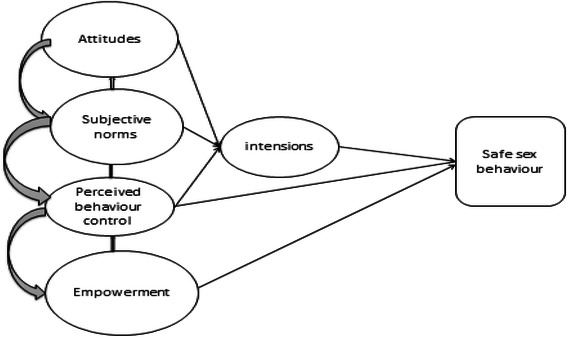
Despite the declining trends of Human immunodeficiency virus (HIV) infection in Sub-Saharan Africa (SSA), unsafe sexual behaviours among adolescents still represent a public health challenge. It is important to understand factors acting at different levels to influence sexual behaviour among adolescents. This study examined the influence of perceived behaviour control, subjective norms, attitudes and empowerment on intention to use condoms and reported use of condoms among adolescents in rural Tanzania.
We used a questionnaire to collect data from 403 adolescents aged 14 through 19 years from nine randomly selected secondary schools in the Newala district located in the Southern part of Tanzania. The self-administered questionnaire collected information on sexual practices and factors such as attitudes, subjective norms, perceived behaviour control and empowerment. Binary logistic regression was performed to identify factors associated with intention to use and reported use of condoms.
Sexually active adolescents constituted 40.6 % of the sample, among them 49.7 % did not use a condom at last sexual intercourse and 49.8 % had multiple sex partners. Many (85 %) of sexually active respondents had their sexual debut between the ages of 14 to 17 years. Girls became sexually active earlier than boys. Perceived behaviour control predicted intentions to use condoms (AOR = 3.059, 95 % CI 1.324-7.065), thus demonstrating its importance in the decision to use a condom. Empowerment (odds ratio = 3.694, 95 % CI 1.295-10.535) and a positive attitude (AOR = 3.484, 95 % CI 1.132-10.72) predicted reported condom use, thus turning the decision to actions. Subjective norms had only indirect effects on intention and reported use of condoms.
The findings suggest that unsafe sex practices are prevalent among school adolescents in rural areas of Tanzania. Perceived behaviour control and positive attitudes predict intensions to use condoms whereas empowerment predicts reported condom use. The findings may imply that safe sex promotion interventions that simultaneously address socio-cognitive and ecological determinants of sexual behaviours may improve adolescents' safe sex behaviours.
尽管撒哈拉以南非洲地区(SSA)的人类免疫缺陷病毒(HIV)感染呈下降趋势,但青少年中的不安全性行为仍是一项公共卫生挑战。了解在不同层面起作用以影响青少年性行为的因素很重要。本研究调查了在坦桑尼亚农村地区青少年中,感知行为控制、主观规范、态度和赋权对使用避孕套意图及报告的避孕套使用情况的影响。
我们使用问卷从坦桑尼亚南部新瓦拉区九所随机选取的中学中,收集了403名年龄在14至19岁之间青少年的数据。自行填写的问卷收集了关于性行为及态度、主观规范、感知行为控制和赋权等因素的信息。进行二元逻辑回归以确定与使用避孕套意图及报告的避孕套使用情况相关的因素。
性活跃青少年占样本的40.6%,其中49.7%在最近一次性交时未使用避孕套,49.8%有多个性伴侣。许多(85%)性活跃的受访者在14至17岁之间开始性行为。女孩比男孩更早开始性活跃。感知行为控制可预测使用避孕套的意图(调整后比值比[AOR]=3.059,95%置信区间[CI]1.324 - 7.065),从而表明其在决定使用避孕套方面的重要性。赋权(比值比=3.694,95%CI 1.295 - 10.535)和积极态度(AOR=3.484,95%CI 1.132 - 10.72)可预测报告的避孕套使用情况,从而将决定转化为行动。主观规范对使用避孕套的意图和报告的使用情况仅有间接影响。
研究结果表明,不安全的性行为在坦桑尼亚农村地区的青少年中普遍存在。感知行为控制和积极态度可预测使用避孕套的意图,而赋权可预测报告的避孕套使用情况。研究结果可能意味着,同时解决性行为的社会认知和生态决定因素的安全性行为促进干预措施,可能会改善青少年的安全性行为。