Schiro Andrew, Wilkinson Fiona L, Weston Ria, Smyth J Vincent, Serracino-Inglott Ferdinand, Alexander M Yvonne
Regional Vascular and Endovascular Unit, Manchester Royal Infirmary, Central Manchester University Hospitals NHS Foundation Trust, Manchester Academic Health Science Centre, Oxford Road, Manchester, UK, M13 9WL.
Institute of Cardiovascular Science, Manchester Academic Health Science Centre, University of Manchester, Core Technology Facility, 46 Grafton Street, Manchester, UK, M13 9NT.
Sci Rep. 2015 Nov 13;5:16658. doi: 10.1038/srep16658.
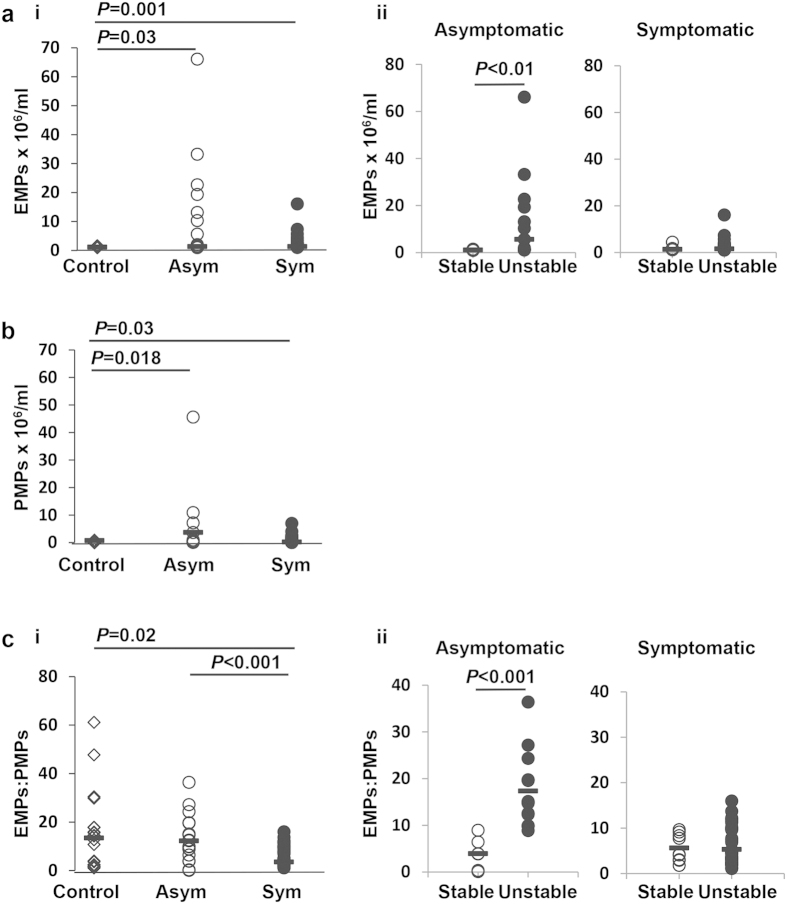
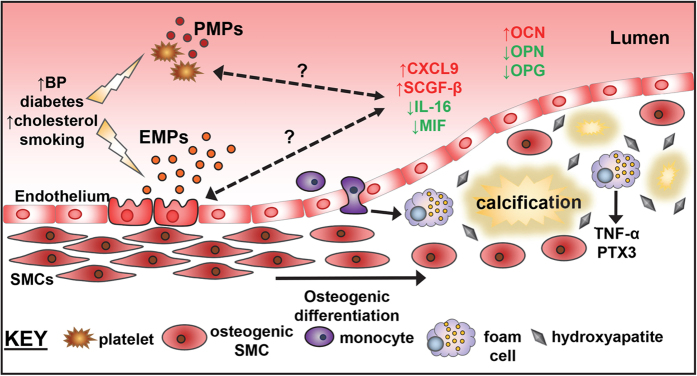
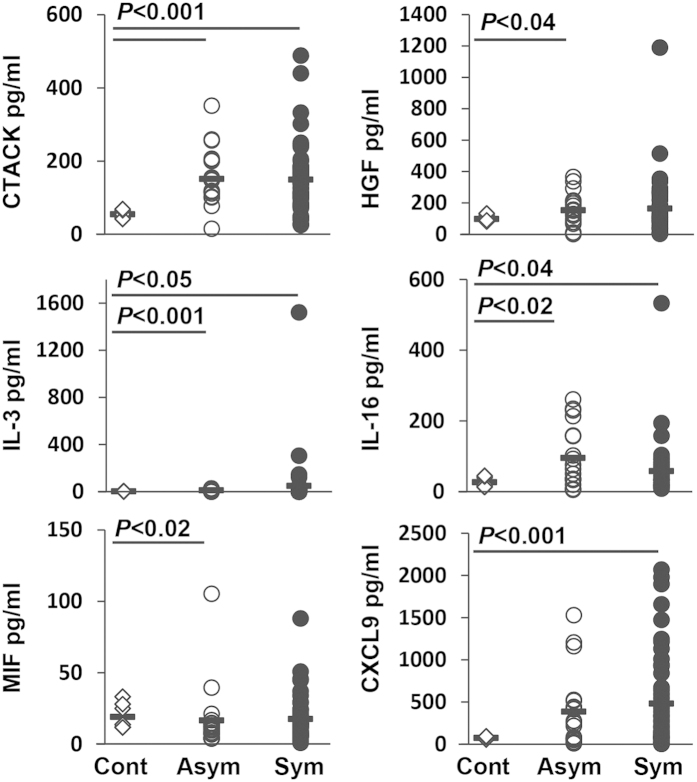
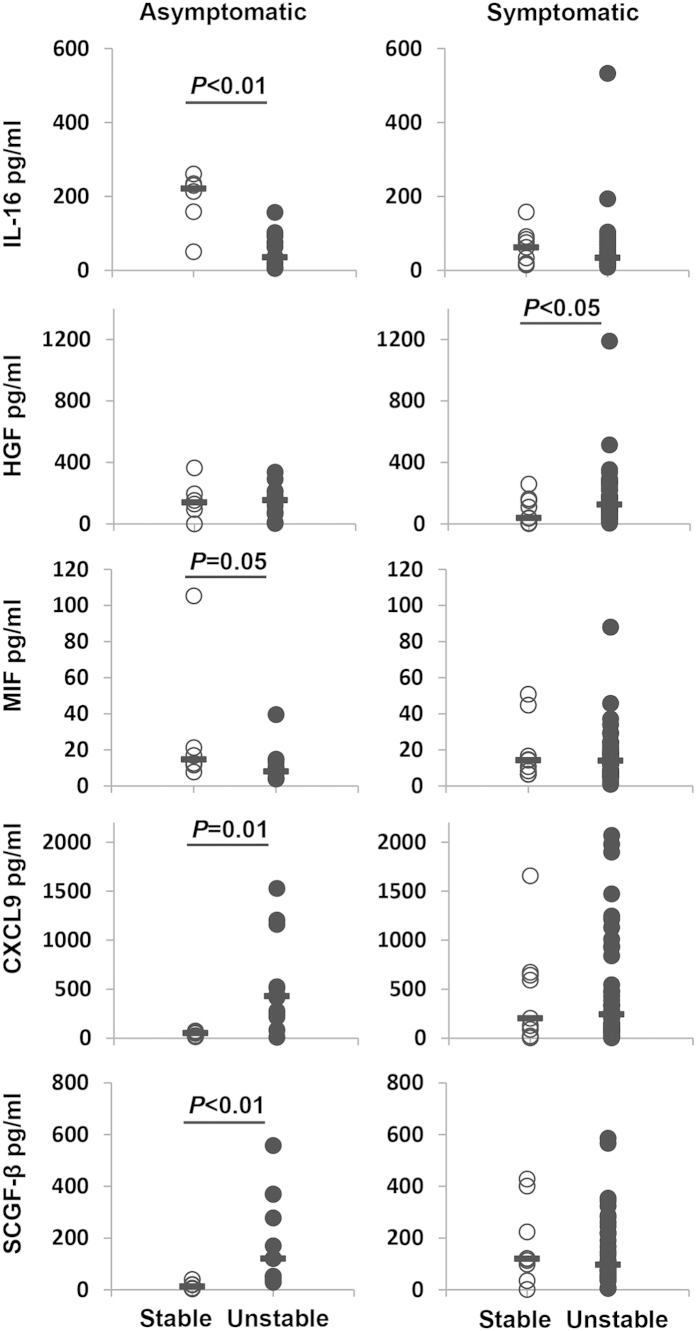
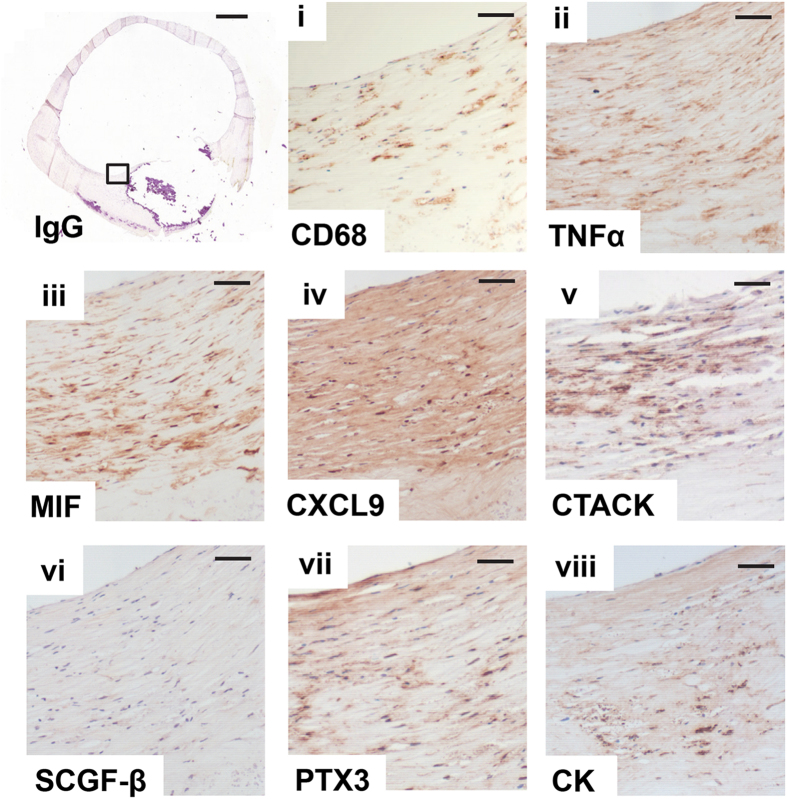
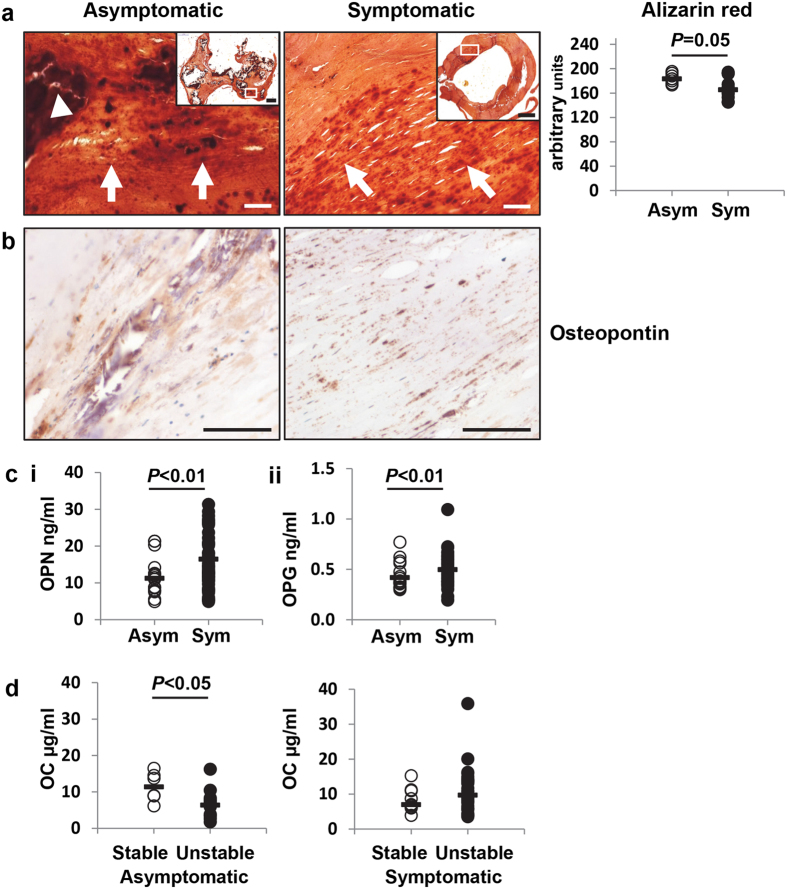
Endothelial microparticles (EMPs) are released from dysfunctional endothelial cells. We hypothesised that patients with unstable carotid plaque have higher levels of circulating microparticles compared to patients with stable plaques, and may correlate with serum markers of plaque instability and inflammation. Circulating EMPs, platelet MPs (PMPs) and inflammatory markers were measured in healthy controls and patients undergoing carotid endarterectomy. EMP/PMPs were quantified using flow cytometry. Bioplex assays profiled systemic inflammatory and bone-related proteins. Immunohistological analysis detailed the contribution of differentially-regulated systemic markers to plaque pathology. Alizarin red staining showed calcification. EMPs and PMPs were significantly higher in patients with carotid stenosis (≥ 70%) compared to controls, with no differences between asymptomatic vs symptomatic patients. Asymptomatic patients with unstable plaques exhibited higher levels of EMPs, CXCL9 and SCGF-β compared to those with stable plaques. CXCL9, and SCGF-β were detected within all plaques, suggesting a contribution to both localised and systemic inflammation. Osteopontin and osteoprotegerin were significantly elevated in the symptomatic vs asymptomatic group, while osteocalcin was higher in asymptomatic patients with stable plaque. All plaques exhibited calcification, which was significantly greater in asymptomatic patients. This may impact on plaque stability. These data could be important in identifying patients at most benefit from intervention.
内皮微粒(EMPs)由功能失调的内皮细胞释放。我们假设,与稳定斑块患者相比,不稳定颈动脉斑块患者的循环微粒水平更高,且可能与斑块不稳定和炎症的血清标志物相关。在健康对照者和接受颈动脉内膜切除术的患者中测量循环EMPs、血小板微粒(PMPs)和炎症标志物。使用流式细胞术对EMPs/PMPs进行定量分析。Bioplex检测分析全身炎症和骨相关蛋白。免疫组织学分析详细阐述了差异调节的全身标志物对斑块病理的影响。茜素红染色显示钙化情况。与对照组相比,颈动脉狭窄(≥70%)患者的EMPs和PMPs显著更高,无症状患者与有症状患者之间无差异。与稳定斑块患者相比,无症状不稳定斑块患者的EMPs、CXCL9和SCGF-β水平更高。在所有斑块中均检测到CXCL9和SCGF-β,提示其对局部和全身炎症均有作用。有症状组与无症状组相比,骨桥蛋白和骨保护素显著升高,而无症状稳定斑块患者的骨钙素更高。所有斑块均出现钙化,无症状患者的钙化程度显著更高。这可能会影响斑块稳定性。这些数据对于识别最能从干预中获益的患者可能具有重要意义。