Hemmati Mina, Zohoori Elham, Mehrpour Omid, Karamian Mehdi, Asghari Somaye, Zarban Asghar, Nasouti Roya
Atherosclerosis and Coronary Artery Research Center, Birjand University of Medical Sciences, Birjand, Iran ; Department of Biochemistry, Faculty of Medicine, Birjand University of Medical Sciences, Birjand, Iran.
Department of Biochemistry, Faculty of Medicine, Birjand University of Medical Sciences, Birjand, Iran.
EXCLI J. 2015 Aug 4;14:908-15. doi: 10.17179/excli2015-232. eCollection 2015.
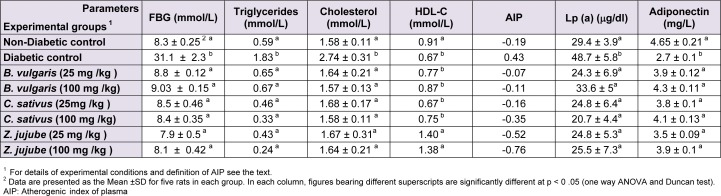
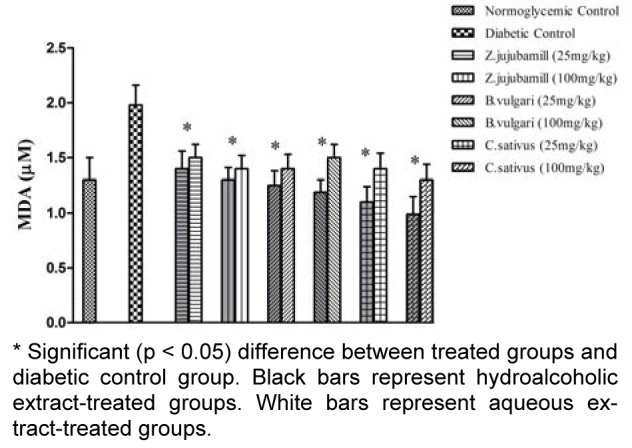
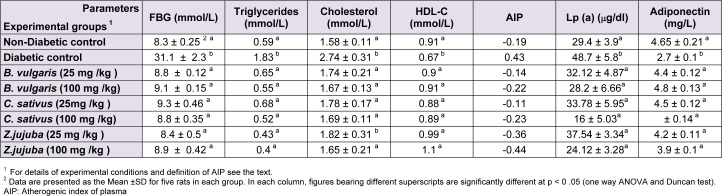
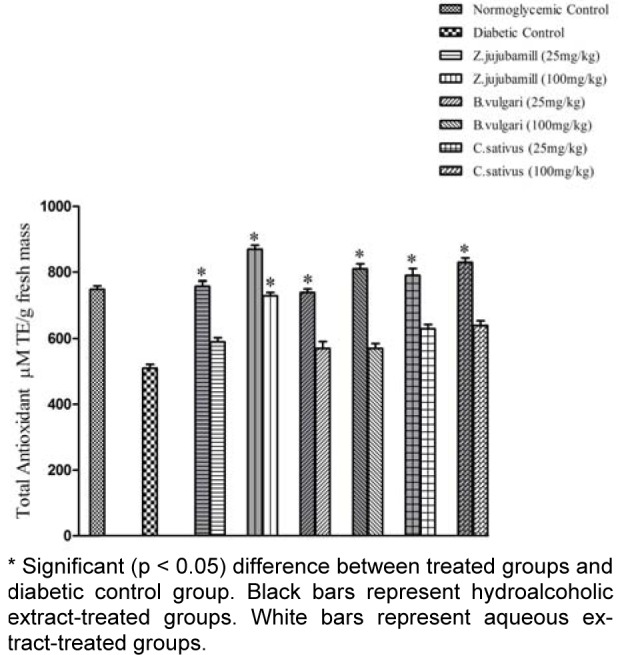
Atherogenic dyslipidemia, characterized by an increased level of lipoprotein (a) and a decreased level of adiponectin, is a major risk factor for cardiovascular diseases in diabetic patients. To reduce cardiovascular risk in diabetic patients, use of agents with antidiabetic and anti-atherogenic potential is required. Using an animal model of diabetes, we investigated the antiatherogenic potential of extracts of three medicinal plants: jujube, barberry, and saffron. For this, serum level of fasting blood glucose, lipid profile, malondialdehyde, total antioxidant capacity, adiponectin and lipoprotein (a) in diabetic control and extract treated groups were measured. Statistical analysis of measurements showed that serum levels of fasting blood glucose, triglyceride, and VLDL decreased significantly (P < 0.05) in all treated groups. Treatment with all extracts reduced lipid peroxidation and increased antioxidant capacity of the experimental diabetic groups. Serum adiponectin levels increased in all treated groups, whereas lipoprotein (a) levels decreased, most markedly when treated with jujube extract. Jujube, saffron, and barberry extracts are beneficial in ameliorating oxidative stress and atherogenic risk of diabetic rats. This highlights the benefits of further investigating the cardio-protective potential of medicinal plant extracts and evaluating their usefulness as cardio protective agents in clinical practice.
致动脉粥样硬化性血脂异常,其特征为脂蛋白(a)水平升高和脂联素水平降低,是糖尿病患者心血管疾病的主要危险因素。为降低糖尿病患者的心血管风险,需要使用具有抗糖尿病和抗动脉粥样硬化潜力的药物。我们使用糖尿病动物模型,研究了三种药用植物(枣、小檗和藏红花)提取物的抗动脉粥样硬化潜力。为此,测量了糖尿病对照组和提取物处理组的空腹血糖血清水平、血脂谱、丙二醛、总抗氧化能力、脂联素和脂蛋白(a)。测量结果的统计分析表明,所有处理组的空腹血糖、甘油三酯和极低密度脂蛋白血清水平均显著降低(P < 0.05)。所有提取物处理均降低了实验性糖尿病组的脂质过氧化并提高了抗氧化能力。所有处理组的血清脂联素水平均升高,而脂蛋白(a)水平降低,用枣提取物处理时最为明显。枣、藏红花和小檗提取物有利于改善糖尿病大鼠的氧化应激和动脉粥样硬化风险。这突出了进一步研究药用植物提取物的心脏保护潜力并评估其在临床实践中作为心脏保护剂的有用性的益处。