Pereira Bruna L B, Arruda Fernanda C O, Reis Patrícia P, Felix Tainara F, Santos Priscila P, Rafacho Bruna P, Gonçalves Andrea F, Claro Renan T, Azevedo Paula S, Polegato Bertha F, Okoshi Katashi, Fernandes Ana A H, Paiva Sergio A R, Zornoff Leonardo A M, Minicucci Marcos F
Internal Medicine Department, Botucatu Medical School, Univ Estadual Paulista (UNESP), Botucatu 18618-970, Brazil.
Department of Surgery and Orthopedics, Botucatu Medical School, Univ Estadual Paulista (UNESP), Botucatu 18618-970, Brazil.
Nutrients. 2015 Nov 19;7(11):9640-9. doi: 10.3390/nu7115493.
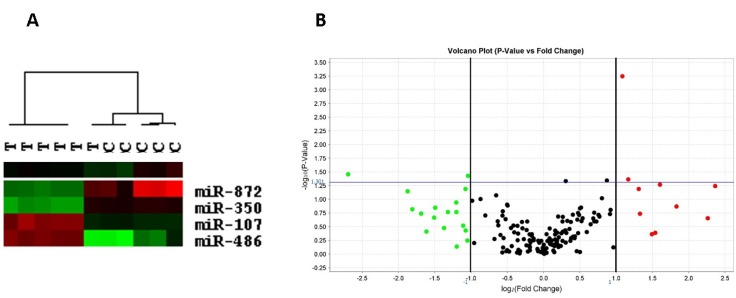
The aim of this study was to evaluate the effects of tomato supplementation on the normal rat heart and the role of oxidative stress in this scenario. Male Wistar rats were assigned to two groups: a control group (C; n = 16), in which animals received a control diet + 0.5 mL of corn oil/kg body weight/day, and a tomato group (T; n = 16), in which animals received a control diet supplemented with tomato +0.5 mL of corn oil/kg body weight/day. After three months, morphological, functional, and biochemical analyses were performed. Animals supplemented with tomato had a smaller left atrium diameter and myocyte cross-sectional area (CSA) compared to the control group (C group: 474 (415-539); T group: 273 (258-297) µm²; p = 0.004). Diastolic function was improved in rats supplemented with tomato. In addition, lipid hydroperoxide was lower (C group: 267 ± 46.7; T group: 219 ± 23.0 nmol/g; p = 0.039) in the myocardium of rats supplemented with tomato. Tomato intake was also associated with up-regulation of miR-107 and miR-486 and down-regulation of miR-350 and miR-872. In conclusion, tomato supplementation induces changes in miRNA expression and reduces oxidative stress. In addition, these alterations may be responsible for CSA reduction and diastolic function improvement.
本研究的目的是评估补充番茄对正常大鼠心脏的影响以及氧化应激在这种情况下的作用。将雄性Wistar大鼠分为两组:对照组(C组;n = 16),动物接受对照饮食 + 0.5 mL玉米油/千克体重/天;番茄组(T组;n = 16),动物接受补充番茄的对照饮食 + 0.5 mL玉米油/千克体重/天。三个月后,进行形态学、功能和生化分析。与对照组相比,补充番茄的动物左心房直径和心肌细胞横截面积(CSA)较小(C组:474(415 - 539);T组:273(258 - 297)µm²;p = 0.004)。补充番茄的大鼠舒张功能得到改善。此外,补充番茄的大鼠心肌中脂质过氧化氢含量较低(C组:267 ± 46.7;T组:219 ± 23.0 nmol/g;p = 0.039)。番茄摄入还与miR - 107和miR - 486的上调以及miR - 350和miR - 872的下调有关。总之,补充番茄可诱导miRNA表达变化并降低氧化应激。此外,这些改变可能是CSA减小和舒张功能改善的原因。