Bartol Thomas M, Bromer Cailey, Kinney Justin, Chirillo Michael A, Bourne Jennifer N, Harris Kristen M, Sejnowski Terrence J
Howard Hughes Medical Institute, Salk Institute for Biological Studies, La Jolla, United States.
McGovern Institute for Brain Research, Massachusetts Institute of Technology, Cambridge, United States.
Elife. 2015 Nov 30;4:e10778. doi: 10.7554/eLife.10778.
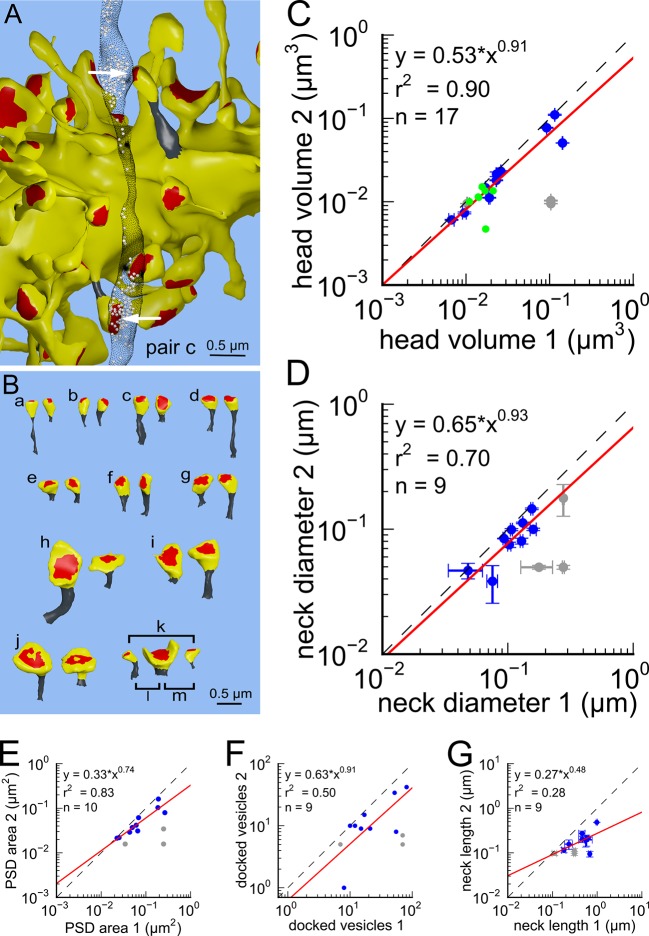
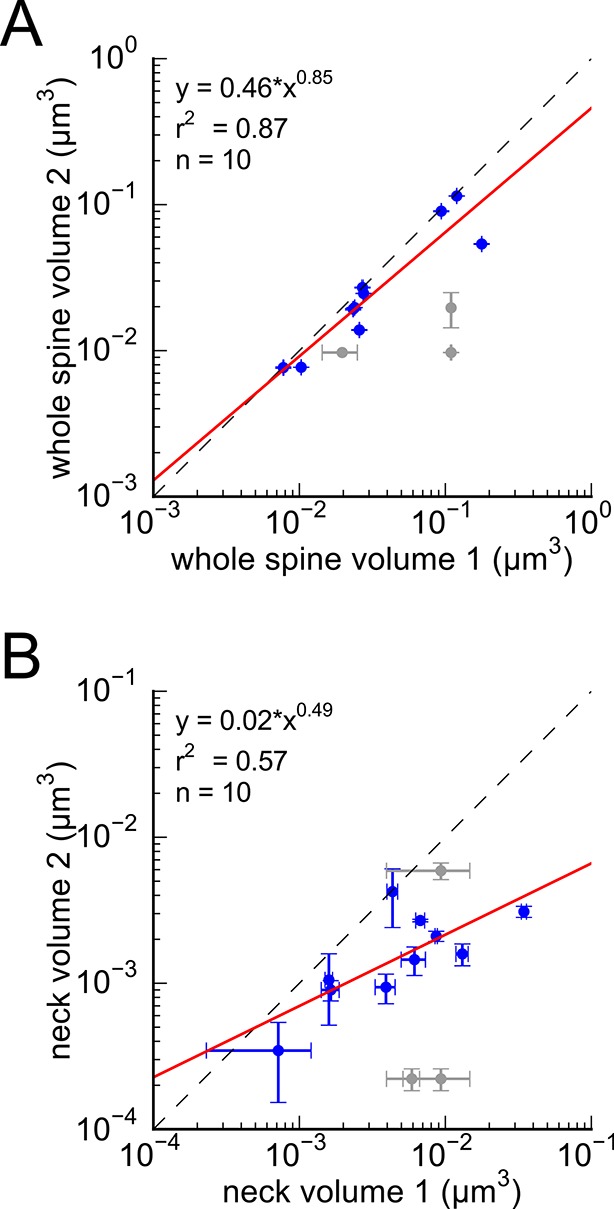
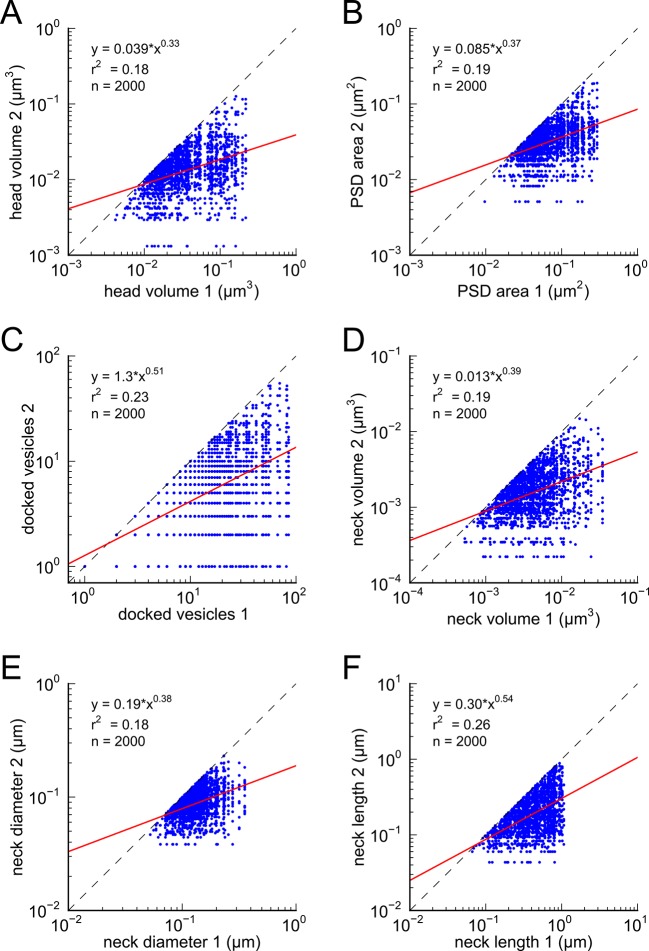
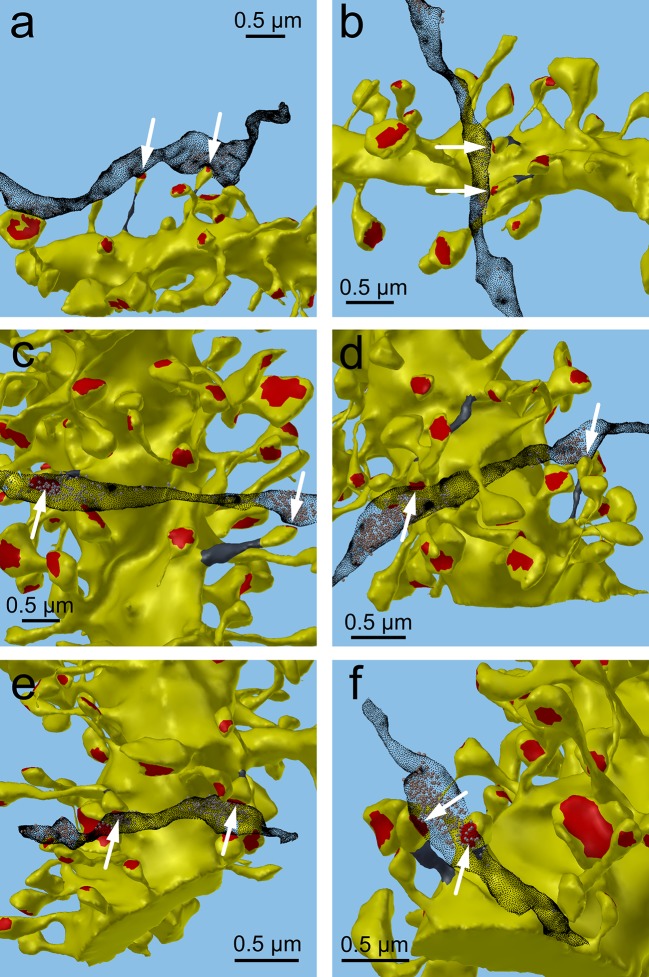
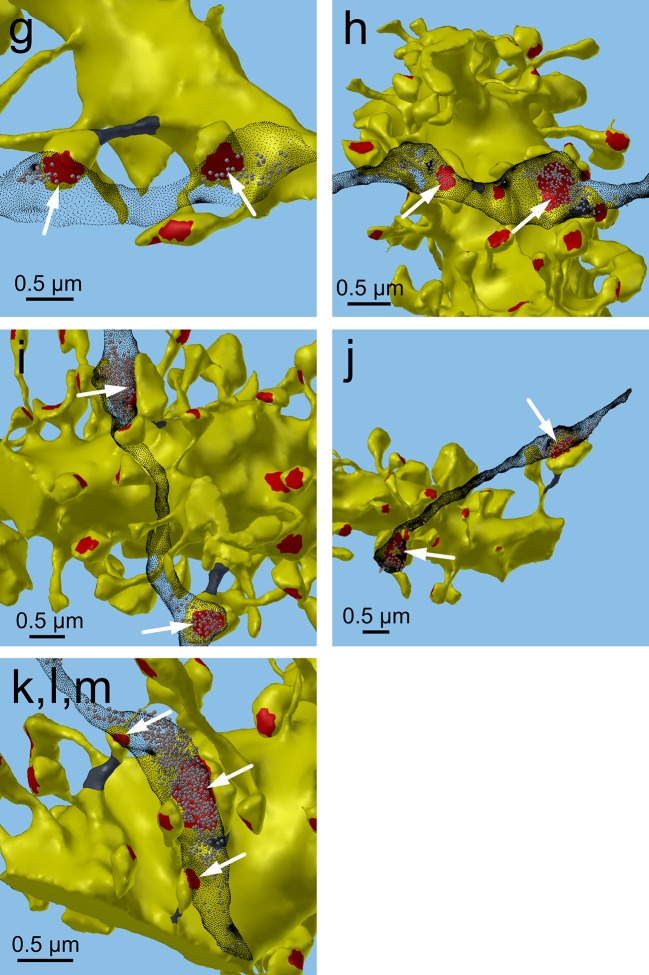
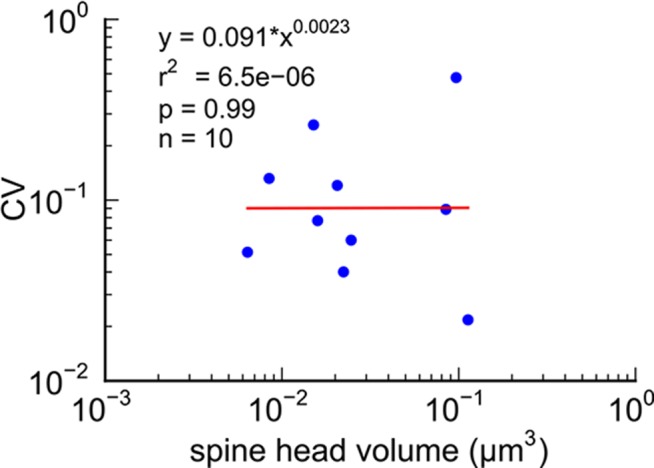
Information in a computer is quantified by the number of bits that can be stored and recovered. An important question about the brain is how much information can be stored at a synapse through synaptic plasticity, which depends on the history of probabilistic synaptic activity. The strong correlation between size and efficacy of a synapse allowed us to estimate the variability of synaptic plasticity. In an EM reconstruction of hippocampal neuropil we found single axons making two or more synaptic contacts onto the same dendrites, having shared histories of presynaptic and postsynaptic activity. The spine heads and neck diameters, but not neck lengths, of these pairs were nearly identical in size. We found that there is a minimum of 26 distinguishable synaptic strengths, corresponding to storing 4.7 bits of information at each synapse. Because of stochastic variability of synaptic activation the observed precision requires averaging activity over several minutes.
计算机中的信息通过可存储和恢复的比特数来量化。关于大脑的一个重要问题是,通过突触可塑性,一个突触能够存储多少信息,而突触可塑性取决于概率性突触活动的历史。突触大小与效能之间的强相关性使我们能够估计突触可塑性的变异性。在海马神经纤维网的电子显微镜重建中,我们发现单个轴突在同一树突上形成两个或更多的突触连接,具有共同的突触前和突触后活动历史。这些配对的棘突头部和颈部直径(而非颈部长度)在大小上几乎相同。我们发现至少有26种可区分的突触强度,这相当于每个突触存储4.7比特的信息。由于突触激活的随机变异性,所观察到的精度需要在几分钟内对活动进行平均。