Faghihzadeh Forouzan, Hekmatdoost Azita, Adibi Payman
Department of Clinical Nutrition and Dietetics, Faculty of Nutrition and Food Technology, National Nutrition and Food Technology Research Institute, Shahid Beheshti University of Medical Science, Tehran, Iran.
Department of Medicine, Integrative Functional Gastroenterology Research Center, Isfahan University of Medical Sciences, Isfahan, Iran.
J Res Med Sci. 2015 Aug;20(8):797-810. doi: 10.4103/1735-1995.168405.
Recent studies demonstrated that resveratrol has many therapeutic effects on liver disorders. Resveratrol significantly increased survival after liver transplantation, decreased fat deposition, necrosis, and apoptosis which induced by ischemia in Wistar rats. It provided liver protection against chemical, cholestatic, and alcohol injury. Resveratrol can improve glucose metabolism and lipid profile and decrease liver fibrosis and steatosis. Furthermore, it was able to alter hepatic cell fatty acid composition. According to extension of liver disease around the world and necessity of finding new threat, this review critically examines the current preclinical in vitro and in vivo studies on the preventive and therapeutic effects of resveratrol in liver disorders.
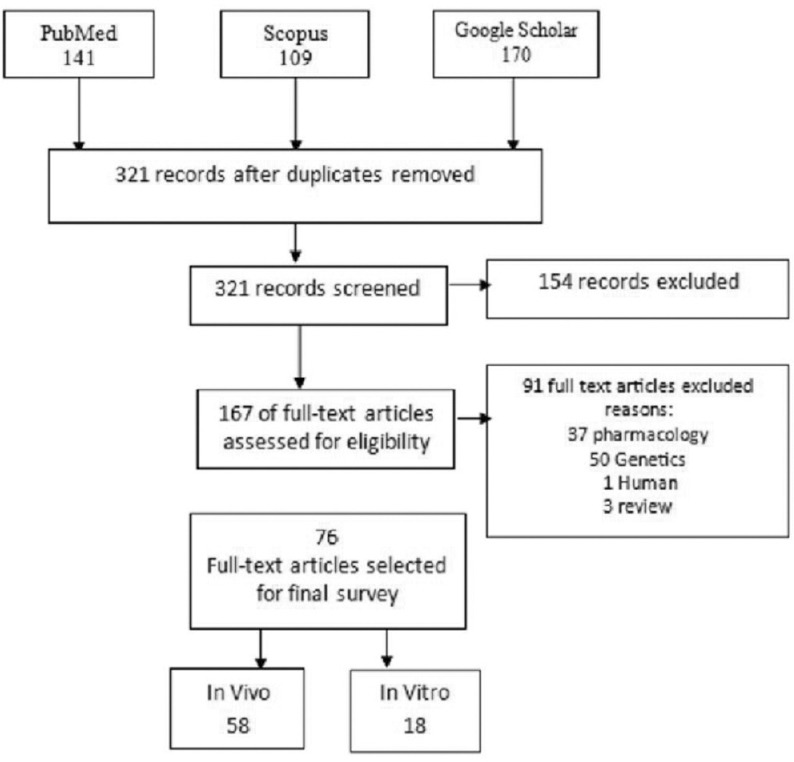
A search in PubMed, Google Scholar, and Scopus was undertaken to identify relevant literature using search terms, including "liver," "hepatic," and "Resveratrol." Both in vivo and in vitro studies were included. No time limiting considered for this search.
A total of 76 articles were eligible for this review. In these articles, resveratrol shows antioxidative properties in different models of hepatitis resulting in reducing of hepatic fibrosis.
Resveratrol could reduce hepatic steatosis through modulating the insulin resistance and lipid profile in animals. These high quality preclinical studies propose the potential therapeutic implication of resveratrol in liver disorders especially those with hepatic steatosis. Resveratrol can play a pivotal role in prevention and treatment of liver disorders by reducing hepatic fibrosis.
最近的研究表明,白藜芦醇对肝脏疾病具有多种治疗作用。白藜芦醇显著提高了肝移植后的存活率,减少了Wistar大鼠缺血诱导的脂肪沉积、坏死和细胞凋亡。它为肝脏提供了针对化学、胆汁淤积和酒精损伤的保护作用。白藜芦醇可以改善葡萄糖代谢和脂质谱,减少肝纤维化和脂肪变性。此外,它能够改变肝细胞脂肪酸组成。鉴于全球肝病的蔓延以及寻找新治疗方法的必要性,本综述批判性地审视了目前关于白藜芦醇在肝脏疾病预防和治疗作用的临床前体外和体内研究。
在PubMed、谷歌学术和Scopus中进行检索,使用包括“肝脏”、“肝的”和“白藜芦醇”等检索词来识别相关文献。纳入了体内和体外研究。本次检索不考虑时间限制。
共有76篇文章符合本综述的要求。在这些文章中,白藜芦醇在不同的肝炎模型中显示出抗氧化特性,从而减少肝纤维化。
白藜芦醇可以通过调节动物的胰岛素抵抗和脂质谱来减少肝脂肪变性。这些高质量的临床前研究提出了白藜芦醇在肝脏疾病尤其是肝脂肪变性疾病中的潜在治疗意义。白藜芦醇可以通过减少肝纤维化在肝脏疾病的预防和治疗中发挥关键作用。