Electrical Engineering Department, Stanford University, Stanford, CA, 94305, USA.
OpenBiome, 196 Boston Avenue, Medford, MA, 02155, USA.
Microbiome. 2015 Dec 17;3:75. doi: 10.1186/s40168-015-0140-3.
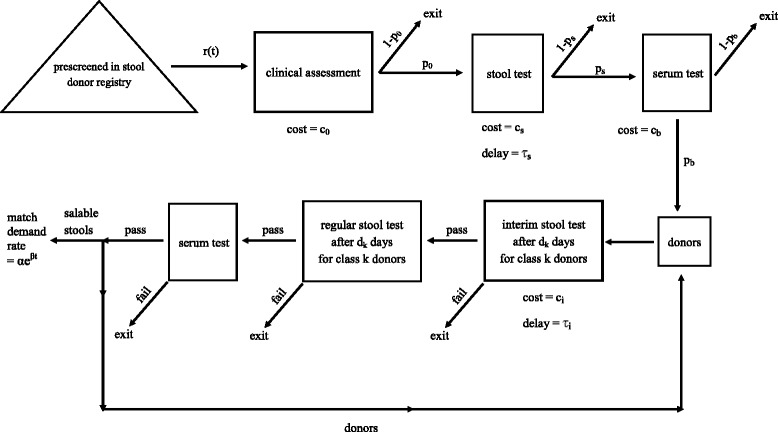
Fecal microbiota transplantation is an effective treatment for recurrent Clostridium difficile infection and is being investigated as a treatment for other microbiota-associated diseases. To facilitate these activities, an international public stool bank has been created, which screens donors and processes stools in a standardized manner. The goal of this research is to use mathematical modeling and analysis to optimize screening and donor management at the stool bank.
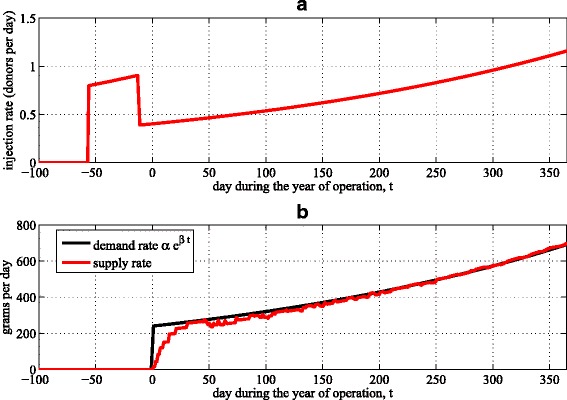
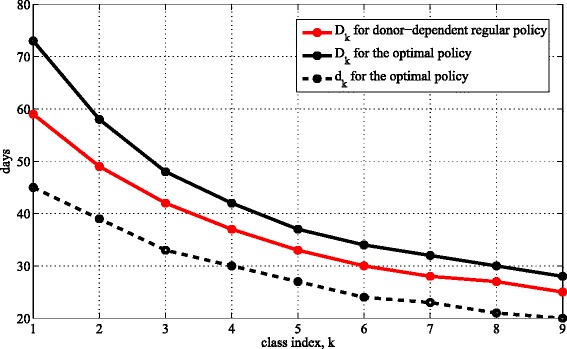
Compared to the current policy of screening active donors every 60 days before releasing their quarantined stools for sale, costs can be reduced by 10.3 % by increasing the screening frequency to every 36 days. In addition, the stool production rate varies widely across donors, and using donor-specific screening, where higher producers are screened more frequently, also reduces costs, as does introducing an interim (i.e., between consecutive regular tests) stool test for just rotavirus and C. difficile. We also derive a donor release (i.e., into the system) policy that allows the supply to approximately match an exponentially increasing deterministic demand.
More frequent screening, interim screening for rotavirus and C. difficile, and donor-specific screening, where higher stool producers are screened more frequently, are all cost-reducing measures. If screening costs decrease in the future (e.g., as a result of bringing screening in house), a bottleneck for implementing some of these recommendations may be the reluctance of donors to undergo serum screening more frequently than monthly.
粪便微生物群移植是治疗复发性艰难梭菌感染的有效方法,目前正在研究将其作为治疗其他与微生物群相关疾病的方法。为了促进这些活动,创建了一个国际公共粪便银行,该银行以标准化的方式筛选供体并处理粪便。本研究的目的是使用数学建模和分析来优化粪便银行的筛选和供体管理。
与当前每 60 天筛查一次活跃供体、每 36 天筛查一次供体的现行政策相比,通过增加筛查频率,可以将成本降低 10.3%。此外,供体的粪便产量差异很大,使用针对特定供体的筛查方法(即,对高产量供体进行更频繁的筛查)也可以降低成本,对轮状病毒和艰难梭菌进行中间(即连续定期检测之间)检测也可以降低成本。我们还得出了一种供体释放(即进入系统)政策,该政策允许供应大致与指数增长的确定性需求相匹配。
更频繁的筛查、中间轮状病毒和艰难梭菌检测,以及针对特定供体的筛查(即对高产量供体进行更频繁的筛查)都是降低成本的措施。如果未来筛查成本降低(例如,由于将筛查引入内部),那么实施其中一些建议的瓶颈可能是供体不愿意比每月更频繁地接受血清筛查。