Madhaiyan Munusamy, Alex Tan Hian Hwee, Ngoh Si Te, Prithiviraj Bharath, Ji Lianghui
Biomaterials and Biocatalysts Group, Temasek Life Sciences Laboratory, 1 Research Link, National University of Singapore, Singapore, 117604 Singapore.
Plant Biology Division, The Samuel Roberts Noble Foundation, Ardmore, OK 73401 USA.
Biotechnol Biofuels. 2015 Dec 21;8:222. doi: 10.1186/s13068-015-0404-y. eCollection 2015.
Jatropha curcas L. (Jatropha) is a potential biodiesel crop that can be cultivated on marginal land because of its strong tolerance to drought and low soil nutrient content. However, seed yield remains low. To enhance the commercial viability and green index of Jatropha biofuel, a systemic and coordinated approach must be adopted to improve seed oil and biomass productivity. Here, we present our investigations on the Jatropha-associated nitrogen-fixing bacteria with an aim to understand and exploit the unique biology of this plant from the perspective of plant-microbe interactions.
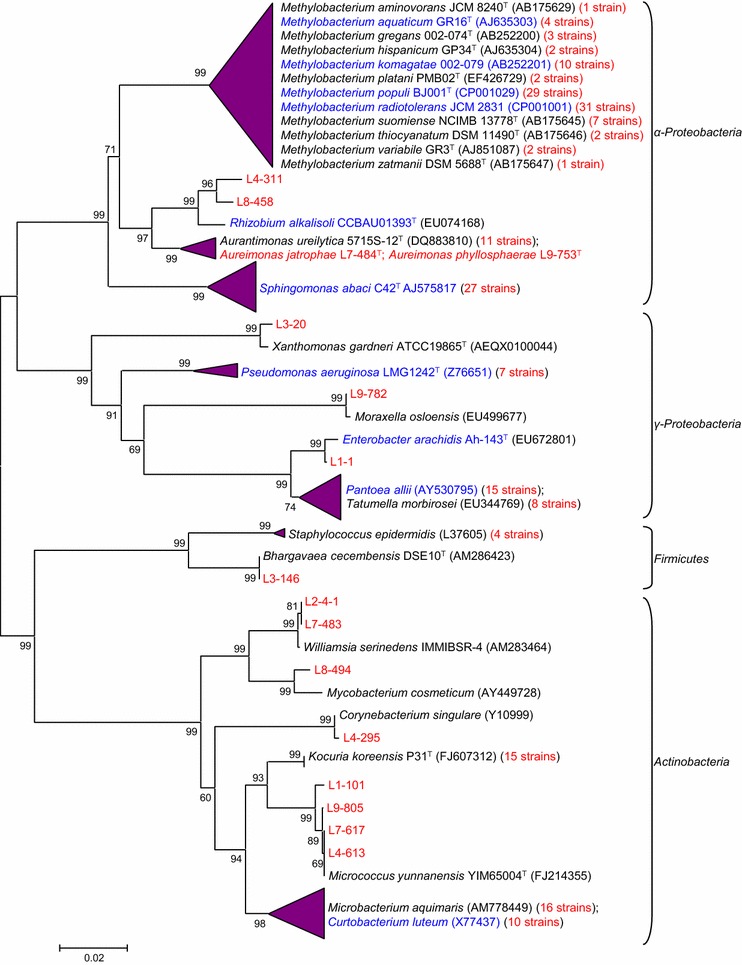
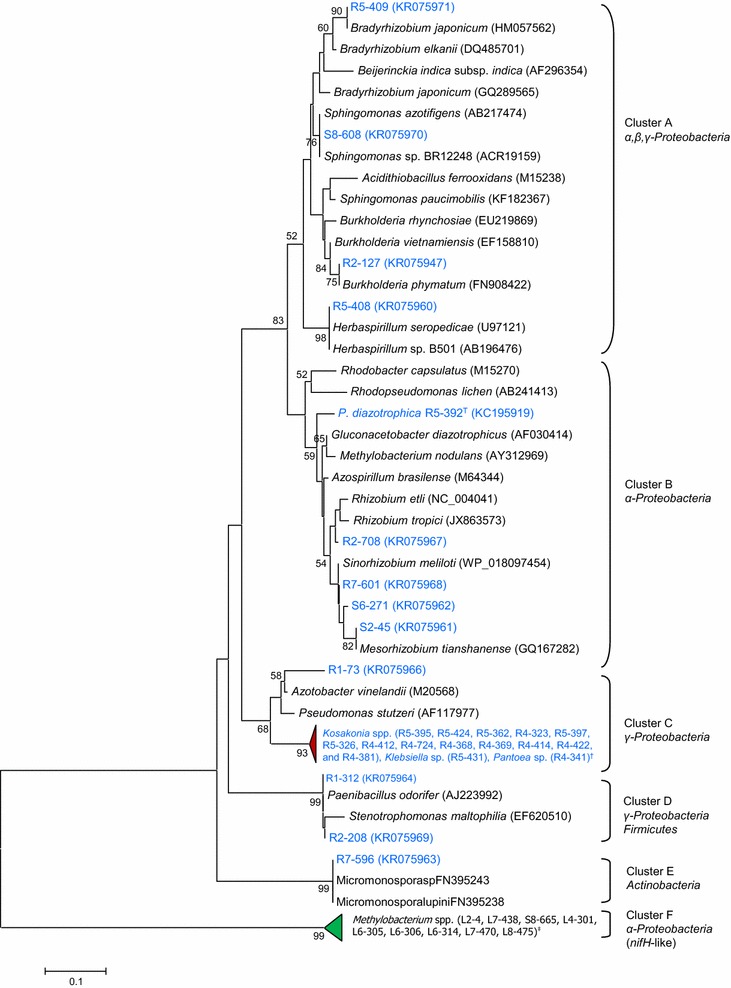
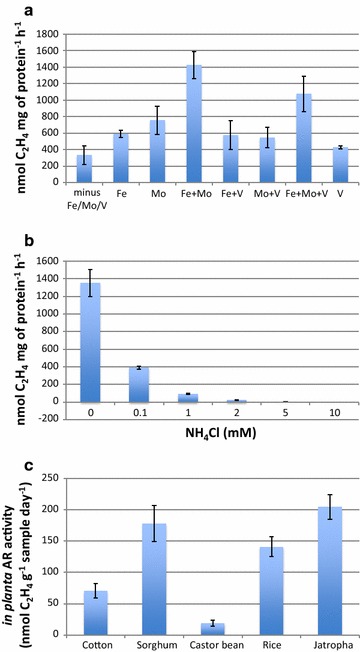
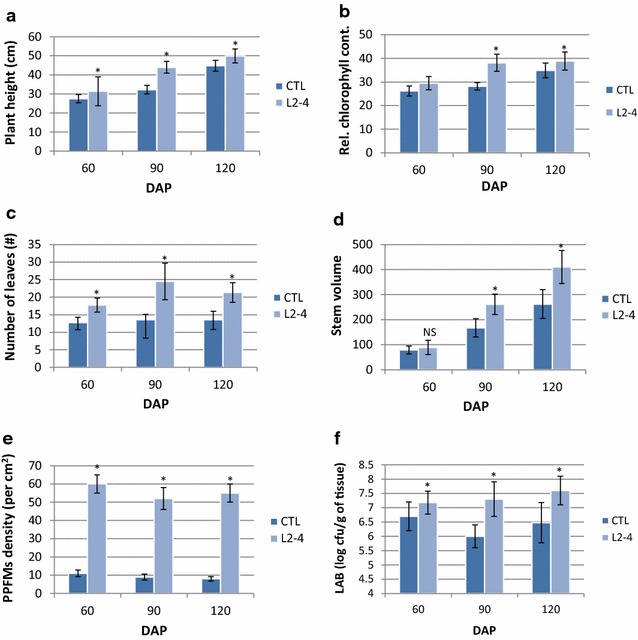
An analysis of 1017 endophytic bacterial isolates derived from different parts of Jatropha revealed that diazotrophs were abundant and diversely distributed into five classes belonging to α, β, γ-Proteobacteria, Actinobacteria and Firmicutes. Methylobacterium species accounted for 69.1 % of endophytic bacterial isolates in leaves and surprisingly, 30.2 % which were able to fix nitrogen that inhabit in leaves. Among the Methylobacterium isolates, strain L2-4 was characterized in detail. Phylogenetically, strain L2-4 is closely related to M. radiotolerans and showed strong molybdenum-iron dependent acetylene reduction (AR) activity in vitro and in planta. Foliar spray of L2-4 led to successful colonization on both leaf surface and in internal tissues of systemic leaves and significantly improved plant height, leaf number, chlorophyll content and stem volume. Importantly, seed production was improved by 222.2 and 96.3 % in plants potted in sterilized and non-sterilized soil, respectively. Seed yield increase was associated with an increase in female-male flower ratio.
The ability of Methylobacterium to fix nitrogen and colonize leaf tissues serves as an important trait for Jatropha. This bacteria-plant interaction may significantly contribute to Jatropha's tolerance to low soil nutrient content. Strain L2-4 opens a new possibility to improve plant's nitrogen supply from the leaves and may be exploited to significantly improve the productivity and Green Index of Jatropha biofuel.
麻疯树是一种潜在的生物柴油作物,因其对干旱和低土壤养分含量具有较强的耐受性,可种植于边际土地。然而,其种子产量仍然较低。为提高麻疯树生物燃料的商业可行性和绿色指数,必须采用系统且协调的方法来提高种子油和生物质生产力。在此,我们展示了对与麻疯树相关的固氮细菌的研究,旨在从植物 - 微生物相互作用的角度理解和利用这种植物的独特生物学特性。
对来自麻疯树不同部位的1017株内生细菌分离株的分析表明,固氮菌丰富且多样地分布于属于α、β、γ - 变形菌门、放线菌门和厚壁菌门的五个类别中。甲基杆菌属物种占叶片内生细菌分离株的69.1%,令人惊讶的是,其中30.2%能够在叶片中固氮。在甲基杆菌分离株中,对L2 - 4菌株进行了详细表征。从系统发育来看,L2 - 4菌株与耐辐射甲基杆菌密切相关,并且在体外和植物体内均表现出较强的钼铁依赖性乙炔还原(AR)活性。叶面喷施L2 - 4导致其成功定殖于叶片表面以及系统叶的内部组织,并显著提高了株高、叶片数量、叶绿素含量和茎体积。重要的是,在灭菌和未灭菌土壤中盆栽的植株种子产量分别提高了222.2%和96.3%。种子产量的增加与雌雄花比例的增加相关。
甲基杆菌的固氮能力和在叶片组织中的定殖能力是麻疯树的一个重要特性。这种细菌 - 植物相互作用可能对麻疯树耐受低土壤养分含量有显著贡献。L2 - 4菌株为从叶片改善植物氮供应开辟了新的可能性,并且可用于显著提高麻疯树生物燃料的生产力和绿色指数。