Biomaterials and Biocatalysts Group, Temasek Life Sciences Laboratory, 1 Research Link, National University of Singapore, Singapore 117604, Republic of Singapore.
Biotechnol Biofuels. 2013 Oct 1;6(1):140. doi: 10.1186/1754-6834-6-140.
Jatropha curcas L. is an oil seed producing non-leguminous tropical shrub that has good potential to be a fuel plant that can be cultivated on marginal land. Due to the low nutrient content of the targeted plantation area, the requirement for fertilizer is expected to be higher than other plants. This factor severely affects the commercial viability of J. curcas.
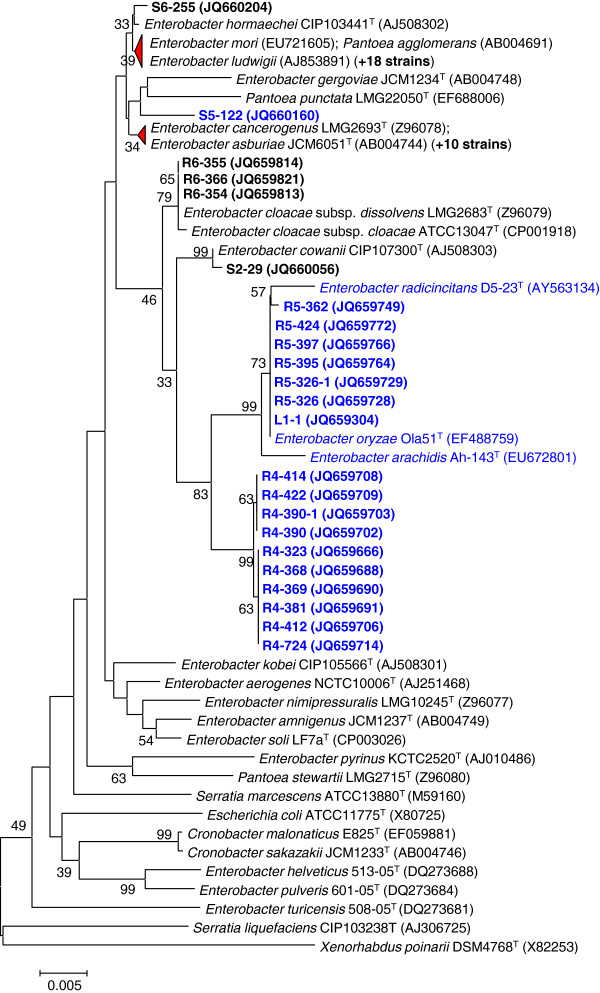
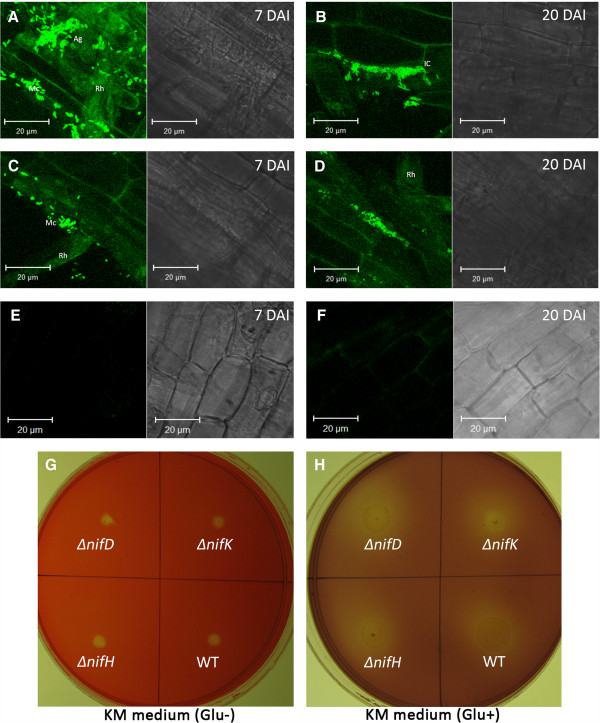
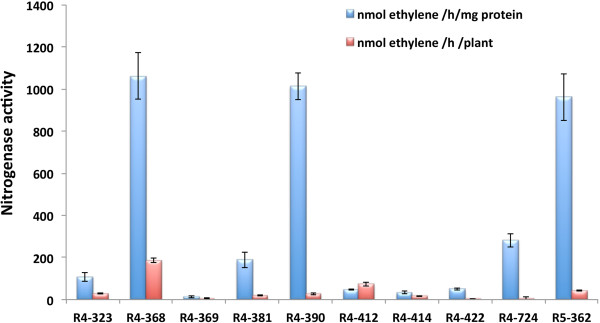
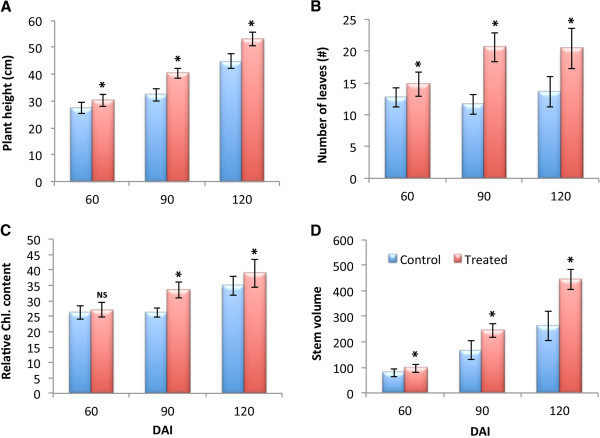
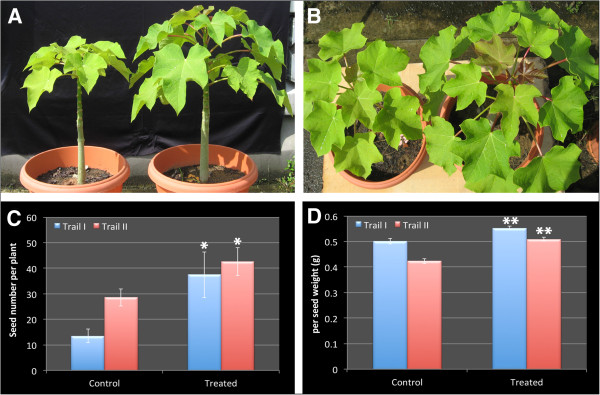
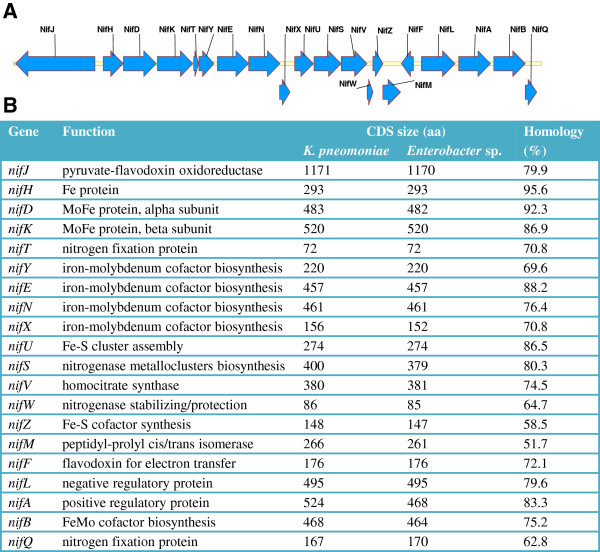
We explored the feasibility to use endophytic nitrogen-fixing bacteria that are native to J. curcas to improve plant growth, biomass and seed productivity. We demonstrated that a novel N-fixing endophyte, Enterobacter sp. R4-368, was able to colonize in root and stem tissues and significantly promoted early plant growth and seed productivity of J. curcas in sterilized and non-sterilized soil. Inoculation of young seedling led to an approximately 57.2% increase in seedling vigour over a six week period. At 90 days after planting, inoculated plants showed an average increase of 25.3%, 77.7%, 27.5%, 45.8% in plant height, leaf number, chlorophyll content and stem volume, respectively. Notably, inoculation of the strain led to a 49.0% increase in the average seed number per plant and 20% increase in the average single seed weight when plants were maintained for 1.5 years in non-sterilized soil in pots in the open air. Enterobacter sp. R4-368 cells were able to colonize root tissues and moved systemically to stem tissues. However, no bacteria were found in leaves. Promotion of plant growth and leaf nitrogen content by the strain was partially lost in nifH, nifD, nifK knockout mutants, suggesting the presence of other growth promoting factors that are associated with this bacterium strain.
Our results showed that Enterobacter sp. R4-368 significantly promoted growth and seed yield of J. curcas. The application of the strains is likely to significantly improve the commercial viability of J. curcas due to the reduced fertilizer cost and improved oil yield.
麻疯树是一种产油的非豆科热带灌木,具有成为可在边缘土地上种植的燃料植物的巨大潜力。由于目标种植区的养分含量低,预计对肥料的需求会高于其他植物。这一因素严重影响了麻疯树的商业可行性。
我们探索了利用原产于麻疯树的内生固氮细菌来改善植物生长、生物量和种子产量的可行性。我们证明了一种新型固氮内生菌,肠杆菌属 R4-368,能够在根和茎组织中定殖,并显著促进了灭菌和未灭菌土壤中麻疯树的早期生长和种子产量。接种幼苗导致幼苗活力在六周内增加了约 57.2%。种植后 90 天,接种植物的株高、叶片数、叶绿素含量和茎体积分别平均增加 25.3%、77.7%、27.5%和 45.8%。值得注意的是,当植物在未灭菌的土壤中在露天花盆中生长 1.5 年时,该菌株的接种导致每株植物的平均种子数增加了 49.0%,平均单粒种子重量增加了 20%。肠杆菌属 R4-368 细胞能够定殖根组织,并系统地转移到茎组织。然而,在叶片中未发现细菌。该菌株对植物生长和叶片氮含量的促进作用在 nifH、nifD 和 nifK 敲除突变体中部分丧失,这表明该菌株存在其他与生长促进相关的因子。
我们的结果表明,肠杆菌属 R4-368 显著促进了麻疯树的生长和种子产量。由于肥料成本的降低和油产量的提高,该菌株的应用有望显著提高麻疯树的商业可行性。