Faron Matthew L, Buchan Blake W, Vismara Chiara, Lacchini Carla, Bielli Alessandra, Gesu Giovanni, Liebregts Theo, van Bree Anita, Jansz Arjan, Soucy Genevieve, Korver John, Ledeboer Nathan A
Medical College of Wisconsin, Milwaukee, Wisconsin, USA.
Medical College of Wisconsin, Milwaukee, Wisconsin, USA Wisconsin Diagnostic Laboratories, Milwaukee, Wisconsin, USA.
J Clin Microbiol. 2016 Mar;54(3):620-4. doi: 10.1128/JCM.02778-15. Epub 2015 Dec 30.
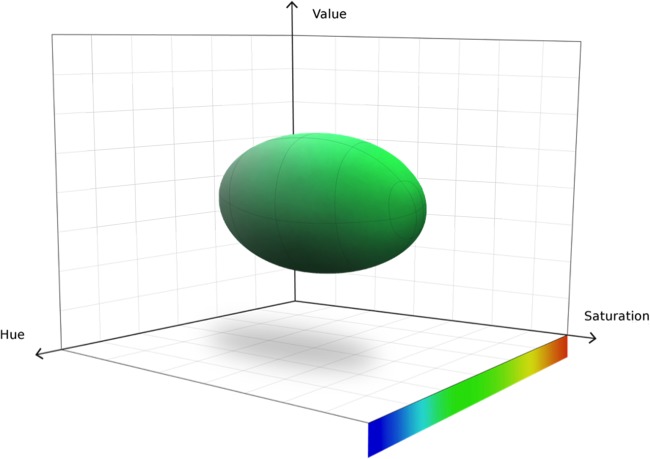
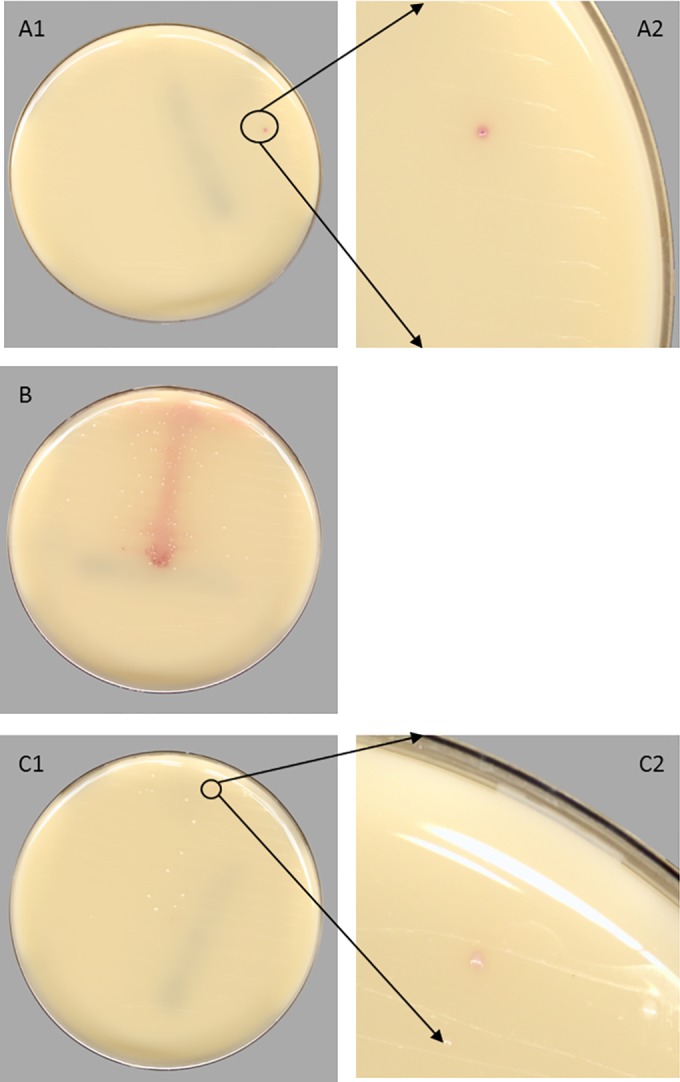
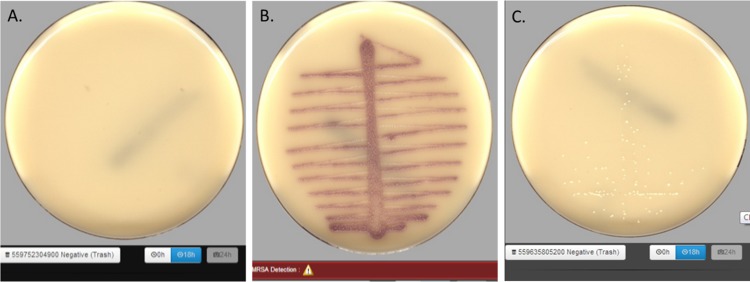
Recently, systems have been developed to create total laboratory automation for clinical microbiology. These systems allow for the automation of specimen processing, specimen incubation, and imaging of bacterial growth. In this study, we used the WASPLab to validate software that discriminates and segregates positive and negative chromogenic methicillin-resistant Staphylococcus aureus (MRSA) plates by recognition of pigmented colonies. A total of 57,690 swabs submitted for MRSA screening were enrolled in the study. Four sites enrolled specimens following their standard of care. Chromogenic agar used at these sites included MRSASelect (Bio-Rad Laboratories, Redmond, WA), chromID MRSA (bioMérieux, Marcy l'Etoile, France), and CHROMagar MRSA (BD Diagnostics, Sparks, MD). Specimens were plated and incubated using the WASPLab. The digital camera took images at 0 and 16 to 24 h and the WASPLab software determined the presence of positive colonies based on a hue, saturation, and value (HSV) score. If the HSV score fell within a defined threshold, the plate was called positive. The performance of the digital analysis was compared to manual reading. Overall, the digital software had a sensitivity of 100% and a specificity of 90.7% with the specificity ranging between 90.0 and 96.0 across all sites. The results were similar using the three different agars with a sensitivity of 100% and specificity ranging between 90.7 and 92.4%. These data demonstrate that automated digital analysis can be used to accurately sort positive from negative chromogenic agar cultures regardless of the pigmentation produced.
最近,已经开发出了用于临床微生物学全实验室自动化的系统。这些系统能够实现标本处理、标本培养以及细菌生长成像的自动化。在本研究中,我们使用WASPLab对一款软件进行验证,该软件通过识别色素沉着菌落来区分和分离产色耐甲氧西林金黄色葡萄球菌(MRSA)平板的阳性和阴性结果。共有57690份提交用于MRSA筛查的拭子样本纳入了本研究。四个研究地点按照各自的护理标准纳入标本。这些地点使用的产色琼脂包括MRSASelect(伯乐生命医学产品公司,华盛顿州雷德蒙德)、chromID MRSA(生物梅里埃公司,法国马西伊图瓦勒)和CHROMagar MRSA(BD诊断公司,马里兰州斯帕克斯)。使用WASPLab对标本进行接种和培养。数码相机在0小时以及16至24小时拍摄图像,WASPLab软件根据色调、饱和度和明度(HSV)评分确定阳性菌落的存在情况。如果HSV评分落在规定阈值内,则该平板判定为阳性。将数字分析的性能与人工读数进行比较。总体而言,数字软件的灵敏度为100%,特异性为90.7%,所有研究地点的特异性在90.0%至96.0%之间。使用三种不同琼脂的结果相似,灵敏度为100%,特异性在90.7%至92.4%之间。这些数据表明,无论产生何种色素沉着,自动化数字分析均可用于准确区分产色琼脂培养物的阳性和阴性结果。