Rastegar Hosein, Ashtiani Hamidreza Ahmadi, Aghaei Mahmoud, Barikbin Behrooz, Ehsani Amirohushang
Food and Drug Control Laboratory and Research Center, Tehran, Iran.
Islamic Azad University, Pharmaceutical Sciences Branch, Tehran, Iran.
Ann Dermatol. 2015 Dec;27(6):667-75. doi: 10.5021/ad.2015.27.6.667. Epub 2015 Dec 7.
The number of people suffering from balding or hair thinning is increasing, despite the advances in various medical therapies. Therefore, it is highly important to develop new therapies to inhibit balding and increase hair proliferation.
We investigated the effects of herbal extracts commonly used for improving balding in traditional medicine to identify potential agents for hair proliferation.
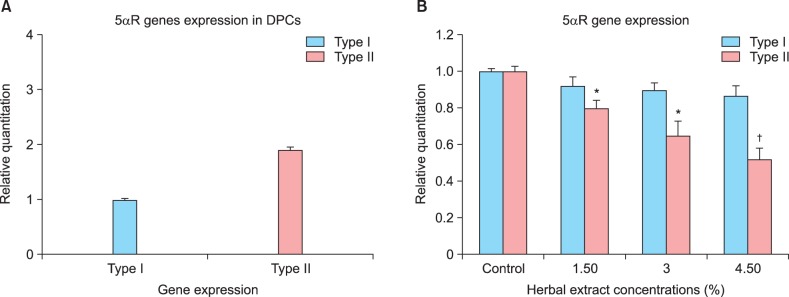
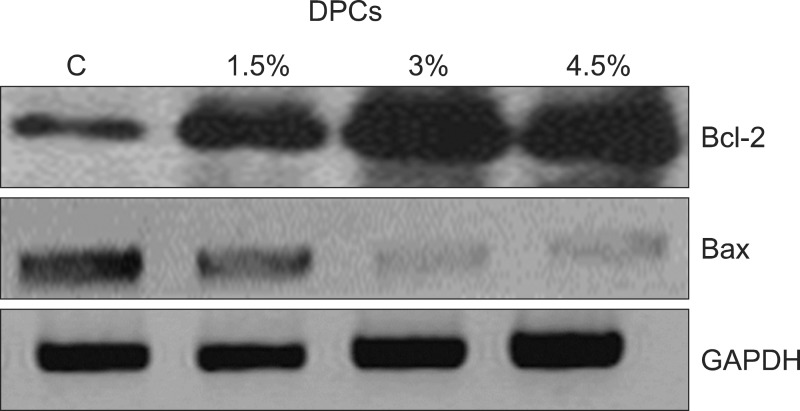
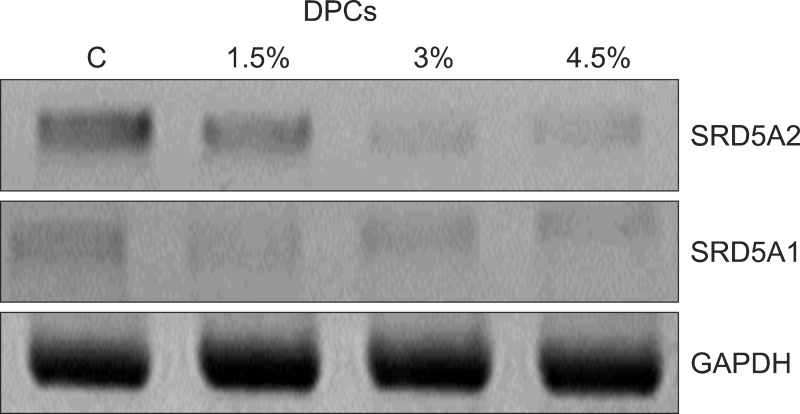
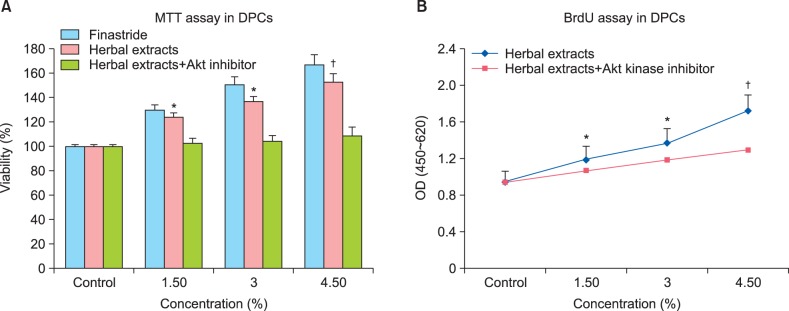
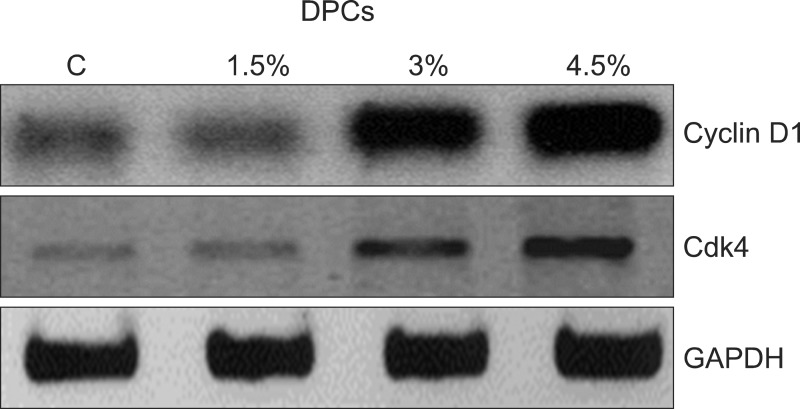
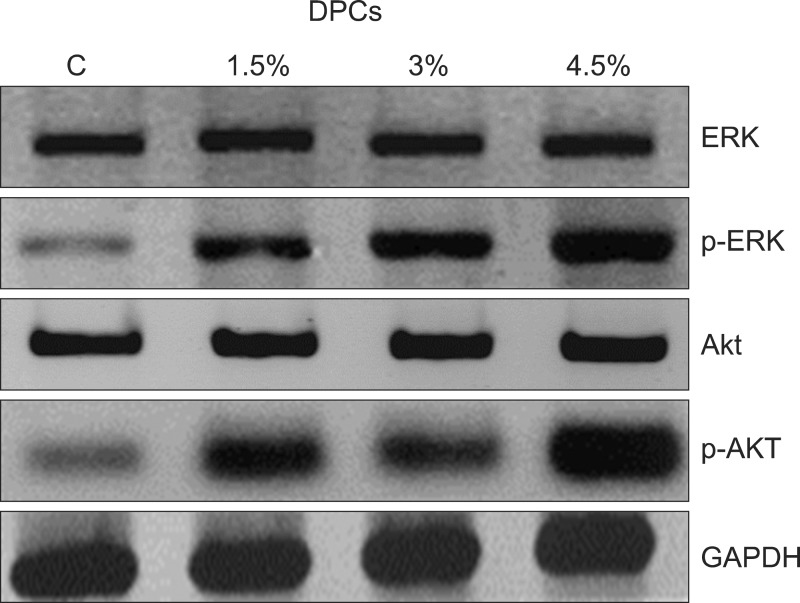
The expression levels of 5α-reductase isoforms (type I and II) were analyzed using quantitative real-time reverse transcription polymerase chain reaction in the human follicular dermal papilla cells (DPCs). The 3-(4,5-dimethylthiazol-2-yl)-2,5-diphenylteterazolium bromide and bromodeoxyuridine tests were used to evaluate the cell proliferation effect of herbal extracts in DPCs. The expression levels of extracellular signal-regulated kinase (ERK), Akt, cyclin D1, cyclin-dependent kinase 4 (Cdk4), B-cell lymphoma (Bcl-2) and Bcl-2-associated X protein (Bax) were measured using western blot analysis.
The 5α-reductase isoform mRNAs and proteins were detected in the cultured DPCs, and the expression level of 5α-R2 in DPCs in the presence of the herbal extracts was gradually decreased. Herbal extracts were found to significantly increase the proliferation of human DPCs at concentrations ranging from 1.5% to 4.5%. These results show that the herbal extracts tested affected the protein expressions of ERK, Akt, cyclin D1, Cdk4, Bcl-2, and Bax in DPCs.
These results suggest that herbal extracts exert positive effects on hair proliferation via ERK, Akt, cyclin D1, and Cdk4 signaling in DPCs; they also suggest that herbal extracts could be a great alternative therapy for increasing hair proliferation.
尽管各种医学疗法取得了进展,但脱发或头发稀疏的人数仍在增加。因此,开发抑制脱发和促进头发生长的新疗法非常重要。
我们研究了传统医学中常用于改善脱发的草药提取物的作用,以确定促进头发生长的潜在药物。
使用定量实时逆转录聚合酶链反应分析人毛囊真皮乳头细胞(DPCs)中5α-还原酶同工型(I型和II型)的表达水平。采用3-(4,5-二甲基噻唑-2-基)-2,5-二苯基四氮唑溴盐和溴脱氧尿苷试验评估草药提取物对DPCs细胞增殖的影响。使用蛋白质印迹分析测量细胞外信号调节激酶(ERK)、Akt、细胞周期蛋白D1、细胞周期蛋白依赖性激酶4(Cdk4)、B细胞淋巴瘤(Bcl-2)和Bcl-2相关X蛋白(Bax)的表达水平。
在培养的DPCs中检测到5α-还原酶同工型的mRNA和蛋白质,在草药提取物存在的情况下,DPCs中5α-R2的表达水平逐渐降低。发现草药提取物在1.5%至4.5%的浓度范围内可显著增加人DPCs的增殖。这些结果表明,所测试的草药提取物影响了DPCs中ERK、Akt、细胞周期蛋白D1、Cdk4、Bcl-2和Bax的蛋白质表达。
这些结果表明,草药提取物通过DPCs中的ERK、Akt、细胞周期蛋白D1和Cdk4信号对头发生长发挥积极作用;它们还表明,草药提取物可能是促进头发生长的一种很好的替代疗法。