Wallis Lisa J, Virányi Zsófia, Müller Corsin A, Serisier Samuel, Huber Ludwig, Range Friederike
Clever Dog Lab, Messerli Research Institute, University of Veterinary Medicine Vienna, Medical University of Vienna, University of Vienna, Veterinärplatz 1, 1210, Vienna, Austria.
Department of Cognitive Biology, University of Vienna, Vienna, Austria.
Age (Dordr). 2016 Feb;38(1):6. doi: 10.1007/s11357-015-9866-x. Epub 2016 Jan 4.
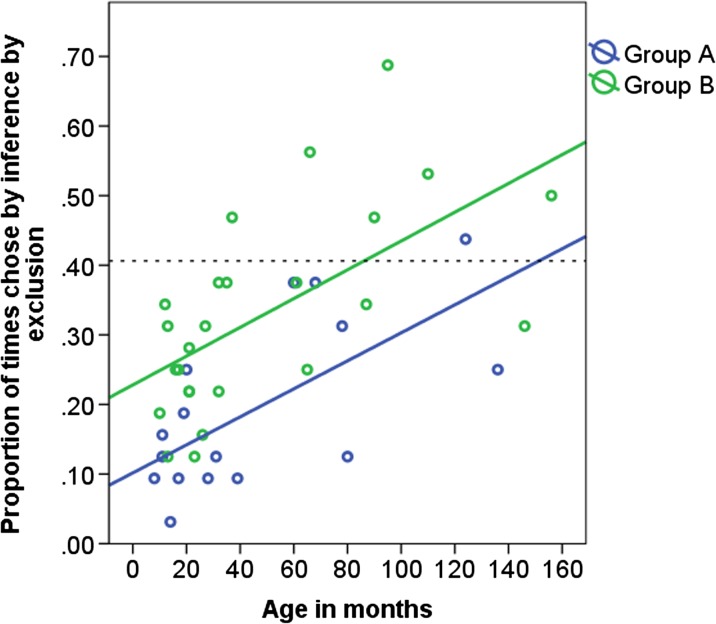
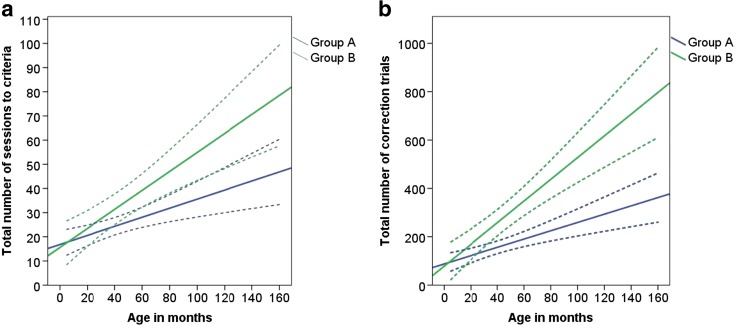
In laboratory dogs, aging leads to a decline in various cognitive domains such as learning, memory and behavioural flexibility. However, much less is known about aging in pet dogs, i.e. dogs that are exposed to different home environments by their caregivers. We used tasks on a touchscreen apparatus to detect differences in various cognitive functions across pet Border Collies aged from 5 months to 13 years. Ninety-five dogs were divided into five age groups and tested in four tasks: (1) underwater photo versus drawing discrimination, (2) clip art picture discrimination, (3) inferential reasoning by exclusion and (4) a memory test with a retention interval of 6 months. The tasks were designed to test three cognitive abilities: visual discrimination learning, logical reasoning and memory. The total number of sessions to reach criterion and the number of correction trials needed in the two discrimination tasks were compared across age groups. The results showed that both measures increased linearly with age, with dogs aged over 13 years displaying slower learning and reduced flexibility in comparison to younger dogs. Inferential reasoning ability increased with age, but less than 10 % of dogs showed patterns of choice consistent with inference by exclusion. No age effect was found in the long-term memory test. In conclusion, the discrimination learning tests used are suitable to detect cognitive aging in pet dogs, which can serve as a basis for comparison to help diagnose cognition-related problems and as a tool to assist with the development of treatments to delay cognitive decline.
在实验用犬中,衰老会导致各种认知领域的衰退,如学习、记忆和行为灵活性。然而,对于宠物犬(即由其照顾者置于不同家庭环境中的犬)的衰老情况,我们了解得要少得多。我们使用触摸屏设备上的任务来检测5个月至13岁的宠物边境牧羊犬在各种认知功能上的差异。95只犬被分为五个年龄组,并接受四项任务的测试:(1)水下照片与绘画辨别,(2)剪贴画图片辨别,(3)排除法推理和(4)间隔6个月的记忆测试。这些任务旨在测试三种认知能力:视觉辨别学习、逻辑推理和记忆。比较了各年龄组达到标准所需的总训练次数以及两项辨别任务中所需的纠正试验次数。结果表明,这两项指标均随年龄呈线性增加,与年轻犬相比,13岁以上的犬学习较慢且灵活性降低。推理能力随年龄增长而提高,但只有不到10%的犬表现出与排除法推理一致的选择模式。在长期记忆测试中未发现年龄效应。总之,所使用的辨别学习测试适用于检测宠物犬的认知衰老,这可作为比较的基础,以帮助诊断与认知相关的问题,并作为协助开发延缓认知衰退治疗方法的工具。