Li Jun, Ma Siyuan, Woo Norman Y S
School of Biological Sciences, Lake Superior State University, Sault Ste. Marie, MI 49783, USA.
Key laboratory of Experimental Marine Biology, Institute of Oceanology, the Chinese Academy of Sciences, Qingdao 266071, China.
Int J Mol Sci. 2015 Dec 29;17(1):40. doi: 10.3390/ijms17010040.
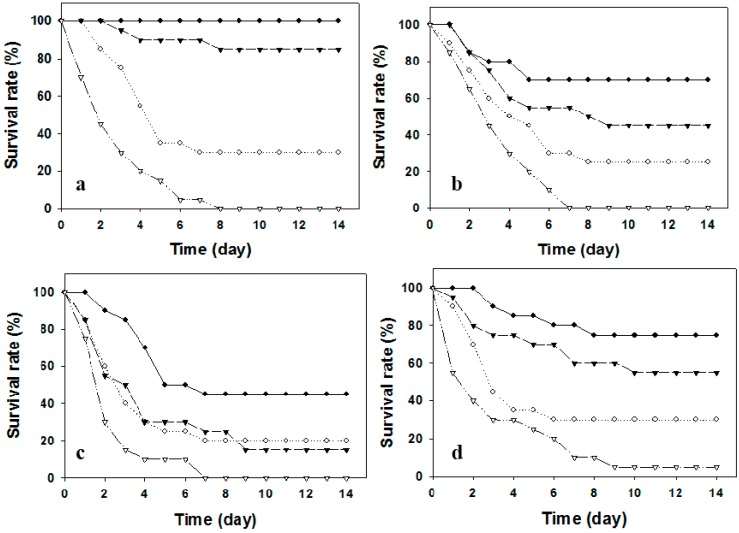
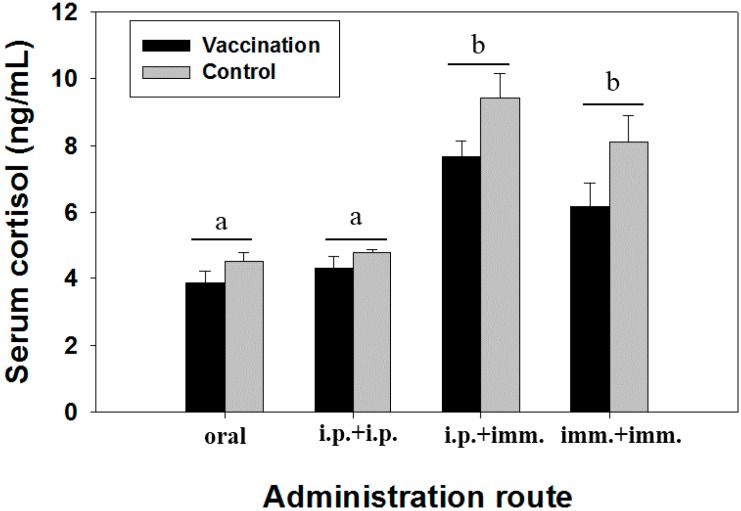
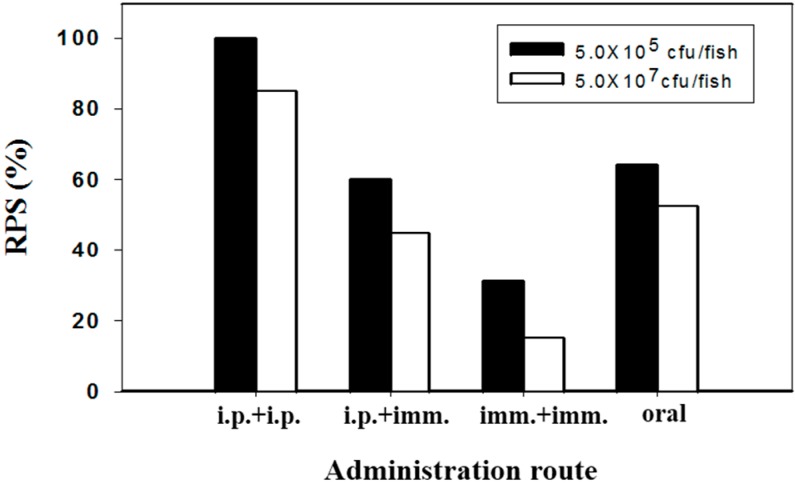
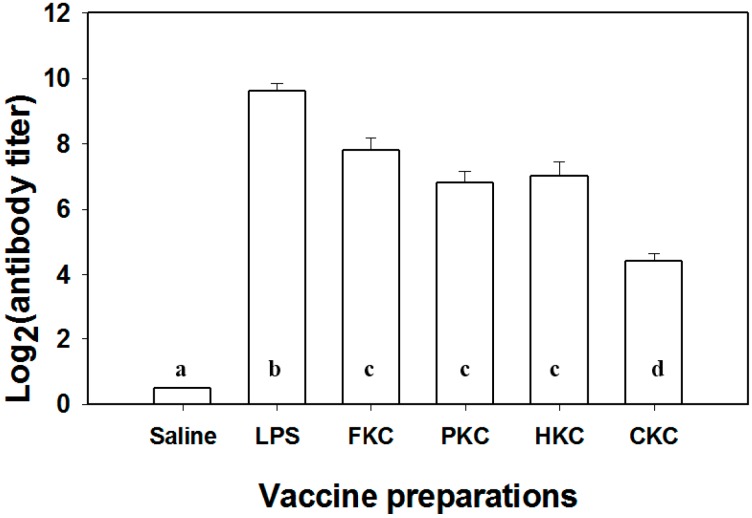
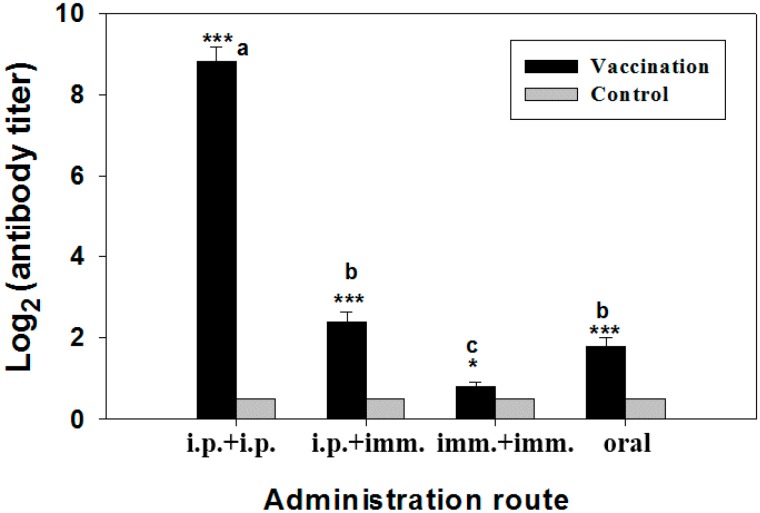
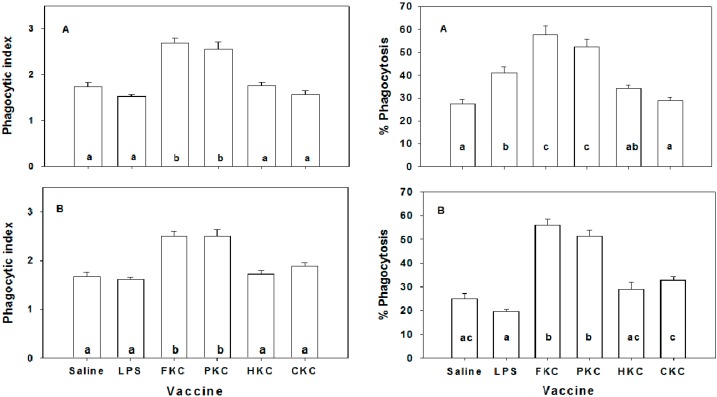
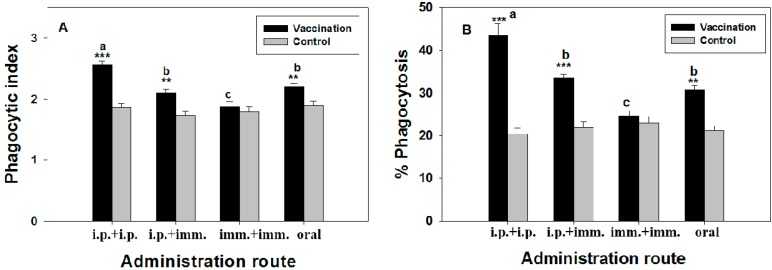
In order to develop more effective immunological strategies to prevent vibriosis of farmed marine fish in Hong Kong and southern China, various vaccine preparations including formalin-, phenol-, chloroform- and heat-killed whole cell bacterins and subcellular lipopolysaccharides (LPS), as well as different administration routes, were investigated. Fish immunized with the subcellular LPS exhibited the best protection [Relative Percent of Survival (RPS) = 100], while fish immunized with whole cell bacterins displayed varying degrees of protection (RPS ranged from 28 to 80), in descending order: formalin-killed > phenol-killed > heat-killed > chloroform-killed bacterins. Regarding various administration routes, fish immunized with two intraperitoneal (i.p.) injections exhibited the best protection, and the RPS values were 100 or 85 upon higher or lower doses of pathogenic V. alginolyticus challenges. Both oral vaccination and a combination of injection/immersion trial were also effective, which achieved relatively high protection (the RPS values ranged from 45 to 64.3). However, two hyperosmotic immersions could not confer satisfactory protection, especially when fish were exposed to the severe pathogenic bacteria challenge. Marked elevations of serum agglutinating antibody titer were detected in all immunized fish. Macrophage phagocytosis was enhanced significantly, especially in the fish immunized by formalin- and phenol-killed bacterins through various administration routes. Both adaptive (specific antibody) and innate (phagocytic activity) immunity elicited by different immunization strategies were in parallel with the degree of protection offered by each of them. Although all vaccination trials had no significant effect on the serum hematocrit and hemoglobin levels, the circulating lymphocyte counts were significantly elevated in the fish immunized with LPS, formalin- and phenol-killed bacterins. Serum cortisol levels appeared to be reduced in all immunized fish except the trial of hyperosmotic immersion, which indicated the stressful impact on vaccinated fish.
为了制定更有效的免疫策略来预防香港和中国南方养殖海水鱼的弧菌病,研究了各种疫苗制剂,包括福尔马林、苯酚、氯仿和热灭活全细胞菌苗以及亚细胞脂多糖(LPS),以及不同的给药途径。用亚细胞LPS免疫的鱼表现出最佳保护作用[相对存活率(RPS)=100],而用全细胞菌苗免疫的鱼表现出不同程度的保护作用(RPS范围为28至80),从高到低依次为:福尔马林灭活>苯酚灭活>热灭活>氯仿灭活菌苗。关于各种给药途径,经两次腹腔注射免疫的鱼表现出最佳保护作用,在高剂量或低剂量致病性溶藻弧菌攻击后,RPS值分别为100或85。口服疫苗接种以及注射/浸泡联合试验也有效,可实现较高的保护作用(RPS值范围为45至64.3)。然而,两次高渗浸泡不能提供令人满意的保护,尤其是当鱼受到严重病原菌攻击时。在所有免疫鱼中均检测到血清凝集抗体效价显著升高。巨噬细胞吞噬作用显著增强,尤其是通过各种给药途径用福尔马林和苯酚灭活菌苗免疫的鱼。不同免疫策略引发的适应性(特异性抗体)和先天性(吞噬活性)免疫均与它们各自提供的保护程度平行。尽管所有疫苗接种试验对血清血细胞比容和血红蛋白水平均无显著影响,但用LPS、福尔马林和苯酚灭活菌苗免疫的鱼循环淋巴细胞计数显著升高。除高渗浸泡试验外,所有免疫鱼的血清皮质醇水平似乎均降低,这表明疫苗接种对鱼有应激影响。