Morin Jean-Benoît, Gimenez Philippe, Edouard Pascal, Arnal Pierrick, Jiménez-Reyes Pedro, Samozino Pierre, Brughelli Matt, Mendiguchia Jurdan
Laboratory of Human Motricity, Education Sport and Health (EA6312), Faculty of Sport Sciences, University of Nice Sophia Antipolis Nice, France.
Laboratory Culture Sport Health Society (EA 4660), University of Franche-Comté Besançon, France.
Front Physiol. 2015 Dec 24;6:404. doi: 10.3389/fphys.2015.00404. eCollection 2015.
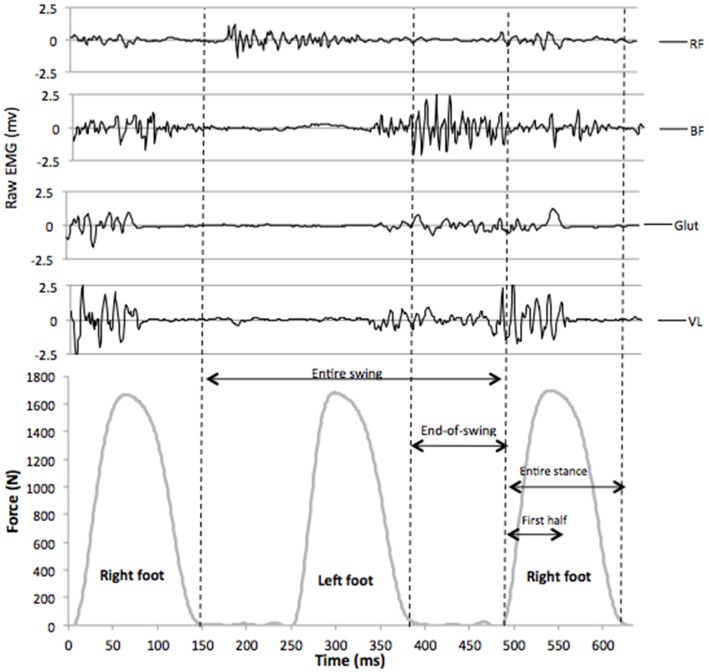
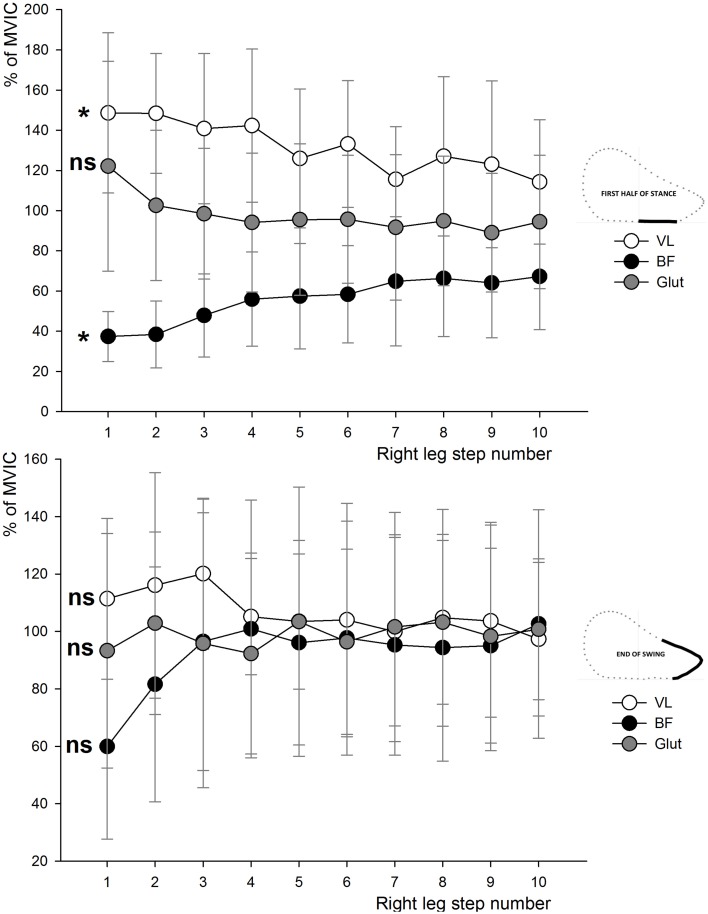
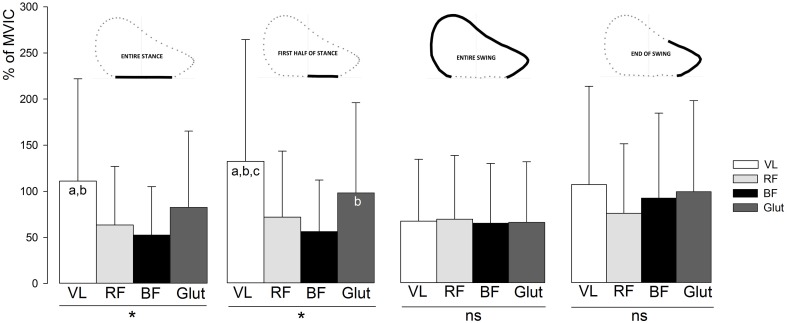
Recent literature supports the importance of horizontal ground reaction force (GRF) production for sprint acceleration performance. Modeling and clinical studies have shown that the hip extensors are very likely contributors to sprint acceleration performance. We experimentally tested the role of the hip extensors in horizontal GRF production during short, maximal, treadmill sprint accelerations. Torque capabilities of the knee and hip extensors and flexors were assessed using an isokinetic dynamometer in 14 males familiar with sprint running. Then, during 6-s sprints on an instrumented motorized treadmill, horizontal and vertical GRF were synchronized with electromyographic (EMG) activity of the vastus lateralis, rectus femoris, biceps femoris, and gluteus maximus averaged over the first half of support, entire support, entire swing and end-of-swing phases. No significant correlations were found between isokinetic or EMG variables and horizontal GRF. Multiple linear regression analysis showed a significant relationship (P = 0.024) between horizontal GRF and the combination of biceps femoris EMG activity during the end of the swing and the knee flexors eccentric peak torque. In conclusion, subjects who produced the greatest amount of horizontal force were both able to highly activate their hamstring muscles just before ground contact and present high eccentric hamstring peak torque capability.
近期文献支持了水平地面反作用力(GRF)产生对短跑加速性能的重要性。建模和临床研究表明,髋伸肌很可能对短跑加速性能有贡献。我们通过实验测试了髋伸肌在短时间、最大强度的跑步机短跑加速过程中水平GRF产生中的作用。在14名熟悉短跑的男性中,使用等速测力计评估了膝部和髋部伸肌及屈肌的扭矩能力。然后,在装有仪器的电动跑步机上进行6秒的短跑过程中,将水平和垂直GRF与股外侧肌、股直肌、股二头肌和臀大肌在支撑期前半段、整个支撑期、整个摆动期和摆动末期的平均肌电图(EMG)活动同步记录。在等速或肌电图变量与水平GRF之间未发现显著相关性。多元线性回归分析显示,水平GRF与摆动末期股二头肌肌电图活动和膝部屈肌离心峰值扭矩的组合之间存在显著关系(P = 0.024)。总之,产生最大水平力的受试者既能在触地前高度激活其腘绳肌,又具有较高的腘绳肌离心峰值扭矩能力。