Choi Junhong, Ieong Ka-Weng, Demirci Hasan, Chen Jin, Petrov Alexey, Prabhakar Arjun, O'Leary Seán E, Dominissini Dan, Rechavi Gideon, Soltis S Michael, Ehrenberg Måns, Puglisi Joseph D
Department of Structural Biology, Stanford University School of Medicine, Stanford, California, USA.
Department of Applied Physics, Stanford University, Stanford, California, USA.
Nat Struct Mol Biol. 2016 Feb;23(2):110-5. doi: 10.1038/nsmb.3148. Epub 2016 Jan 11.
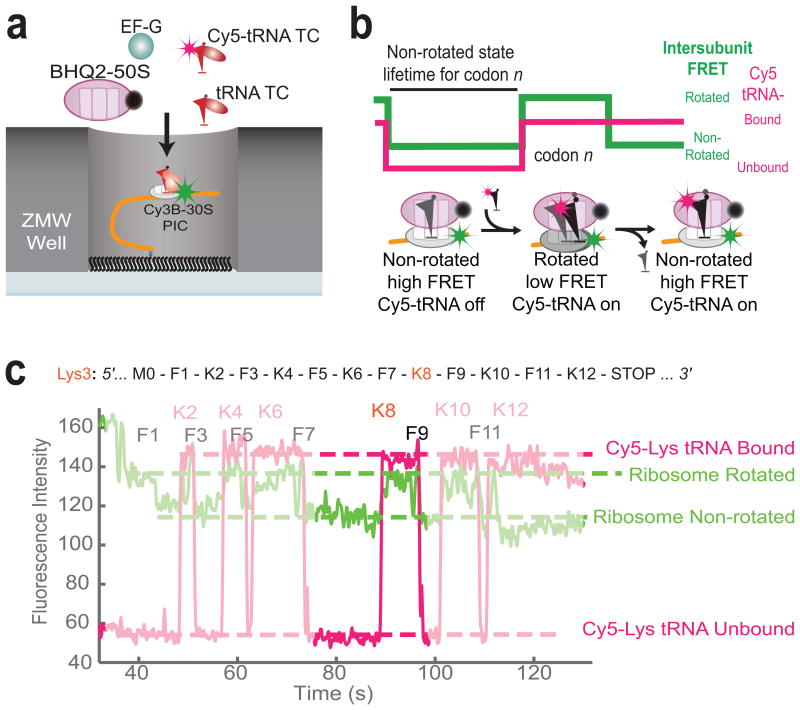
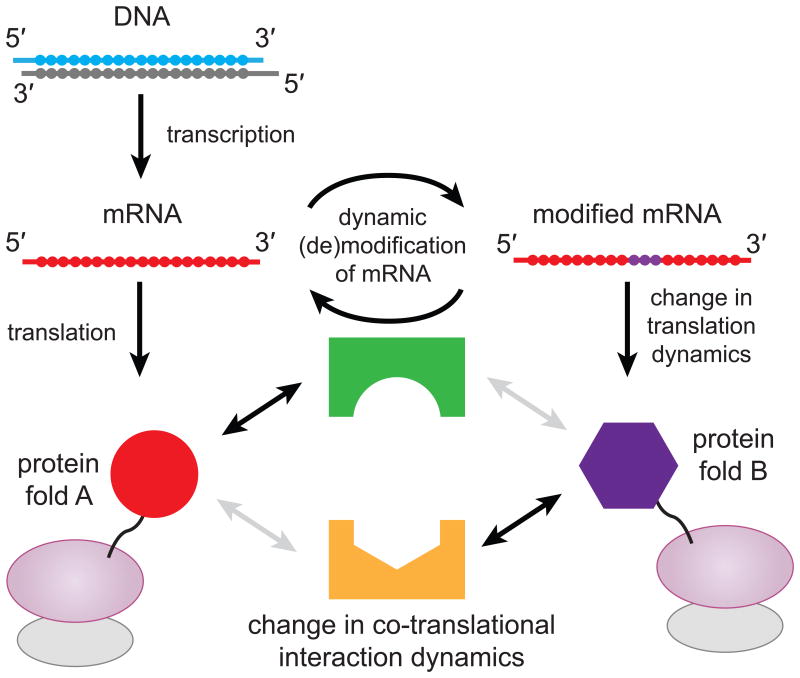
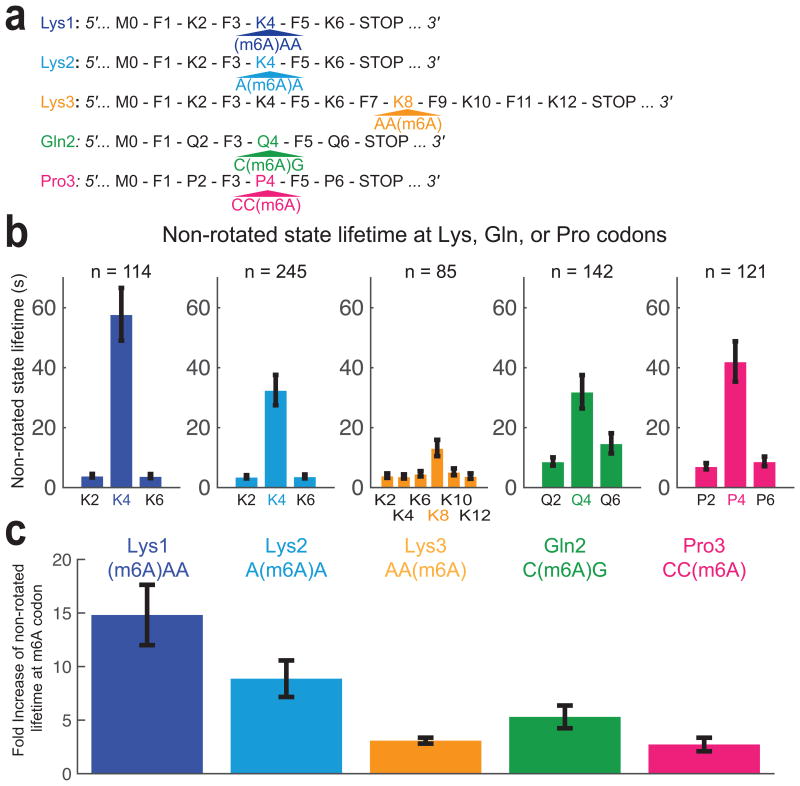
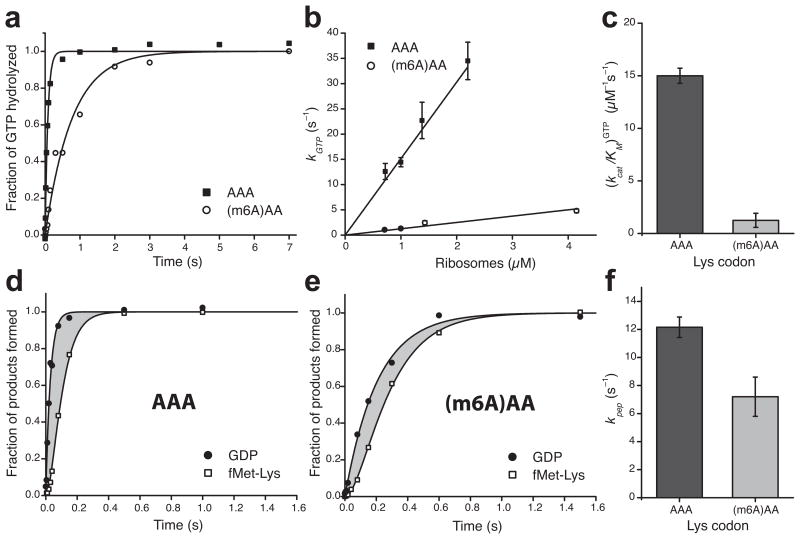
N(6)-methylation of adenosine (forming m(6)A) is the most abundant post-transcriptional modification within the coding region of mRNA, but its role during translation remains unknown. Here, we used bulk kinetic and single-molecule methods to probe the effect of m(6)A in mRNA decoding. Although m(6)A base-pairs with uridine during decoding, as shown by X-ray crystallographic analyses of Thermus thermophilus ribosomal complexes, our measurements in an Escherichia coli translation system revealed that m(6)A modification of mRNA acts as a barrier to tRNA accommodation and translation elongation. The interaction between an m(6)A-modified codon and cognate tRNA echoes the interaction between a near-cognate codon and tRNA, because delay in tRNA accommodation depends on the position and context of m(6)A within codons and on the accuracy level of translation. Overall, our results demonstrate that chemical modification of mRNA can change translational dynamics.
腺苷的N(6)-甲基化(形成m(6)A)是mRNA编码区内最丰富的转录后修饰,但它在翻译过程中的作用仍不清楚。在这里,我们使用整体动力学和单分子方法来探究m(6)A在mRNA解码中的作用。尽管如嗜热栖热菌核糖体复合物的X射线晶体学分析所示,m(6)A在解码过程中与尿苷碱基配对,但我们在大肠杆菌翻译系统中的测量结果表明,mRNA的m(6)A修饰对tRNA的容纳和翻译延伸起到了阻碍作用。m(6)A修饰的密码子与同源tRNA之间的相互作用与近同源密码子和tRNA之间的相互作用相似,因为tRNA容纳的延迟取决于m(6)A在密码子中的位置和上下文以及翻译的准确性水平。总体而言,我们的结果表明,mRNA的化学修饰可以改变翻译动力学。