Boettiger Alistair N, Bintu Bogdan, Moffitt Jeffrey R, Wang Siyuan, Beliveau Brian J, Fudenberg Geoffrey, Imakaev Maxim, Mirny Leonid A, Wu Chao-ting, Zhuang Xiaowei
Howard Hughes Medical Institute, Department of Chemistry and Chemical Biology, Department of Physics, Harvard University, Cambridge, Massachusetts 02138, USA.
Department of Genetics, Harvard Medical School, Boston, Massachusetts 02115, USA.
Nature. 2016 Jan 21;529(7586):418-22. doi: 10.1038/nature16496. Epub 2016 Jan 13.
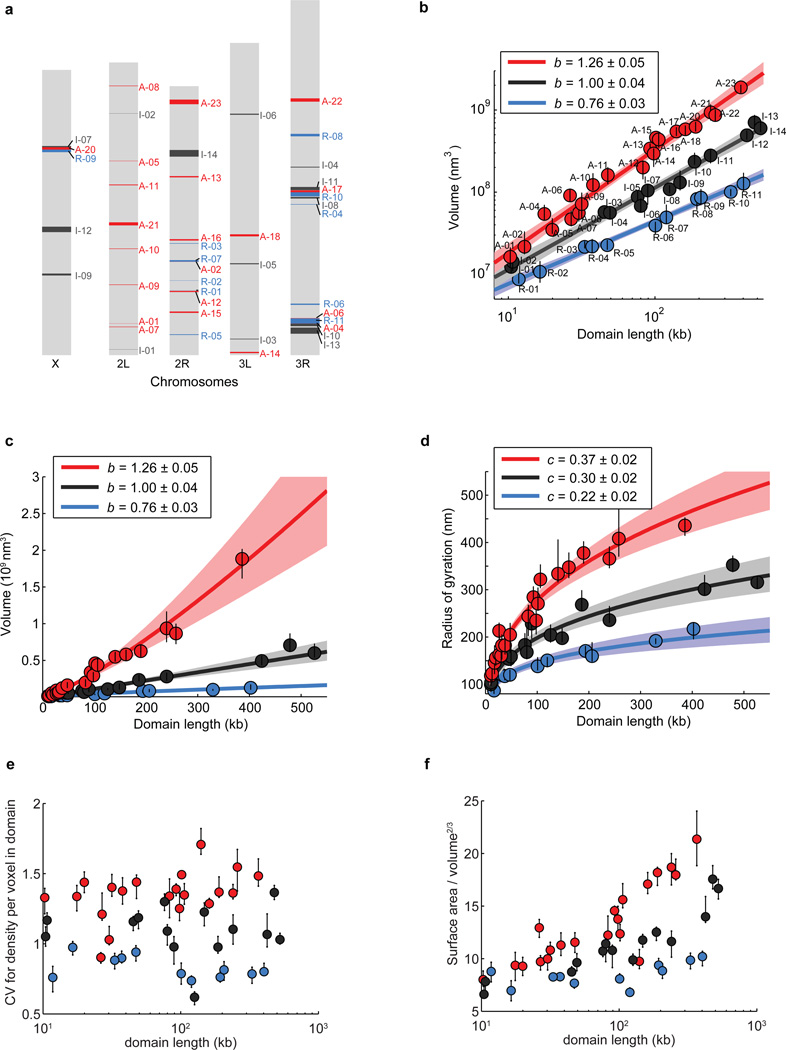
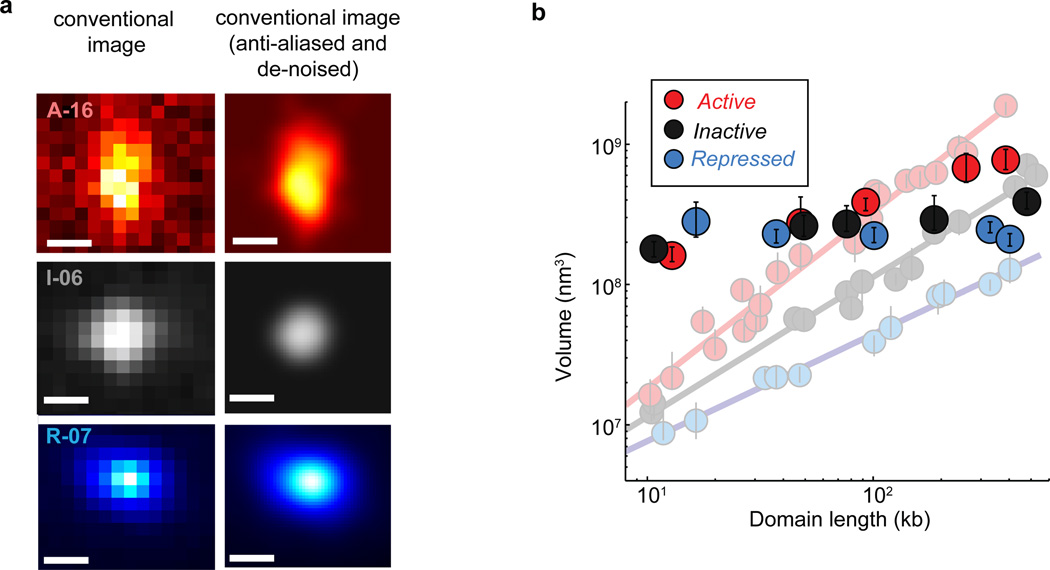
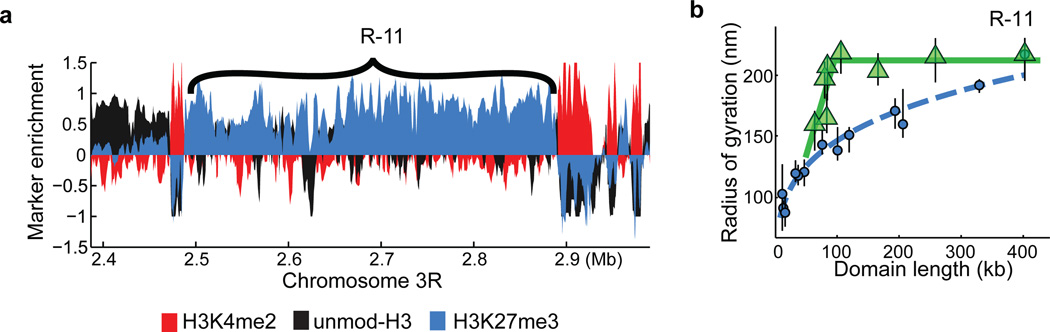
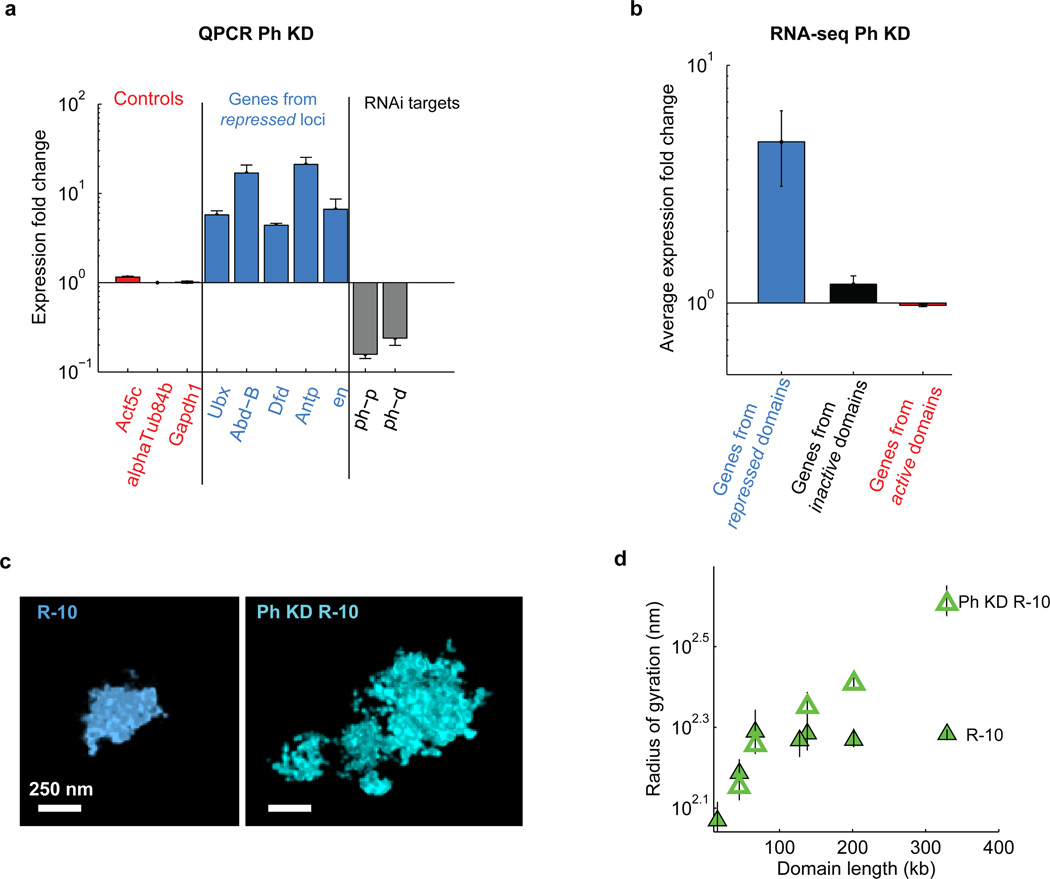
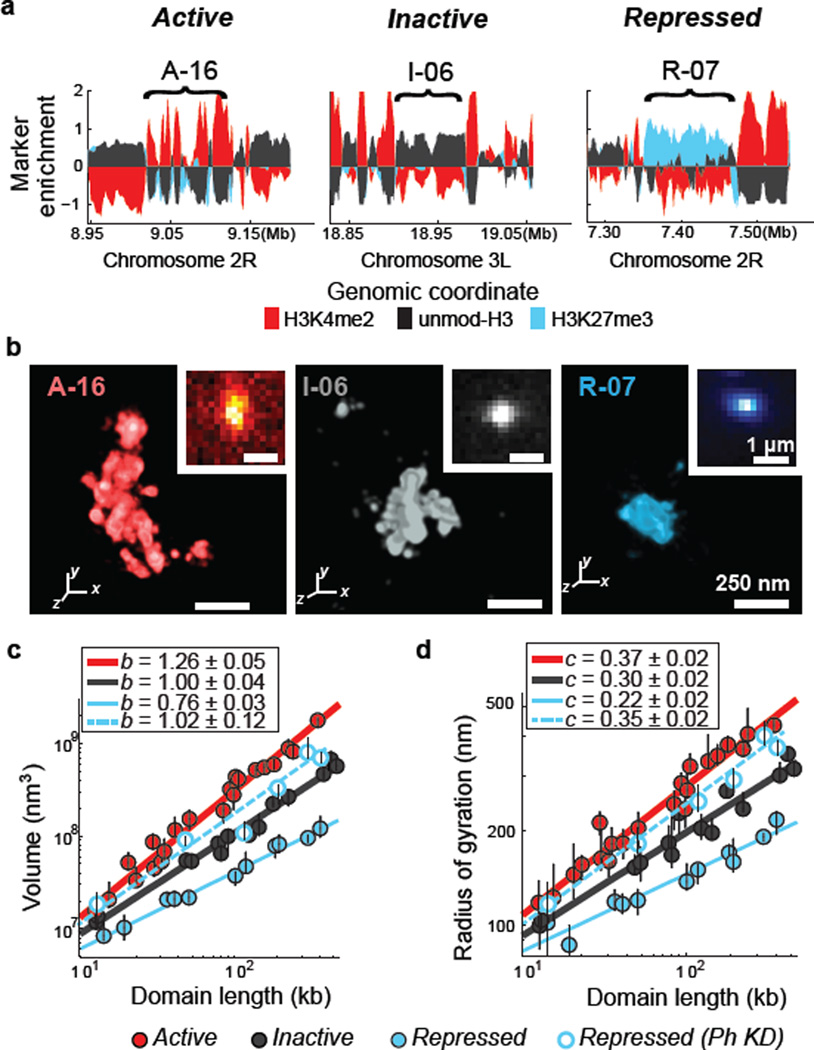
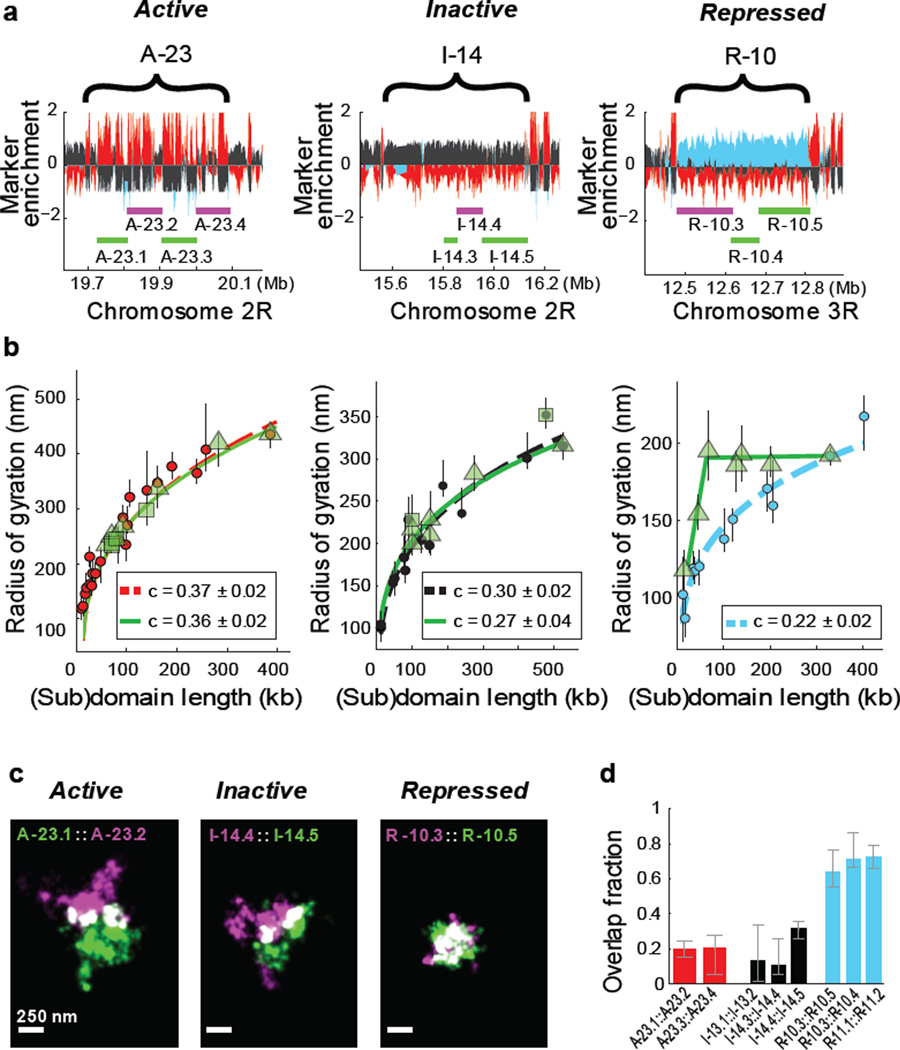
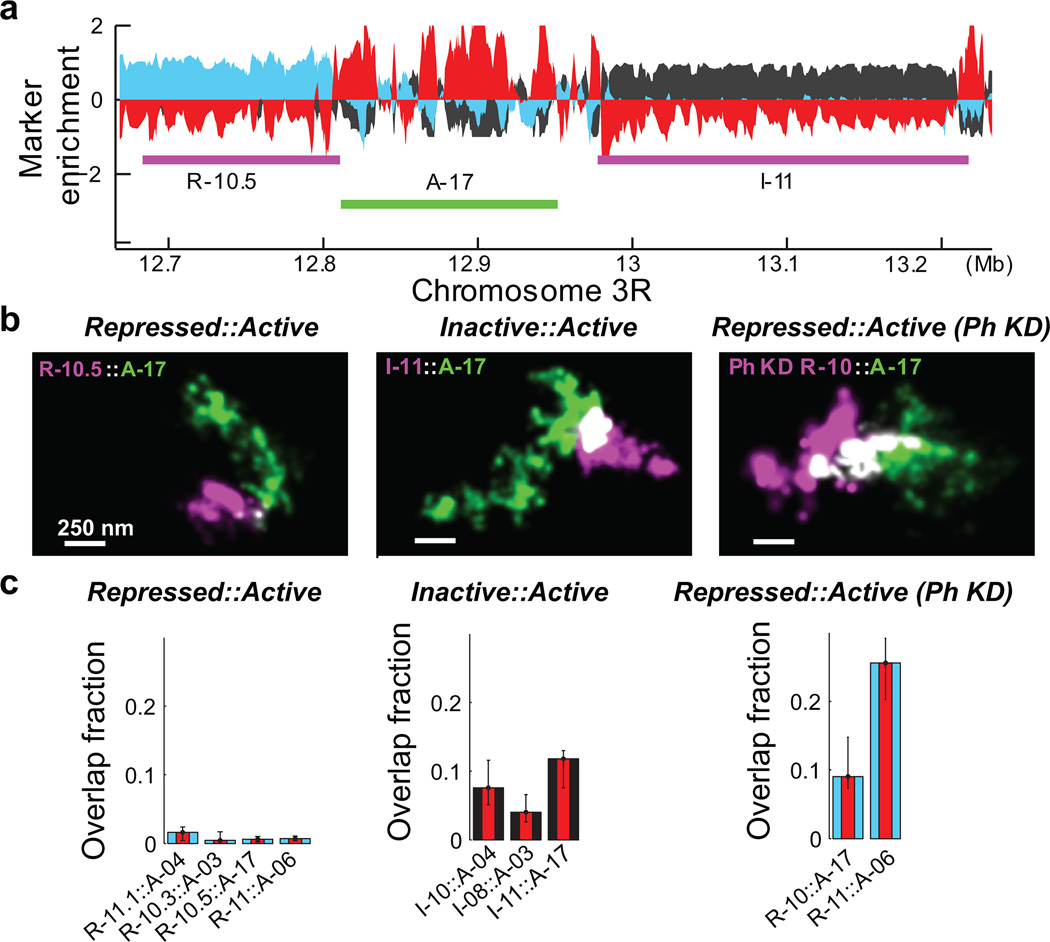
Metazoan genomes are spatially organized at multiple scales, from packaging of DNA around individual nucleosomes to segregation of whole chromosomes into distinct territories. At the intermediate scale of kilobases to megabases, which encompasses the sizes of genes, gene clusters and regulatory domains, the three-dimensional (3D) organization of DNA is implicated in multiple gene regulatory mechanisms, but understanding this organization remains a challenge. At this scale, the genome is partitioned into domains of different epigenetic states that are essential for regulating gene expression. Here we investigate the 3D organization of chromatin in different epigenetic states using super-resolution imaging. We classified genomic domains in Drosophila cells into transcriptionally active, inactive or Polycomb-repressed states, and observed distinct chromatin organizations for each state. All three types of chromatin domains exhibit power-law scaling between their physical sizes in 3D and their domain lengths, but each type has a distinct scaling exponent. Polycomb-repressed domains show the densest packing and most intriguing chromatin folding behaviour, in which chromatin packing density increases with domain length. Distinct from the self-similar organization displayed by transcriptionally active and inactive chromatin, the Polycomb-repressed domains are characterized by a high degree of chromatin intermixing within the domain. Moreover, compared to inactive domains, Polycomb-repressed domains spatially exclude neighbouring active chromatin to a much stronger degree. Computational modelling and knockdown experiments suggest that reversible chromatin interactions mediated by Polycomb-group proteins play an important role in these unique packaging properties of the repressed chromatin. Taken together, our super-resolution images reveal distinct chromatin packaging for different epigenetic states at the kilobase-to-megabase scale, a length scale that is directly relevant to genome regulation.
后生动物基因组在多个尺度上进行空间组织,从围绕单个核小体的DNA包装到整个染色体分离到不同的区域。在千碱基到兆碱基的中间尺度,这涵盖了基因、基因簇和调控域的大小,DNA的三维(3D)组织涉及多种基因调控机制,但理解这种组织仍然是一个挑战。在这个尺度上,基因组被划分为不同表观遗传状态的区域,这些区域对于调节基因表达至关重要。在这里,我们使用超分辨率成像研究不同表观遗传状态下染色质的3D组织。我们将果蝇细胞中的基因组区域分类为转录活跃、不活跃或多梳抑制状态,并观察到每种状态下不同的染色质组织。所有三种类型的染色质区域在其3D物理大小和区域长度之间都表现出幂律缩放,但每种类型都有一个独特的缩放指数。多梳抑制区域显示出最密集的堆积和最有趣的染色质折叠行为,其中染色质堆积密度随区域长度增加。与转录活跃和不活跃染色质所显示的自相似组织不同,多梳抑制区域的特征是区域内高度的染色质混合。此外,与不活跃区域相比,多梳抑制区域在空间上更强地排斥相邻的活跃染色质。计算建模和敲低实验表明,多梳蛋白介导的可逆染色质相互作用在抑制染色质的这些独特包装特性中起重要作用。综上所述,我们的超分辨率图像揭示了在千碱基到兆碱基尺度上不同表观遗传状态下独特的染色质包装,这一长度尺度与基因组调控直接相关。