Su Chieh-Shou, Lai Hui-Chin, Wang Chih-Yen, Lee Wen-Lieng, Wang Kuo-Yang, Yang Ya-Ling, Wang Li-Chun, Liu Chia-Ning, Liu Tsun-Jui
Cardiovascular Center and Department of Anesthesiology, Taichung Veterans General Hospital, Taichung, Taiwan.
Institute of Clinical Medicine, National Yang Ming University, Taipei, Taiwan.
BMC Anesthesiol. 2016 Jan 18;16:5. doi: 10.1186/s12871-016-0173-6.
Tracheal intubation of laboratory mice remains essential yet challenging for most researchers. The aim of this study was to investigate whether this procedure can be more efficiently and safely accomplished by a novel method using slim and torqueable guidewires to guide access to the trachea.
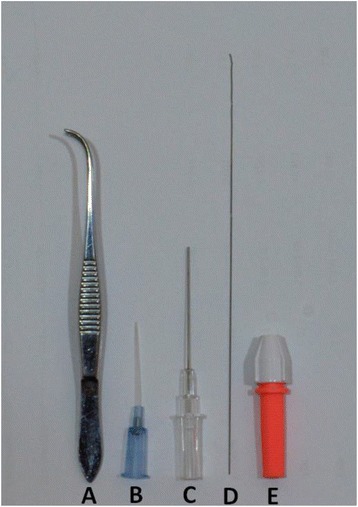
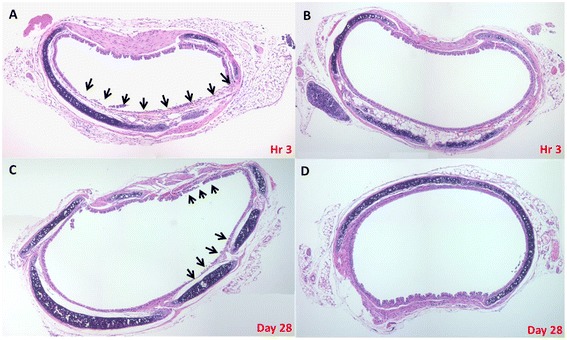
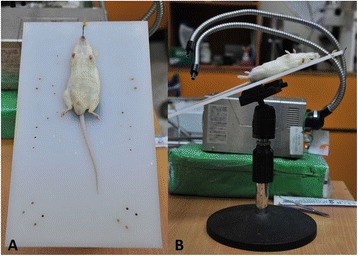
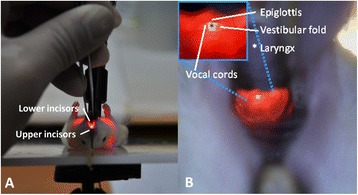
This study was carried out in an animal laboratory affiliated to a tertiary medical center. Mice weighing 22 to 28 g were subjected to various open-chest experiments after being anesthetized with intraperitoneal ketamine (100 mg/kg) and lidocaine hydrochloride (10 mg/kg). The oropharyngeal cavity was opened with angled tissue forceps, and the trachea was transilluminated using an external light. The vocal cords were then crossed using either the Conventional method with a 38-mm-long, end-blunted stiff needle as a guide for insertion of a 22-gauge, 25-mm-long intravenous catheter into the trachea, or the Modified method utilizing using a 0.014-inch-thin torqueable wire as the guide to introduce an identical tube over it into the trachea. The epithelial integrity of the trachea was later examined histologically when the animals were sacrificed either immediately after the surgery or at 28 days post-surgery, depending on the corresponding research protocols.
Orotracheal intubation was successfully completed in all mice using either the Conventional (N = 42) or the Modified method (N = 50). With the Modified method, intubation took less time (1.73 vs. 2.17 min, Modified vs. Conventional, p < 0.001) and fewer attempts (1.0 vs. 1.33, p < 0.001), and there were fewer procedural difficulties (0% vs. 16.7%, p = 0.009) and complications (0% vs. 11.9%, p = 0.041) compared with the Conventional method. Histological analysis revealed a significantly lower incidence of immediate (0% vs. 39%, p < 0.001) and late (0% vs. 58%, p < 0.001) injuries to the tracheal epithelial lining with the Modified method compared to the Conventional method.
Tracheal intubation for laboratory mice can be completed efficiently, safely and atraumatically using the proposed Modified method employing readily available inexpensive instruments.
对于大多数研究人员来说,实验室小鼠的气管插管仍然是一项必不可少但具有挑战性的操作。本研究的目的是调查使用细长且可扭转的导丝引导进入气管的新方法是否能更高效、安全地完成该操作。
本研究在一家三级医疗中心附属的动物实验室进行。体重22至28克的小鼠经腹腔注射氯胺酮(100毫克/千克)和盐酸利多卡因(10毫克/千克)麻醉后,进行各种开胸实验。用弯角组织镊打开口咽腔,并用外部光源对气管进行透照。然后,使用传统方法,以一根38毫米长、末端钝圆的硬针作为引导,将一根22号、25毫米长的静脉导管插入气管;或使用改良方法,利用一根0.014英寸细的可扭转导丝作为引导,将同一根导管套在导丝上插入气管。根据相应的研究方案,在手术后立即或术后28天处死动物时,对气管的上皮完整性进行组织学检查。
使用传统方法(N = 42)或改良方法(N = 50),所有小鼠的经口气管插管均成功完成。与传统方法相比,改良方法插管时间更短(1.73分钟对2.17分钟,改良方法对传统方法,p < 0.001),尝试次数更少(1.0次对1.33次,p < 0.001),操作困难更少(0%对16.7%,p = 0.009),并发症更少(0%对11.9%,p = 0.041)。组织学分析显示,与传统方法相比,改良方法导致气管上皮内膜立即损伤(0%对39%,p < 0.001)和晚期损伤(0%对58%,p < 0.001)的发生率显著更低。
使用所提出的改良方法,采用现成的廉价器械,可高效、安全且无创地完成实验室小鼠的气管插管。