Ziraldo Cordelia, Gong Chang, Kirschner Denise E, Linderman Jennifer J
Department of Chemical Engineering, University of Michigan, Ann ArborMI, USA; Department of Microbiology and Immunology, University of Michigan Medical School, Ann ArborMI, USA.
Department of Microbiology and Immunology, University of Michigan Medical School, Ann ArborMI, USA; Department of Computational Medicine and Bioinformatics, University of Michigan, Ann ArborMI, USA.
Front Microbiol. 2016 Jan 6;6:1477. doi: 10.3389/fmicb.2015.01477. eCollection 2015.
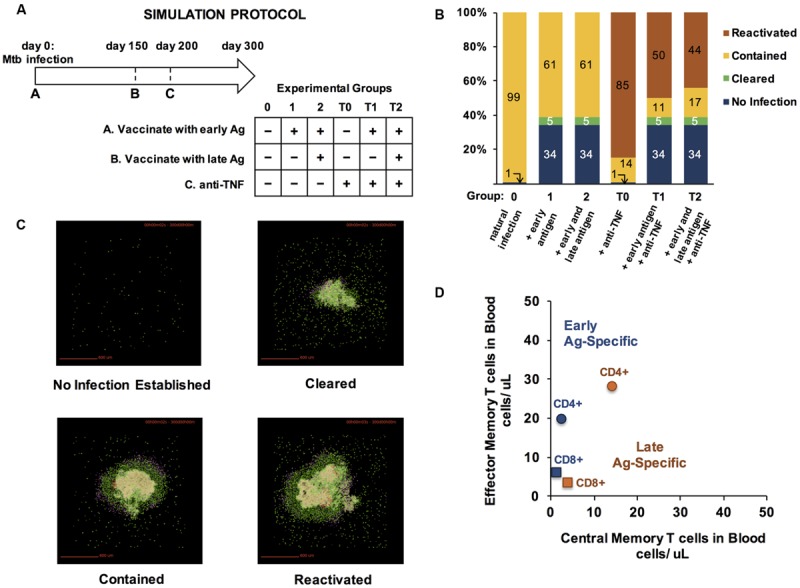
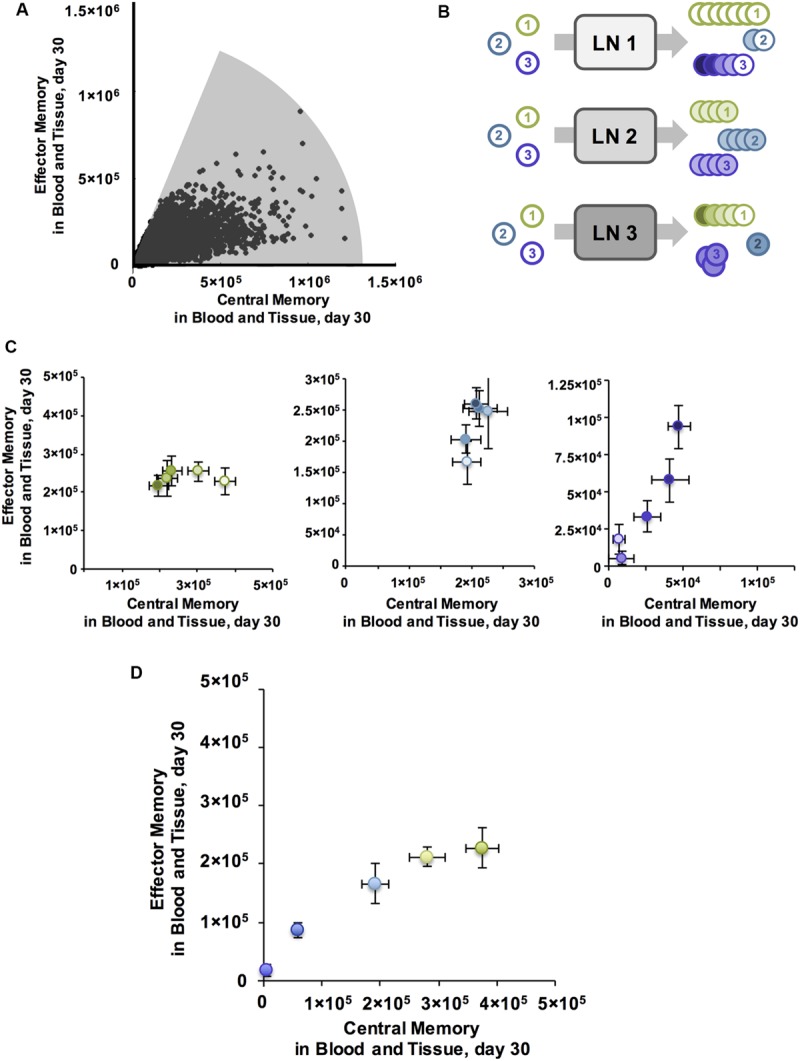
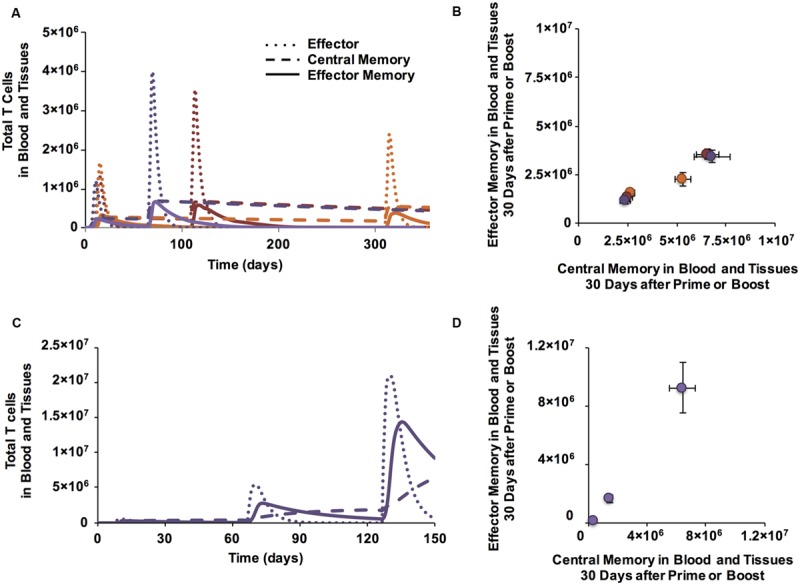
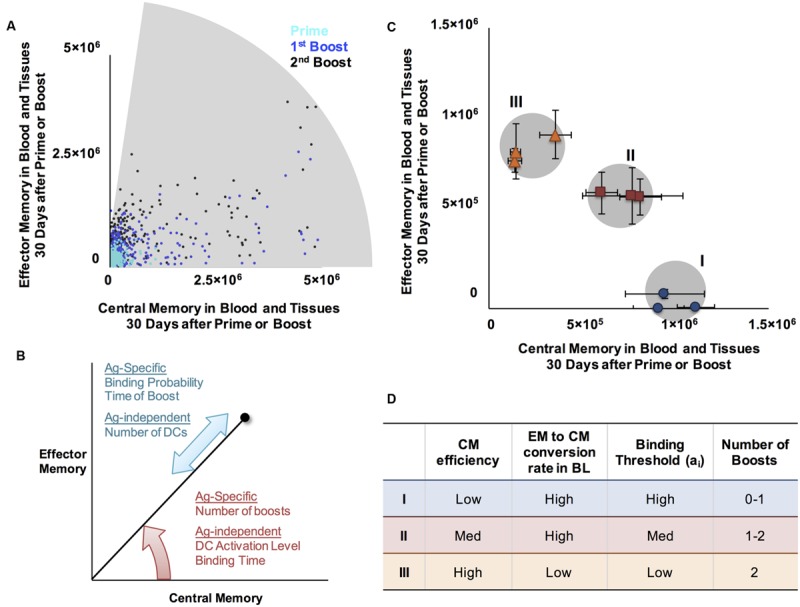
Lack of an effective vaccine results in 9 million new cases of tuberculosis (TB) every year and 1.8 million deaths worldwide. Although many infants are vaccinated at birth with BCG (an attenuated M. bovis), this does not prevent infection or development of TB after childhood. Immune responses necessary for prevention of infection or disease are still unknown, making development of effective vaccines against TB challenging. Several new vaccines are ready for human clinical trials, but these trials are difficult and expensive; especially challenging is determining the appropriate cellular response necessary for protection. The magnitude of an immune response is likely key to generating a successful vaccine. Characteristics such as numbers of central memory (CM) and effector memory (EM) T cells responsive to a diverse set of epitopes are also correlated with protection. Promising vaccines against TB contain mycobacterial subunit antigens (Ag) present during both active and latent infection. We hypothesize that protection against different key immunodominant antigens could require a vaccine that produces different levels of EM and CM for each Ag-specific memory population. We created a computational model to explore EM and CM values, and their ratio, within what we term Memory Design Space. Our model captures events involved in T cell priming within lymph nodes and tracks their circulation through blood to peripheral tissues. We used the model to test whether multiple Ag-specific memory cell populations could be generated with distinct locations within Memory Design Space at a specific time point post vaccination. Boosting can further shift memory populations to memory cell ratios unreachable by initial priming events. By strategically varying antigen load, properties of cellular interactions within the LN, and delivery parameters (e.g., number of boosts) of multi-subunit vaccines, we can generate multiple Ag-specific memory populations that cover a wide range of Memory Design Space. Given a set of desired characteristics for Ag-specific memory populations, we can use our model as a tool to predict vaccine formulations that will generate those populations.
缺乏有效的疫苗导致全球每年新增900万例结核病病例,180万人死亡。尽管许多婴儿在出生时接种了卡介苗(一种减毒牛分枝杆菌),但这并不能预防儿童期后结核病的感染或发病。预防感染或疾病所需的免疫反应仍然未知,这使得开发有效的抗结核疫苗具有挑战性。几种新疫苗已准备好进行人体临床试验,但这些试验困难且昂贵;尤其具有挑战性的是确定保护所需的适当细胞反应。免疫反应的强度可能是成功研发疫苗的关键。对多种表位有反应的中央记忆(CM)和效应记忆(EM)T细胞数量等特征也与保护相关。有前景的抗结核疫苗包含在活动性和潜伏性感染期间都存在的分枝杆菌亚单位抗原(Ag)。我们假设针对不同关键免疫优势抗原的保护可能需要一种针对每个Ag特异性记忆群体产生不同水平的EM和CM的疫苗。我们创建了一个计算模型来探索我们所称的记忆设计空间内的EM和CM值及其比率。我们的模型捕捉淋巴结内T细胞启动过程中涉及的事件,并跟踪它们通过血液循环到外周组织的过程。我们使用该模型测试在接种疫苗后的特定时间点,是否可以在记忆设计空间内产生具有不同位置的多个Ag特异性记忆细胞群体。加强免疫可以进一步将记忆群体转变为初始启动事件无法达到的记忆细胞比率。通过策略性地改变抗原负荷、淋巴结内细胞相互作用的特性以及多亚单位疫苗的递送参数(如加强免疫次数),我们可以产生覆盖广泛记忆设计空间的多个Ag特异性记忆群体。给定一组Ag特异性记忆群体的期望特征,我们可以使用我们的模型作为工具来预测能够产生这些群体的疫苗配方。