Zhou Jianye, Jiang Nan, Wang Shaoguo, Hu Xiaopan, Jiao Kangli, He Xiangyi, Li Zhiqiang, Wang Jizeng
College of Civil Engineering and Mechanics, Lanzhou University, Lanzhou, 730000, Gansu, China.
State Key Laboratory of Forest and Soil Ecology, Institute of Applied Ecology, Chinese Academy of Sciences, Shenyang 110016, Liaoning, China.
PLoS One. 2016 Jan 19;11(1):e0147039. doi: 10.1371/journal.pone.0147039. eCollection 2016.
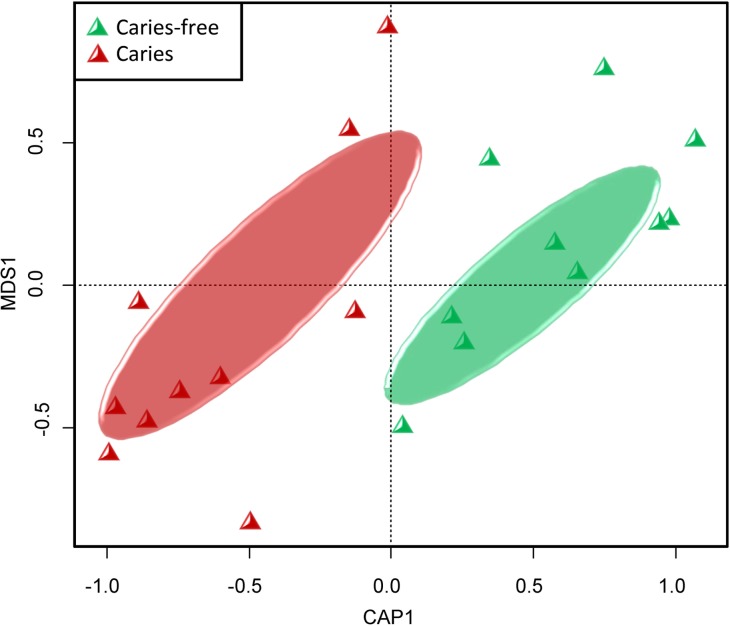
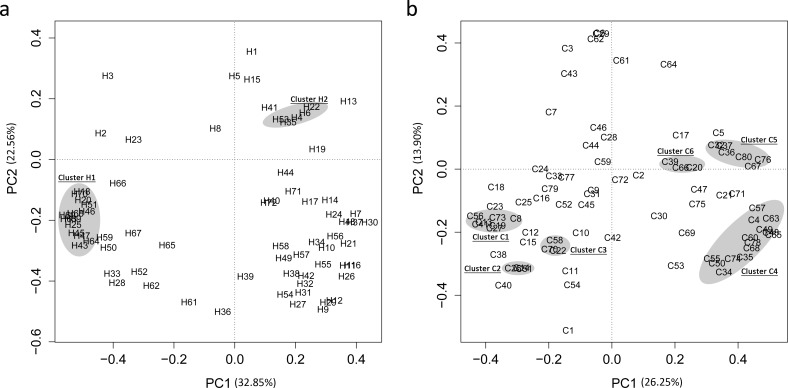
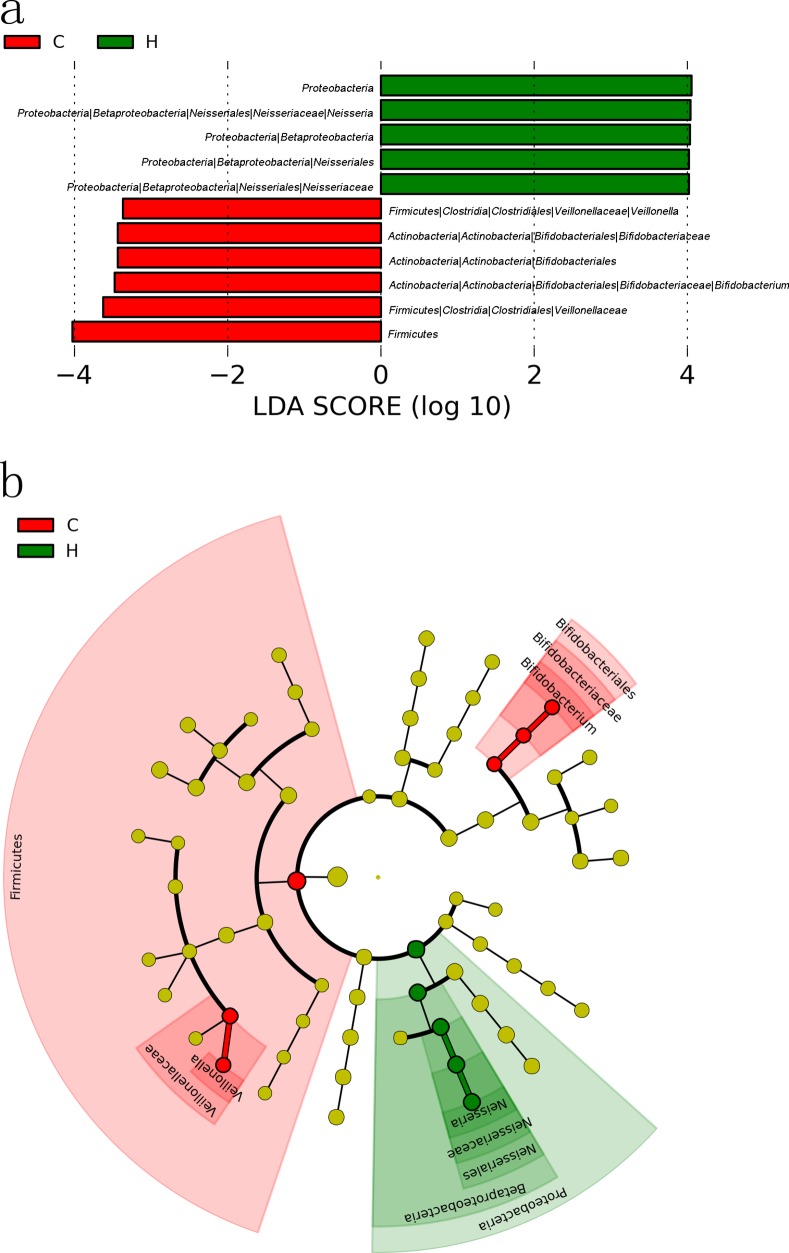
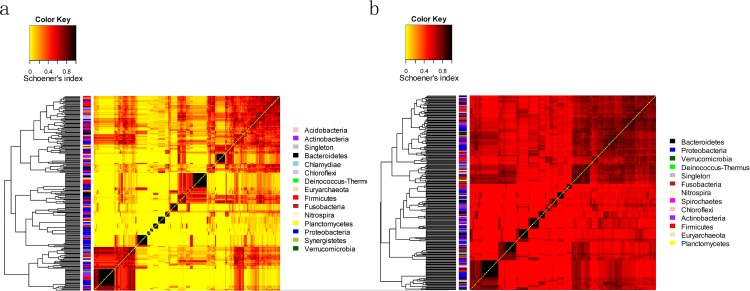
Recently, high-throughput sequencing has improved the understanding of the microbiological etiology of caries, but the characteristics of the microbial community structure in the human oral cavity with and without caries are not completely clear. To better understand these characteristics, Illumina MiSeq high-throughput sequencing was utilized to analyze 20 salivary samples (10 caries-free and 10 caries) from subjects from the same town in Dongxiang, Gansu, China. A total of 5,113 OTUs (Operational Taxonomic Units, 97% cutoff) were characterized in all of the salivary samples obtained from the 20 subjects. A comparison of the two groups revealed that (i) the predominant phyla were constant between the two groups; (ii) the relative abundance of the genera Veillonella, Bifidobacterium, Selenomonas, Olsenella, Parascardovia, Scardovia, Chryseobacterium, Terrimonas, Burkholderia and Sporobacter was significantly higher in the group with caries (P < 0.05); and (iii) four genera with low relative abundance (< 0.01% on average), including two characteristic genera in caries (Chryseobacterium and Scardovia), significantly influenced the microbial community structure at the genus and OTU levels. Moreover, via co-occurrence and principal component analyses, the co-prevalence of the pathogenic genera was detected in the caries samples, but in the caries-free samples, the function of clustered genera was more random. This result suggests that a synergistic effect may be influencing the assembly of the caries microbial community, whereas competition may play a more dominant role in governing the microbial community in the caries-free group. Our findings regarding the characteristics of the microbial communities of the groups with and without caries might improve the understanding of the microbiological etiology of caries and might improve the prevention and cure of caries in the future.
最近,高通量测序增进了人们对龋齿微生物病因的理解,但有龋和无龋人群口腔微生物群落结构的特征尚不完全清楚。为了更好地了解这些特征,利用Illumina MiSeq高通量测序技术对来自中国甘肃东乡同一城镇的受试者的20份唾液样本(10份无龋样本和10份有龋样本)进行了分析。从20名受试者获得的所有唾液样本中共鉴定出5113个操作分类单元(OTU,97%相似度阈值)。两组样本比较显示:(i)两组的优势菌门一致;(ii)韦荣球菌属、双歧杆菌属、纤毛菌属、欧森氏菌属、副斯卡多维亚菌属、斯卡多维亚菌属、金黄杆菌属、土生单胞菌属、伯克霍尔德菌属和芽孢杆菌属在有龋组中的相对丰度显著更高(P<0.05);(iii)4个相对丰度较低(平均<0.01%)的菌属,包括有龋组中的两个特征菌属(金黄杆菌属和斯卡多维亚菌属),在菌属和OTU水平上对微生物群落结构有显著影响。此外,通过共现分析和主成分分析,在有龋样本中检测到致病菌属的共现情况,但在无龋样本中,聚类菌属的功能更为随机。这一结果表明,协同效应可能影响龋齿微生物群落的组装,而竞争可能在无龋组微生物群落的调控中起更主导的作用。我们关于有龋组和无龋组微生物群落特征的研究结果可能会增进对龋齿微生物病因的理解,并可能在未来改善龋齿的防治。